
For as long as I can remember, I’ve wanted to visit Whitby. It started when I read a series of books as a kid called The Whitby Witches, by Robin Jarvis. They scared the life out of me and I remember being haunted by them for ages afterwards. But they also planted a seed in my head of this gothic seaside town, riddled with history and folklore, centuries old cottages and shipwrecks. For years, Whitby simmered at the back of my mind, but I never got around visiting – until my birthday weekend this year. So, with an itch for a solo trip and my mid-thirties looming, I decided it was finally time.
Whitby, like many sea-side towns in the UK has seen a huge tourism boom in recent years. This means that it’s full of shops that sell identical tat and mass-produced sweets, over-priced artisan coffee shops, and street after street of locals’ cottages turned holiday lets. Walking down the main streets on the east side of the River Esk, door after door sported the characteristic little black key box of the holiday let. I know that places like Whitby – where traditional industries are withering – are heavily reliant on tourism. I also know that it’s difficult to walk the fine line between supporting the population and not pricing them out of their own town. So many wonderful places have become so visitor-friendly that the incredible unique identity and culture that made them so attractive in the first place is in danger of being lost. Managing all that is far above my paygrade, so this isn’t meant to be a scathing take-down of the tourism industry. Still, after years of dreaming, it was hard at first to not be a little disappointed by the heaving streets and sea of plastic souvenirs. But I’m no stranger to honeypots. I’ve lived in two of them – Edinburgh and Oxford – and I know that there is far more to both these places than the tourist traps and ticklists.
I was determined not to take it at face value. I was going to find Whitby.
Smoke me a kipper, I’ll be back for lunch
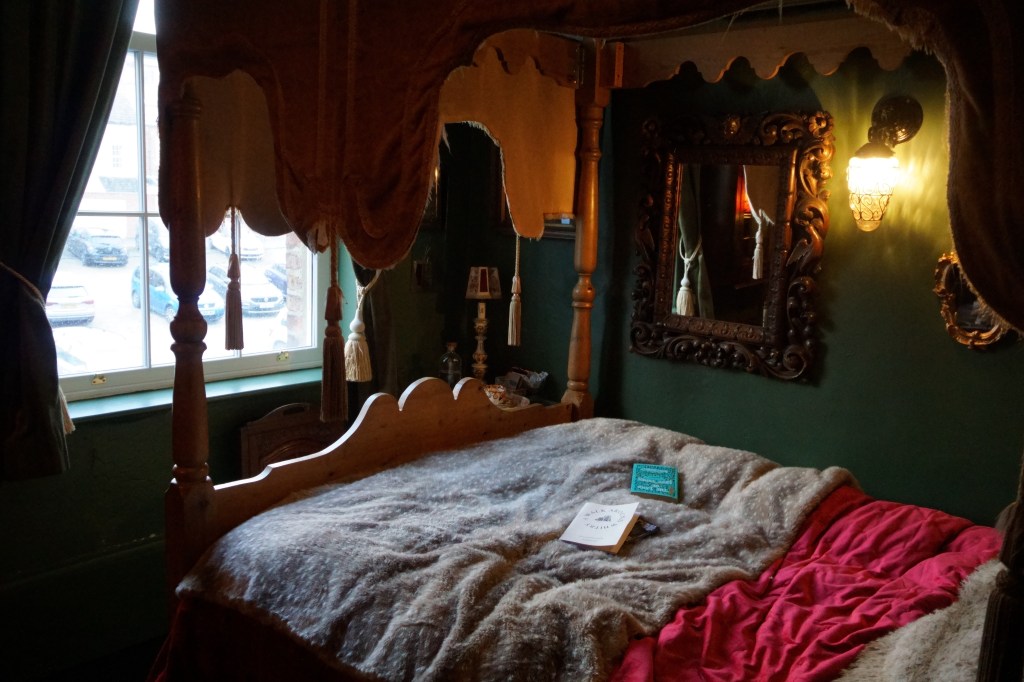
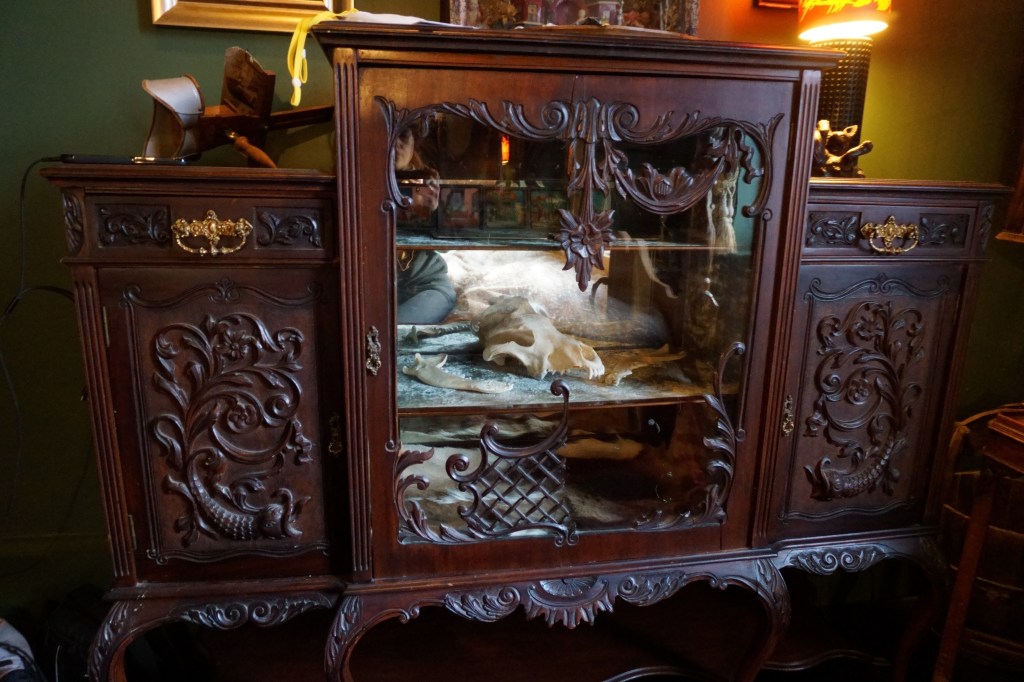
My hotel was a perfect choice then. Eschewing the endless, copy-paste, millennial-grey holiday lets, I had searched for something with colour. With character. With a story. La Rosa Hotel was the perfect choice – I’ve never felt more like a place “gets” me. The favourite haunt of Lewis Carroll on his regular Whitby visits, it perches close to the edge of the western cliffs, each room showcasing a unique theme. I was in “Little Red”, a small but cosy room of dark forest green, with an opulent red velvet coverlet on a four-poster bed, perfect for nestling down in and proclaiming “all the better to see you with, my dear!” In an intricate dark wood cabinet, a wolf skull completed the theme. I was blown away by how well thought out it was, even down the red cloak hanging on the back of the door.
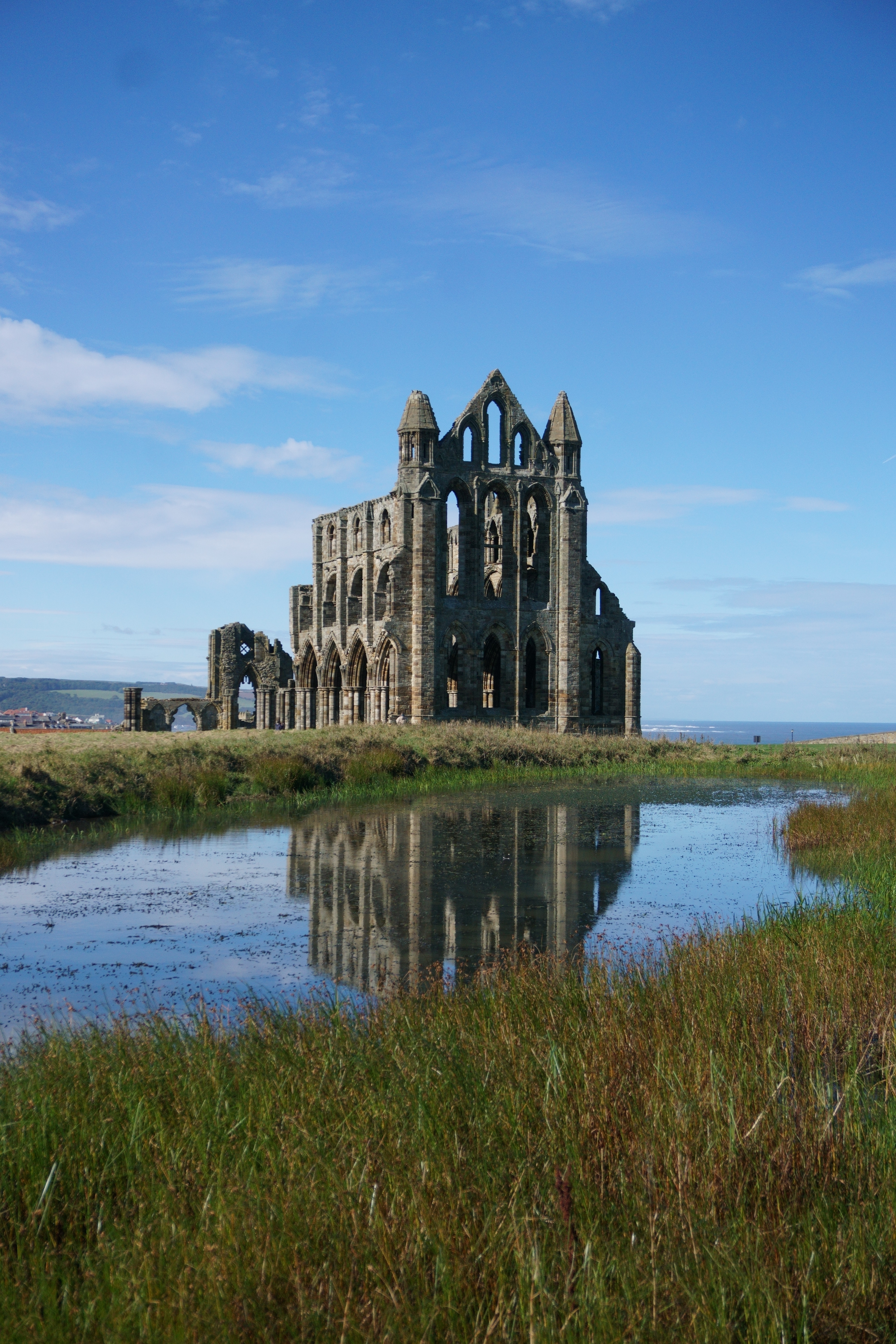
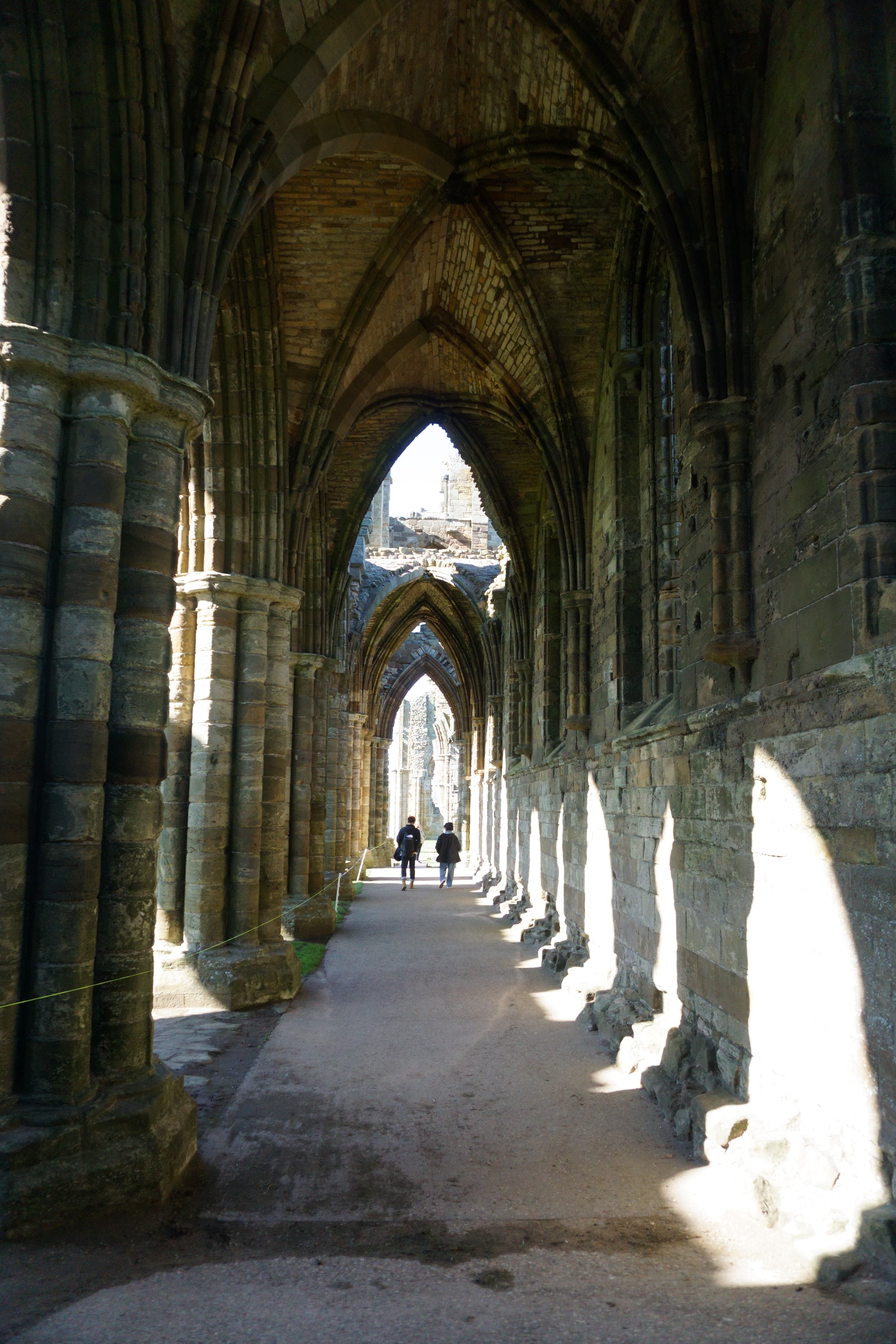
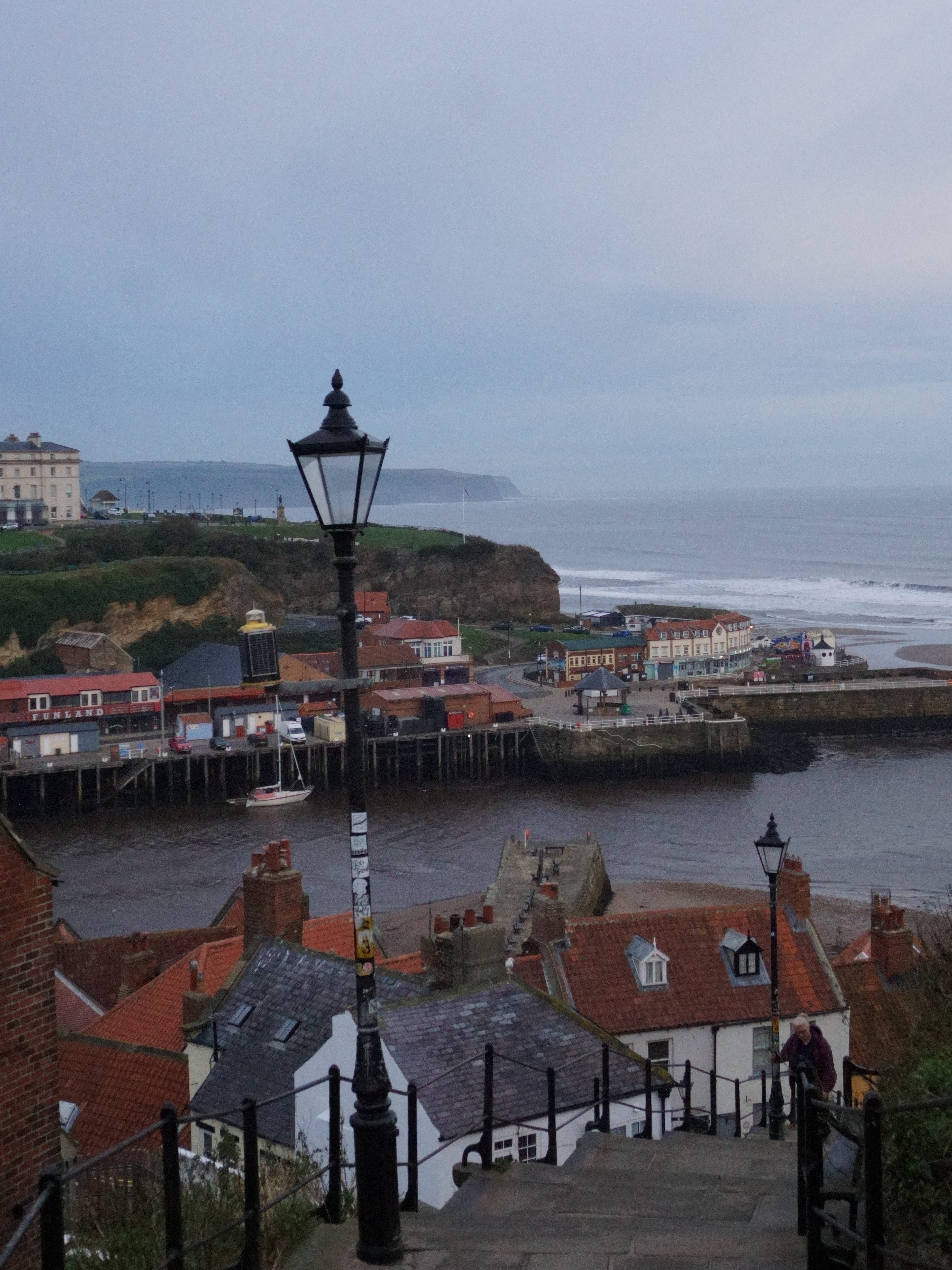
Leaving the hotel brought me face to face with the famous whalebone arch on the cliff top. From there I headed down to the pier where autumn waves crashed against the concrete of the harbour wall. Then, across the old swing bridge and over into the older, east side of town. The streets were thronged with people, so I hustled along to the famous 199 steps up to the Abbey, uncomfortable as always, in a crowd. After the close-packed streets, the wide expanse of the Abbey grounds up on the cliff top was like another world. Even half-tumbled down, you have to crane your neck to take in the towering ruins, and it’s wild to think that this enormous, beautiful church with its intricate carvings and soaring arched roofs is over 600 years old. I walked through the remains of the corridors, now reclaimed by grass, and tried to imagine what a breath-taking sight it would have been, fully intact.

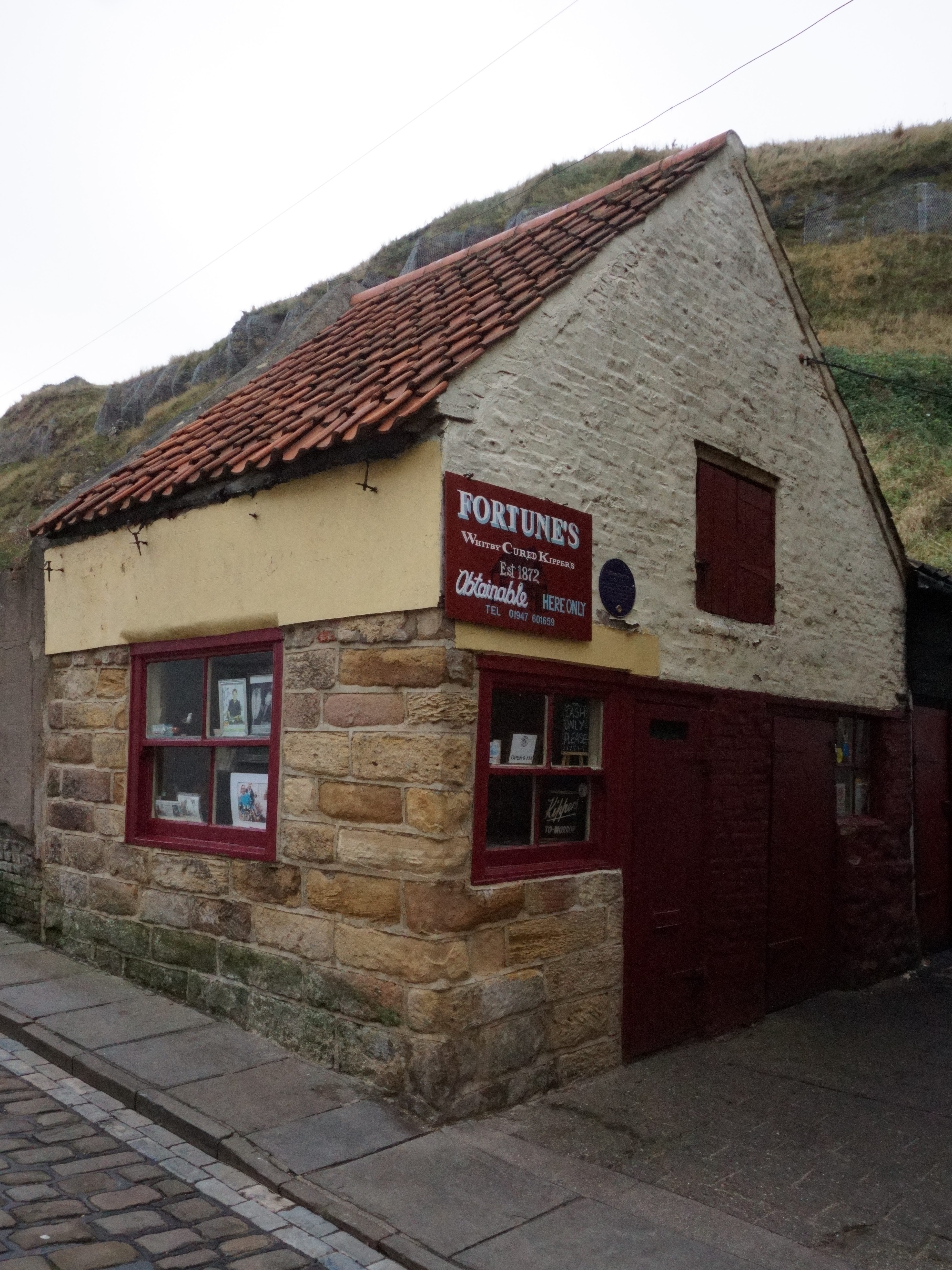
From the Abbey, I headed down Henrietta Street, in search of Fortune’s traditional kipper smokehouse. This family have been curing kippers since 1872, a stalwart reminder that for centuries, much of Whitby’s cultural identity revolved around fishing. Far from being weirded out by my kipper excitement (they’re a regular feature in my weekly food shop), the shopkeeper (one of two owner brothers) enthusiastically told me all about the smoking process, his family history and, most importantly, where in town I could sample his fish. Fifteen minutes later, sat outside the Monk’s Haven café, wolfing down Fortune’s kippers with scrambled eggs, I finally felt like I was starting to discover the Whitby I had been looking for. From my vantage point, I watched the crowds pass by, and caught the eye of an elderly woman, struggling on the uneven cobbled street. I shifted my table to allow her walker up on to the flatter pavement, and she told me all about how several decades ago she protested the council’s plans to replace the centuries old road with a newer, smoother thoroughfare, campaigning to keep the cobbles and preserve her beloved hometown’s character. “Fat lot of good it’s doing me now!” she joked before stomping off.
I spent much of the afternoon in the Captain Cook museum, delighting over the model sloops and barks (always a sucker for a sailing ship), rather than his colonial endeavours. I felt like I was on the right track, and was excited for the ghost tour I had planned for that evening. Considering the rich ghost lore that Whitby has to offer, like the infamous phantom Barguest Coach, the tour was, unfortunately, a bit of a swizz. I usually love a ghost tour. I’m not much of a sceptic – call me Fox Mulder because I want to believe… but the stories were tepid and flimsy, seemingly avoiding the best tales and the most interesting parts of town. This, combined with a too large crowd had me bailing out part way round. Instead, I was drawn in to the open door of an artist’s studio, hung with turbulent paintings of stormy skies and vivid ships at rest in the harbour. For all the timid seaside paintings I’d seen that day, these were the first that evoked a real, emotional reaction in me and I ended up having a long, deep and philosophical conversation with the animated and eccentric artist, that was worth far more to me than a mediocre ghost tour.
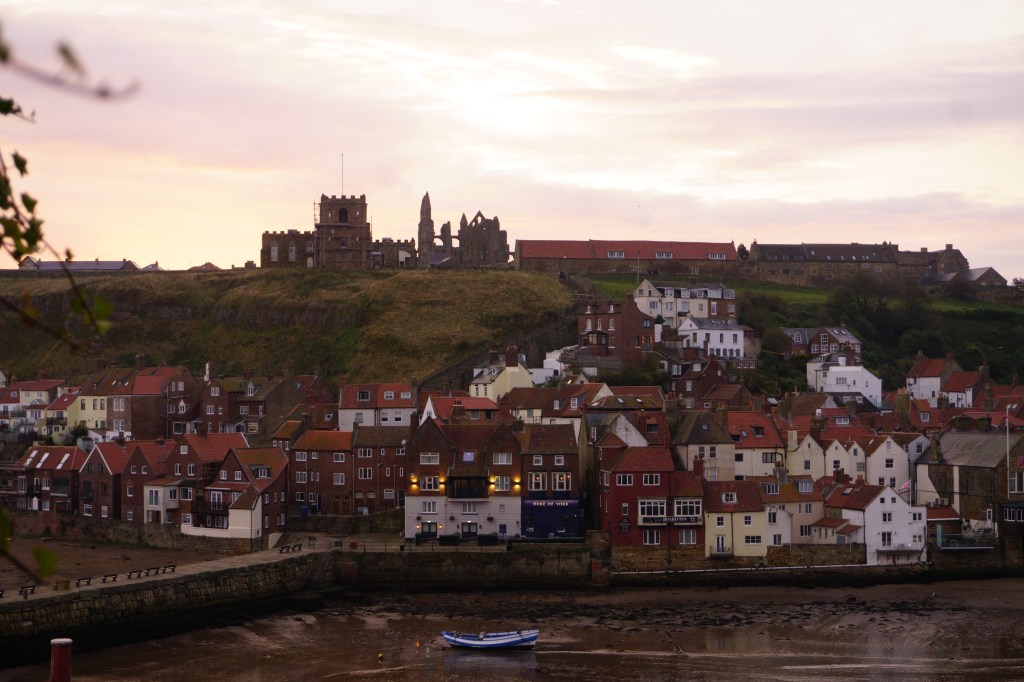
A pre-dawn walk around Whitby
Eager to see the streets without the crowds, I started out pre-dawn the next day. As soon as I walked out of the hotel, I knew the early morning had been worth it. Silhouetted against the dawn pastels, the abbey rose menacingly over the town, every inch the inspiration for Dracula. The moody, atmospheric clouds suited it far better than the bright sunshine and blue skies of the previous day. Unfortunately the sun had slipped behind the clouds by the time I got up the steps, but no bother, I still wanted to see the rest of the town.

In those narrow winding streets, lined with mis-matched buildings that spanned centuries, it was hard to believe that this was the same place that had been a gauntlet of careless people the day before. I was able to wander, taking it in, exploring the labyrinthine yards that squirreled away off the main roads and feeling like I had stepped back in time. I took a circuitous route, guided by the “A Walk Around Whitby” pamphlet I had bought at St Mary’s Church the day before. It highlighted buildings of note, their prior functions and the people that had lived there, snippets of folklore and history building up a picture of the town over centuries.
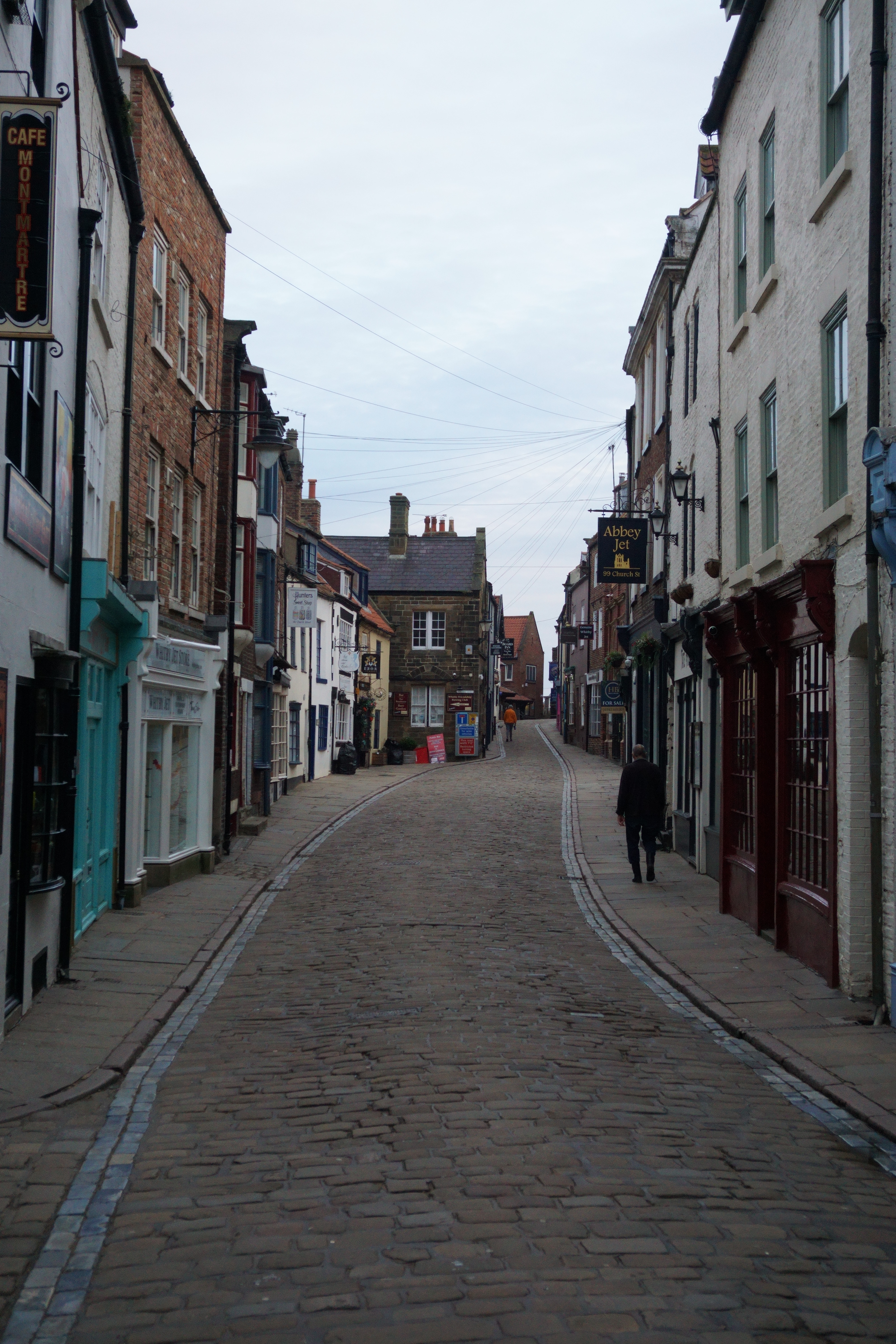
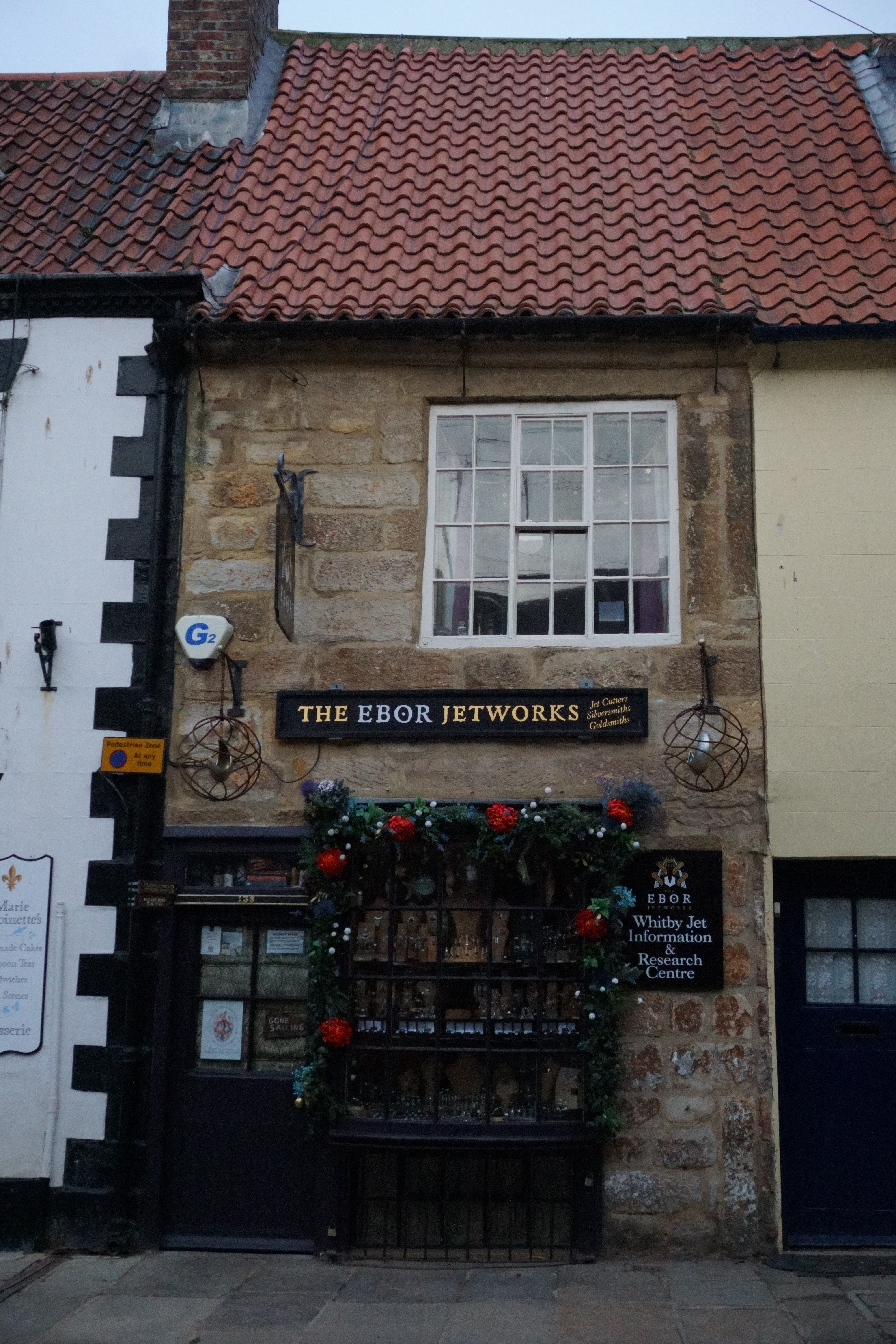

There were still a few people out and about, but it was a completely different vibe to the faceless sea that would flood the streets in just a few hours’ time. Everyone I passed had a smile, a greeting to share or a quick conversation about the day to come. One woman, Dutch, but a resident of Whitby for over 40 years stopped me to ask about the guide I was following – it turned out she had known the author – now passed away. She told me how she’d come to Whitby, why she’d stayed, and the spots she thought I should check out before I left. Eventually I completed the circuit and made my way back to my hotel for breakfast, taking with me a wildly different impression of the town than the day before.
The hand of glory
After I reluctantly checked out of La Rosa and waved goodbye to my decadent room and the dark fairy tales it conjured, I headed to my final stop of the trip. The Whitby Museum lies a little way out of town, in the beautifully maintained Pannet Park. The 200-year-old museum was crammed with fossils, natural history taxidermy, and as many model ships as my heart could desire, though, like the Captain Cook Museum, I was surprised how quiet it was compared to the main streets.
Of the displays, the Frank Meadow Sutcliffe exhibit gave me exactly what I was after – a window into historic Whitby. Sutcliffe was a Whitby photographer in the late 19th century, who documented the day-to-day life of the townsfolk, from women shucking mussels on their doorsteps, children playing in the mud flats of the estuary, to the fishermen waiting for tides in the harbour.
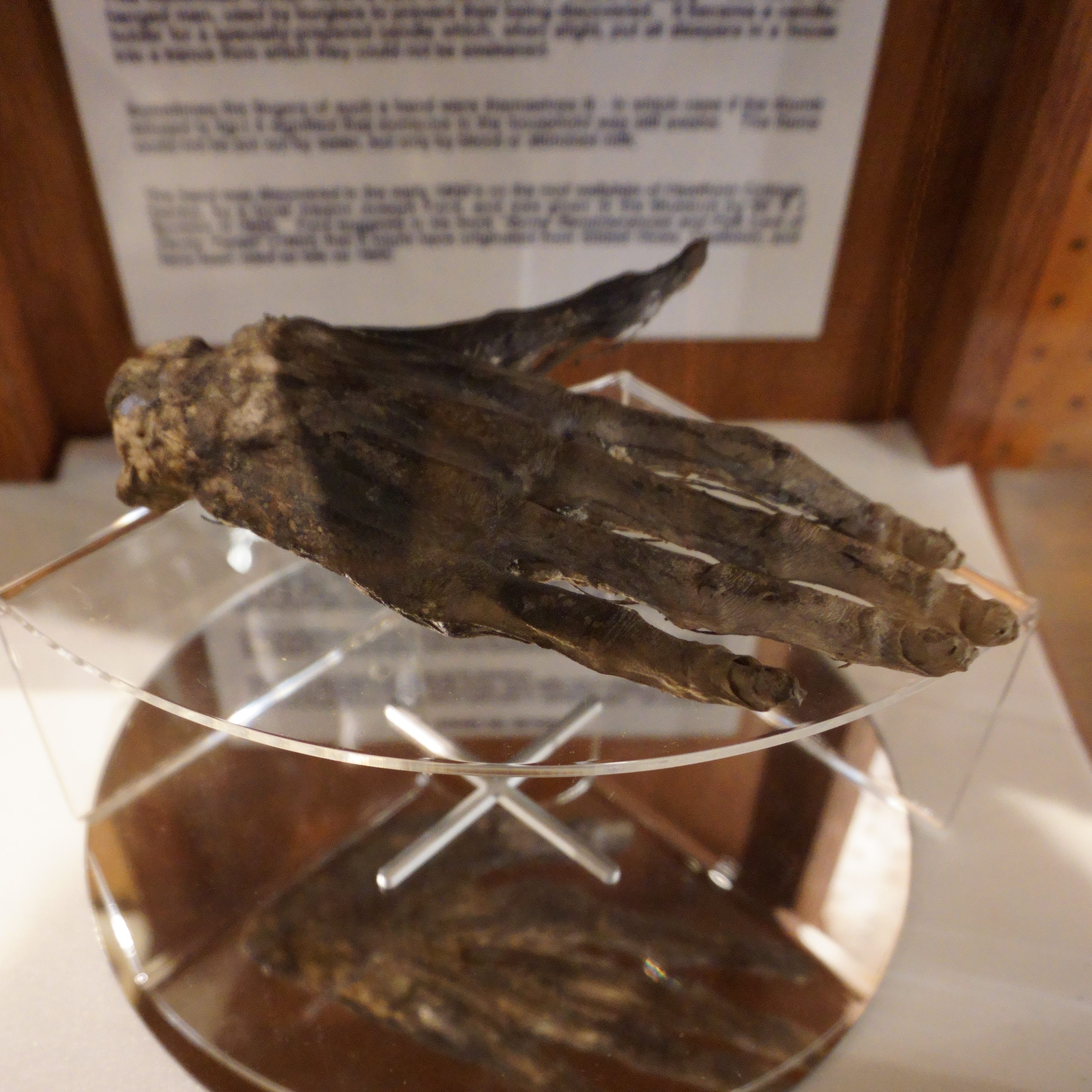
Before I threw myself into buying far too many Sutcliffe prints from the gift shop (“It’s my birthday,” I justified to myself. “I deserve a little treat.”*), I had one more exhibit to marvel over. Whitby Museum’s hand of glory is supposedly the only one of its kind remaining in the world, and was found hidden in the wall of a local house. The mummified right hand of a criminal, severed while the body still hung from the gallows, the hand of glory was prized by thieves. Human fat candles were jammed between the fingers, or the fingers themselves lit, in order to keep the occupants of a target house in a deep sleep, allowing the thieves to commit their crimes and make their escape undisturbed. The hand is as fascinating as it is unsettling. Long, bony fingers rest on the glass pedestal, the cord-like tendons and pulleys clearly visible in the mirror below. Who did it belong to? What crime did they commit to warrant being hanged? Who severed the hand, and more importantly – did it work?
So what about Whitby?
As drove out of the town, I was treated to one final glimpse of the abbey, brooding on the east cliff. I had fallen a little in love with Whitby. Or at least, the Whitby I had sought out. The windows into its past, the folklore, gothic aura. But also, the people. I love to talk to strangers and I have certainly inherited my mother’s “I know we just met but tell me your entire life story” aura, which definitely makes it easier. The most memorable experiences I had all weekend were my chats with the locals – the fish smoker, the old lady, the artist and the early morning walker, the owner and bartender in the hotel.
What’s the moral of this story? One, don’t be afraid to take solo trips, that’s for sure. There’s something incredibly freeing about being able to do what you want, when you want; like eating nothing but a huge bag fudge for lunch, or walking the streets till your feet hurt just to make sure you’ve seen every lane and every wonky cottage.
Two, there is always more to a place than the touristy façade it puts on. Take the time to really get to know a place – stay in locally-owned, sustainable accommodation, dig a little deeper, stumble off the beaten path a little more. Most importantly, just talk to people. Have a little chat. Lists of “best things to do in…” are all very well, but if you’re just bouncing from photo opp to photo opp, how can you really get to know a place? Every single person you meet has a story to tell, and most of them don’t take much convincing to tell it. Rich and interesting lives walk by you every day, and how will you ever know what worlds you’re missing out on if you never stop and open the doors to them?
Whitby is teeming with folklore, with gothic dreams, with fascinating history and rich centuries old culture. So yes, I recommend Whitby**, but only if you’re willing to scratch beneath the surface.

*I’ll leave it to you to decide how many times I said those exact words over the course of the weekend.
** And I DEFINITELY recommend La Rosa Hotel.
 Kate Harrison Writes
Leave a comment