
A midwinter festival, celebrated in December, where schools and businesses closed, people decorated their homes with wreaths and spent the days singing, feasting, lighting candles and exchanging gifts. Sound familiar? It’s not Christmas, but it is probably the source of many Christmas traditions. No, I’m talking about the ancient Roman festival of Saturnalia. Held in honour of Saturn, the god of time, agriculture and wealth, it celebrated the prospect of a good spring harvest, while also bringing cheer to the short, dark days of midwinter.
Saturnalia was celebrated across the empire, and lasted for a week of revelry. It usually began with a ceremony at the Temple of Saturn, followed by a large public banquet. Social norms were relaxed, to allow gambling (usually illegal), and the wearing of comfortable dinner dresses instead of formal togas in public (like going to the shops in your pjs and dressing gown I guess). In the home, hierarchies were flipped entirely, with servants and slaves elevated to the head of the table and waited on by their masters. Dice were rolled to select a “Lord of Misrule” to reign over the household and give out silly or mischievous orders. Eventually, after seven days of feasting, drinking, and general partying, the holiday would culminate on the 23rd December with the giving of gifts, including things like fattened pigs, gold rings, clay statuettes, knucklebones and turtledoves. If you want to celebrate Saturnalia but still maintain your modern friendships, I would say that only some of these are still appropriate gifts. I’ll let you decide which.
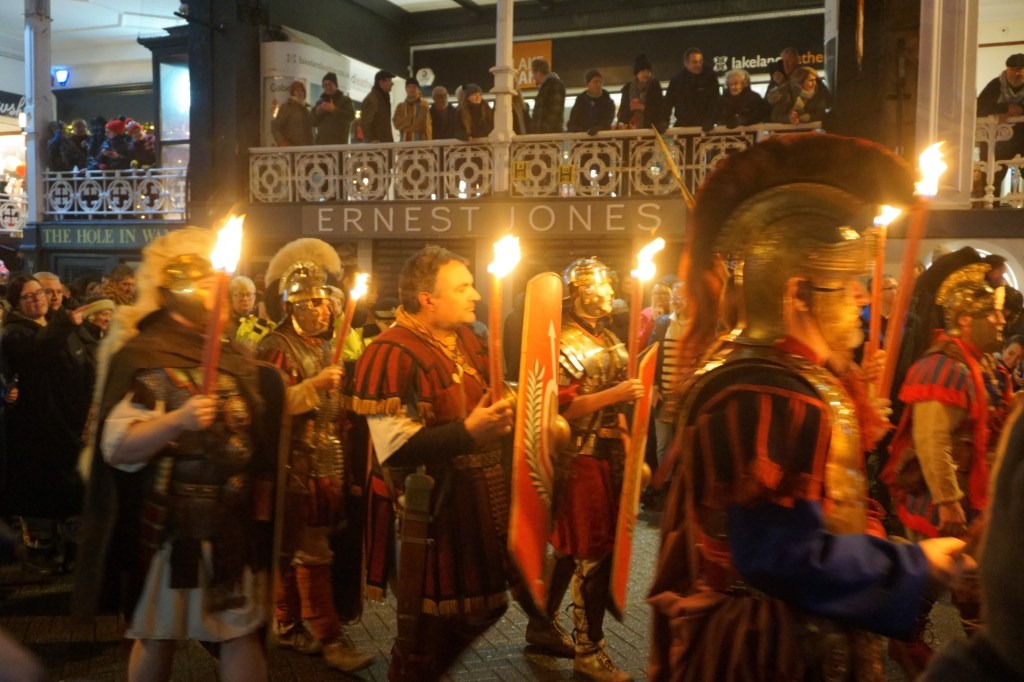
As Christianity took hold, old pagan festivals like Saturnalia died out, or became consumed into the Christmas monolith. In the 21st century, Saturnalia might be largely forgotten, but where better to keep the Saturnalia tradition alive than the historic Roman city of Chester.
The return of Saturn and the Winter Watch
Chester might not be the largest, or the most well-known city in the UK, but it is certainly one of the oldest (and, personal biased opinion: the prettiest). Founded in the first century AD, Chester – originally Deva Victrix – was built as a military outpost by the Romans, to keep an eye on the “unruly” Welsh and Celtic northern tribes. Even almost two thousand years later, the Roman stamp on Chester is still clear, including the remains of the original city walls, the Roman gardens, and the traditional haunt of every emo, alt and goth teenager in Cheshire – the amphitheatre.
After centuries without, the Chester City Council resurrected Saturnalia in the 1990s, incorporating it in to the Chester Winter Watch. The Winter and Midsummer Watches are another Chester folk tradition that have been revived in recent decades. Both the Midsummer and Winter watches originated in the 15th century, and ran until the late 17th century. During the Winter watch, the city leaders would lead a procession around the city walls, ensuring all was secure, before handing the keys to the city over to the City Watch. The Watch would then keep the peace in the city while the population celebrated Christmas. A tradition not too dissimilar to the police rounding up the too-rowdy clubbers stumbling out of Rosie’s and Cruise at closing time – some things never change, it seems.
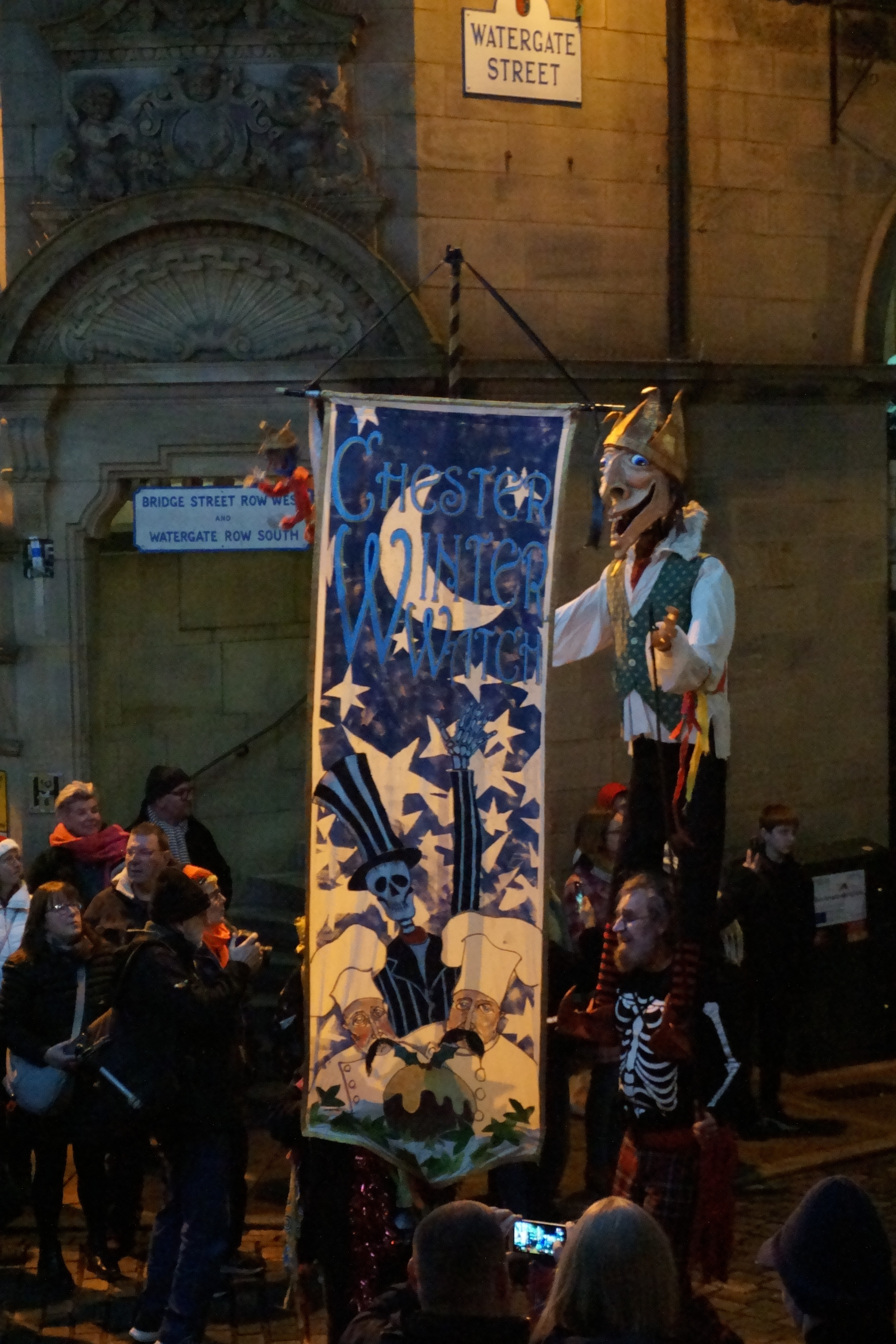
While the Midsummer Watch always incorporated a parade of giant puppets and floats, even in the 15th century, the Winter Watch was originally a more serious affair, the pageantry only having been added during the 20th century revival. I stumbled on Saturnalia by chance last year, when a link to a BBC news article about it popped up on my Google homepage. By luck it was on that very night, and so Chris and I made our way into town to investigate. I love folklore and local traditions, and it seemed wild to me that, having grown up on Chester’s doorstep I had never heard about either Watch, or Saturnalia, an error that needed remedying immediately. The whole evening was a delight, and so it was an easy choice to return this year.
The court of the Lord of Misrule
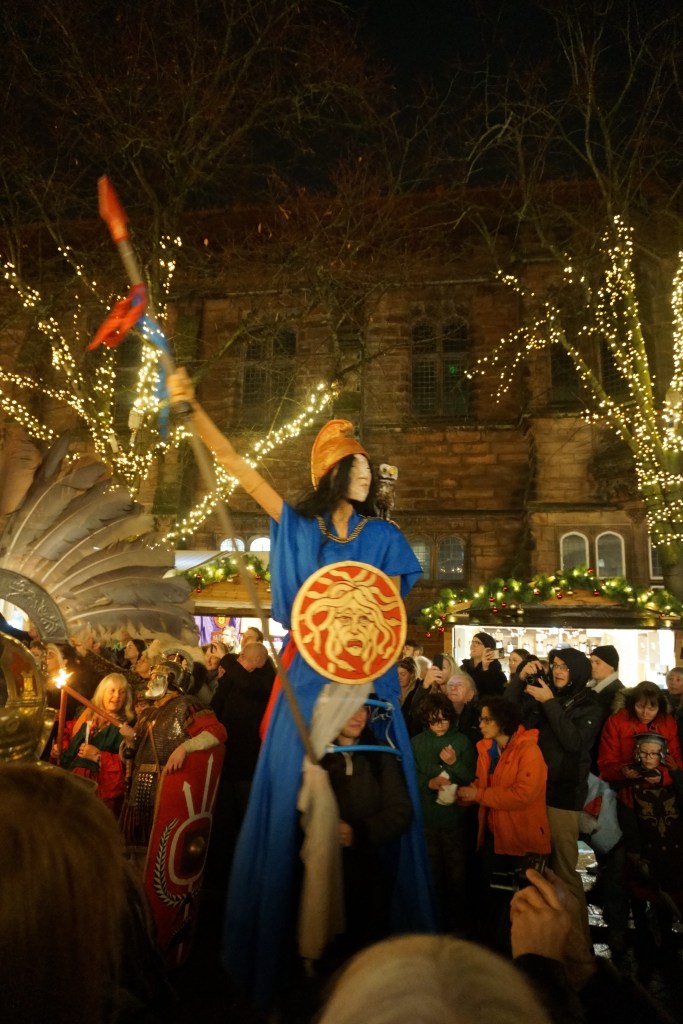
We wandered the stalls of the Christmas market while waiting for the show to begin. Begin it did, with riotous drumming from the ghostly Karamba Samba drum group to build some atmosphere. Then the Romans arrived. Soldiers from the Deva Vitrix 20th legion lined up on either side of the road, lighting their ceremonial candles and trumpeting the traditional chant of “Io Saturnalia!” These Romans may have been local re-enactors, but it didn’t take much effort to project the scene back two thousand years and picture how Saturnalia went down with the soldiers within the fortress city’s walls. Cold, bored and thousands of miles from home, the revelry and relaxed order of Saturnalia was probably a welcome escape.
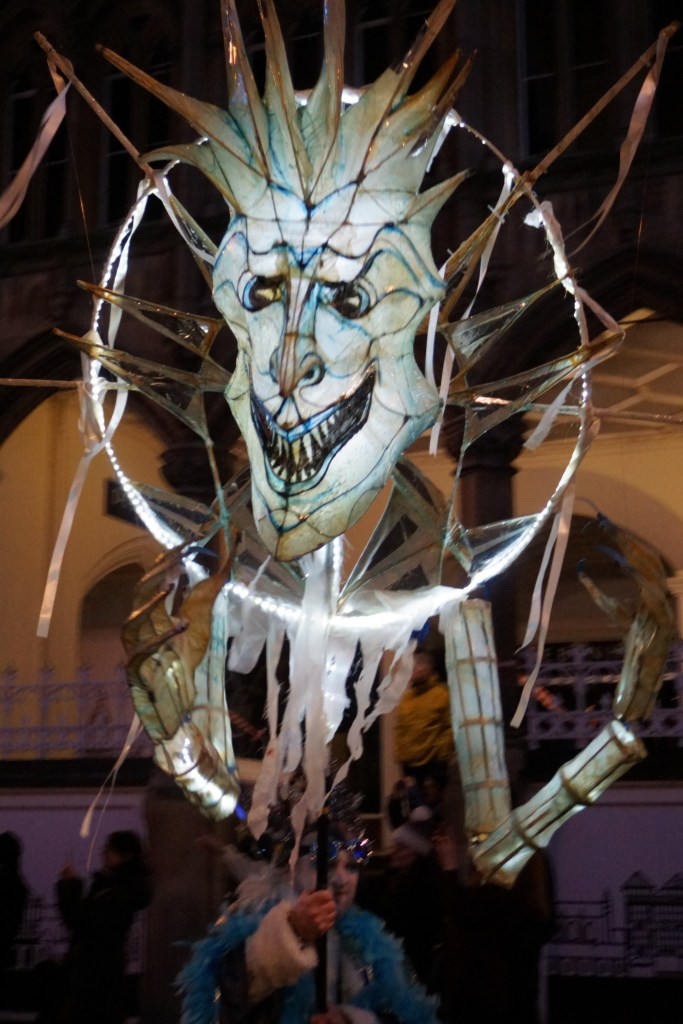
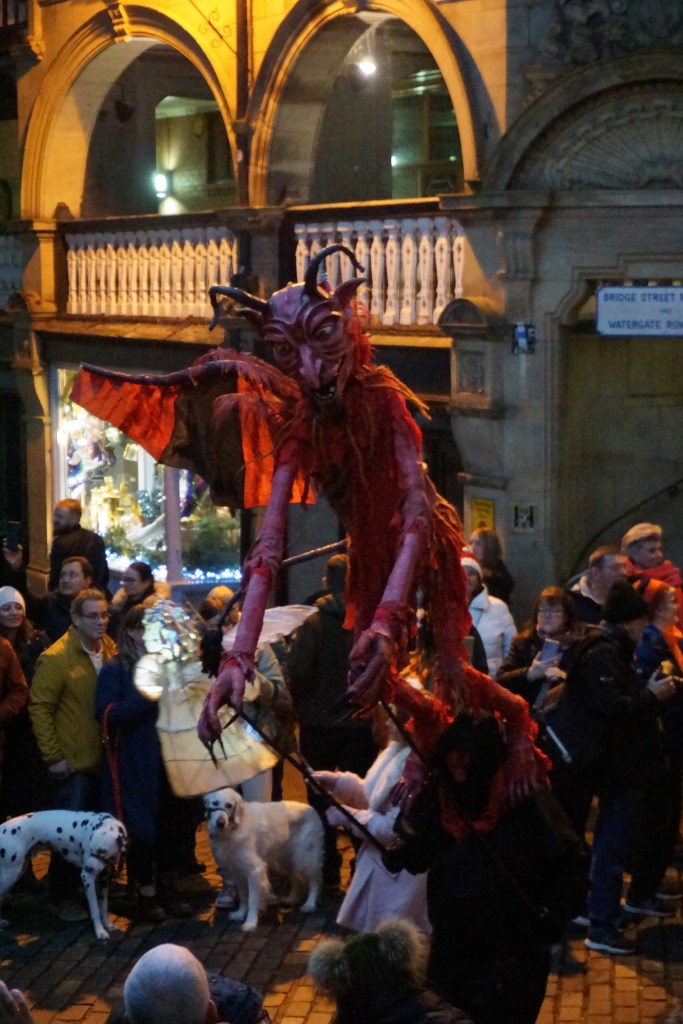

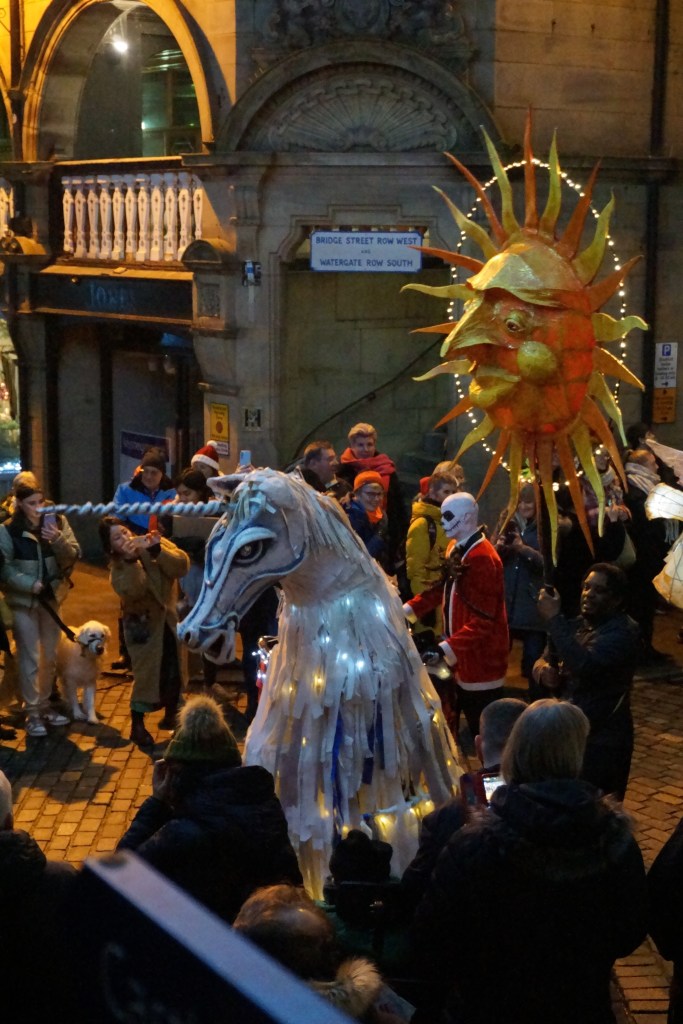
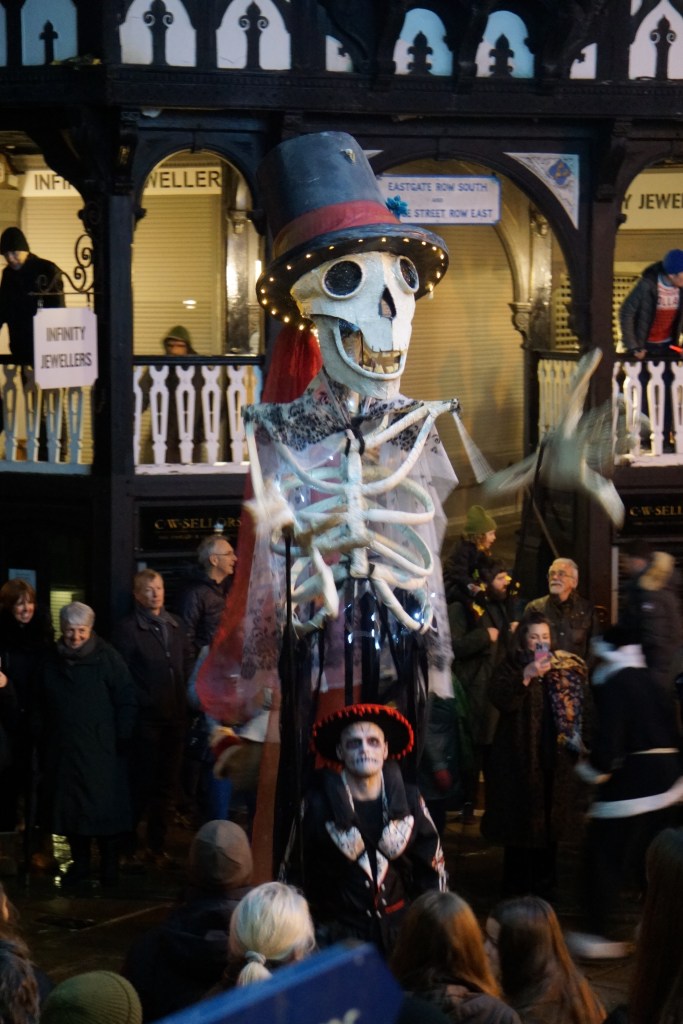
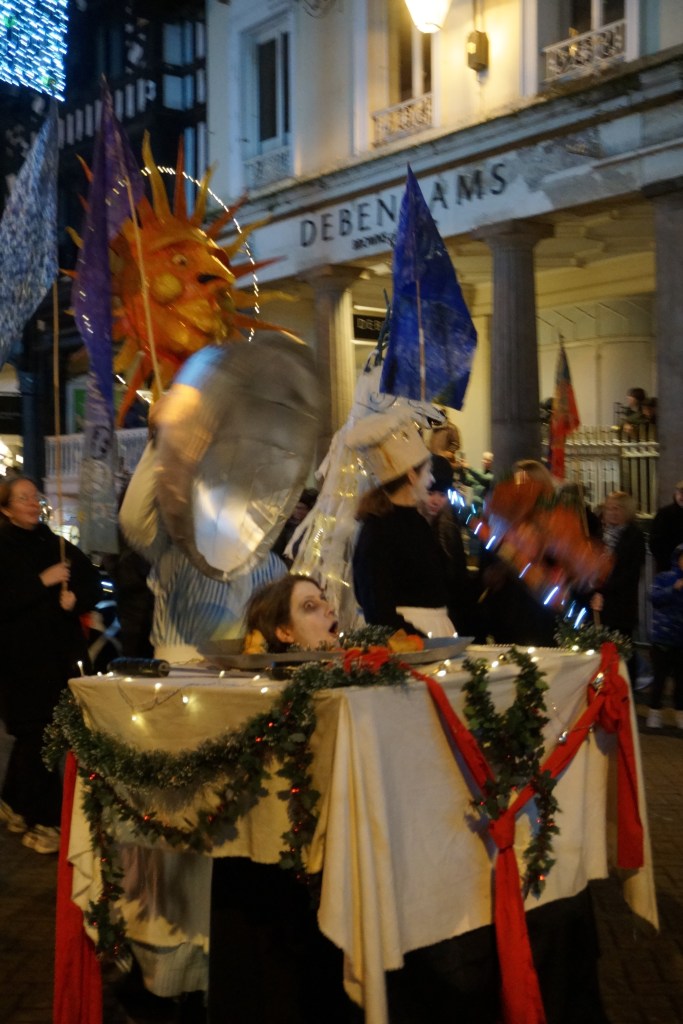
The legion lined up again, and began the parade through the streets. Behind the Romans came the puppet I assumed was the Lord of Misrule, with his jaunty crown and Punch-like face. He swept through the streets, followed by all manner of characters, some imposing, some mischievous and others downright creepy. Some of the puppets represent parts of Chester’s history and culture, like the Roman Goddess Minerva, or the giant Ravens that, in recognition of the nesting pair that made Chester Town Hall their home, after a centuries-long absence in the county. Others are characters to be expected in a such mish-mash of pagan and Christian traditions – an angel swooped and glided alongside a jittery, staccato devil, followed by Gaia and the icy, pointed face of the Jack Frost, his hands reaching out to grasp members of the audience. Enormous articulated skeletons, reminders of the darker sides of winter, stretched out bony arms to reach the people lining the upper levels of the rows. Others still seemed chosen at random – two years in and I’m still not sure what a group of demented chefs, brandishing severed heads on serving platters has to do with either Saturnalia or Christmas, but hey, I’m here for it.
The procession wove through the Chester streets, and we dipped through shortcuts and hopped up the rows to get better views, following the infectious drumming that heralded the festivities. Each time it paraded past I spotted something new, another player, another puppet brought to life by the puppeteers below. Eventually it disbanded, exhausted, back at the town hall square and the packed streets slowly began to dissipate. Saturnalia was over for another year, the Winter Watch complete, the city secure and Saturn appeased.
Want to give praise to mighty Saturn?
If this sounds up your street, if you want to delve more into your local history and folklore, and you want to check it out next year, the Winter Watch is usually held on the first two Thursdays of December, with Saturnalia incorporated into the second date.
The Midsummer Watch, which I am extremely excited about attending next year, is held over a weekend near the end of June, with dates announced nearer the time… see you there maybe?
Sources
https://www.vindolanda.com/blog/saturnalia-roman-midwinter-festival
https://www.getty.edu/news/the-wild-holiday-that-turned-ancient-rome-upside-down/
 Kate Harrison Writes
Leave a comment