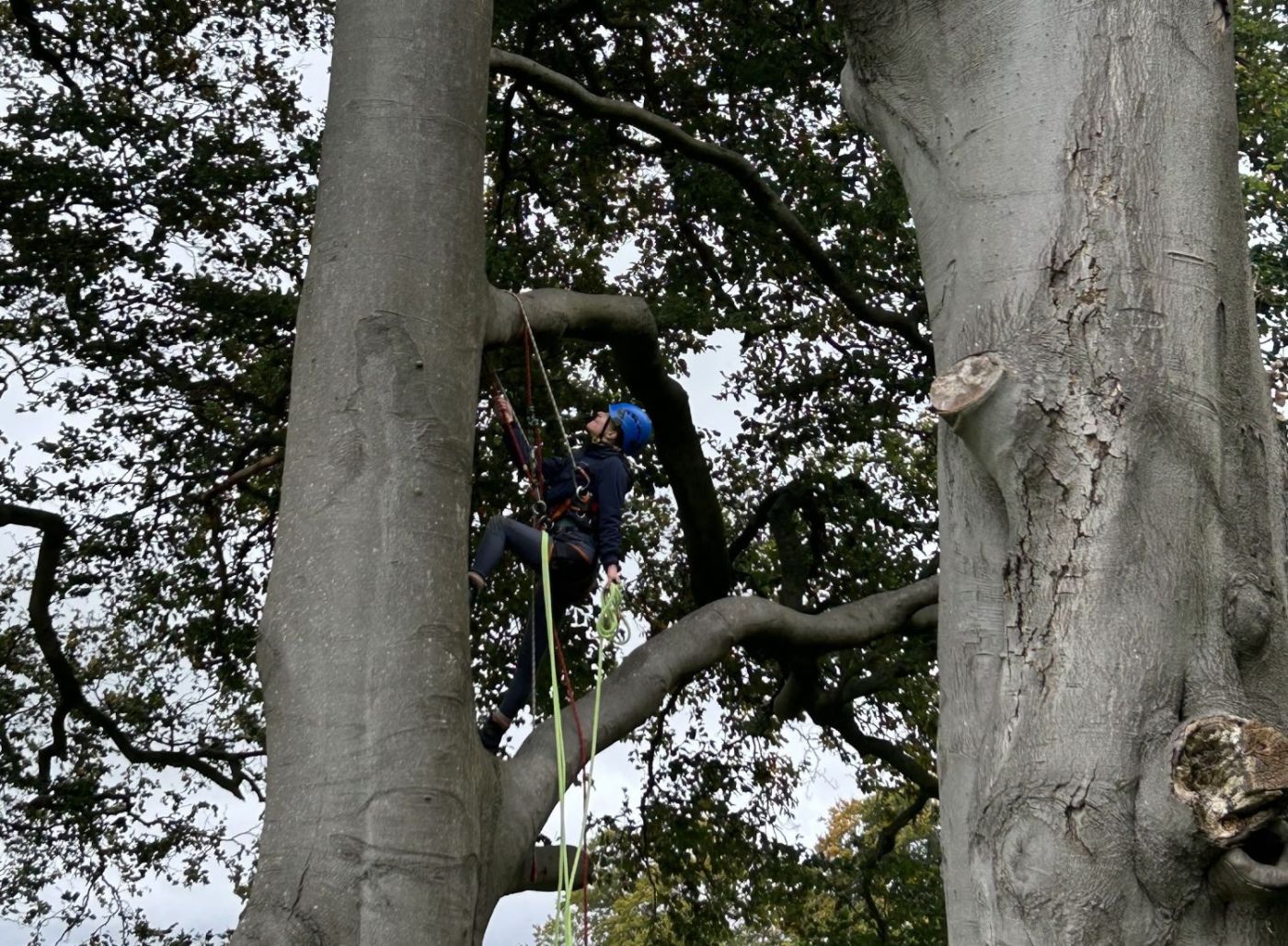
One month into my career break, and I swear I have been busier than I ever was when I was working. Earlier this month, I carved out a week for my first proper trip away since launching this ship of unemployment. Of course it involved climbing, but a very different kind to my usual fare…
I don’t think I have ever liked having my feet on the ground. As far back as my memory stretches I have been climbing up things, hanging off things, perching on chairs with one knee up by my chin, the other leg tucked beneath me, anything to avoid being grounded. I can remember my primary school getting a small adventure playground, and my subsequent telling off by the dinner ladies because I wanted to try and spend the whole lunch break hanging upside down off the monkey bars and they were worried that all the blood was going to rush to my head and I was going to pass out. I’m just so much more comfortable up. Gymnastics, pole dancing, rock climbing, all my main hobbies have involved divorcing all ties with the floor.
In fact, the only place where I’ve had to stay grounded has been my career. Is there anything more rooted than science, really? Facts, theorems and statistics do not float. They do not fly. They establish a solid foundation on which to build reliable, trustworthy knowledge. But, as I explore myself in this new, post science world, I had to ask myself: what if I could incorporate my obsession with heights into a future livelihood?
And that, is how I found myself on a tree climbing and aerial rescue course with Lowe Maintenance up in North Yorkshire earlier this month. It’s not as much a leap as you’d think – I’m very much against turning my escapes into careers (so mountain guiding or climbing instructing is right out), but could tree climbing be sufficiently different but still tap into that primal joy I feel from being up. Plus, it could potentially tie in nicely with my love of birds and my experience volunteering with the RSPB? I don’t know, I’m still figuring that out. But having just sunk 15 years into something I lost the love for, I guess I’m pretty keen to try before I buy this time.
I arrived at the Malham YHA on Sunday evening. I had debated camping to keep costs down but given I had to drive up through the tail end of storm Amy, I was intensely grateful for four solid walls and a roof rather than a thin layer of canvas. The YHA perches on the edge of Malham village, with a direct path running past it and up to the cove. Malham cove is one of the premier sport climbing venues in the UK, and it was absolutely wild to me that my first ever trip here wasn’t based solely around soaking up the sun on the catwalk and trying very, very hard on some very, very hard classics.
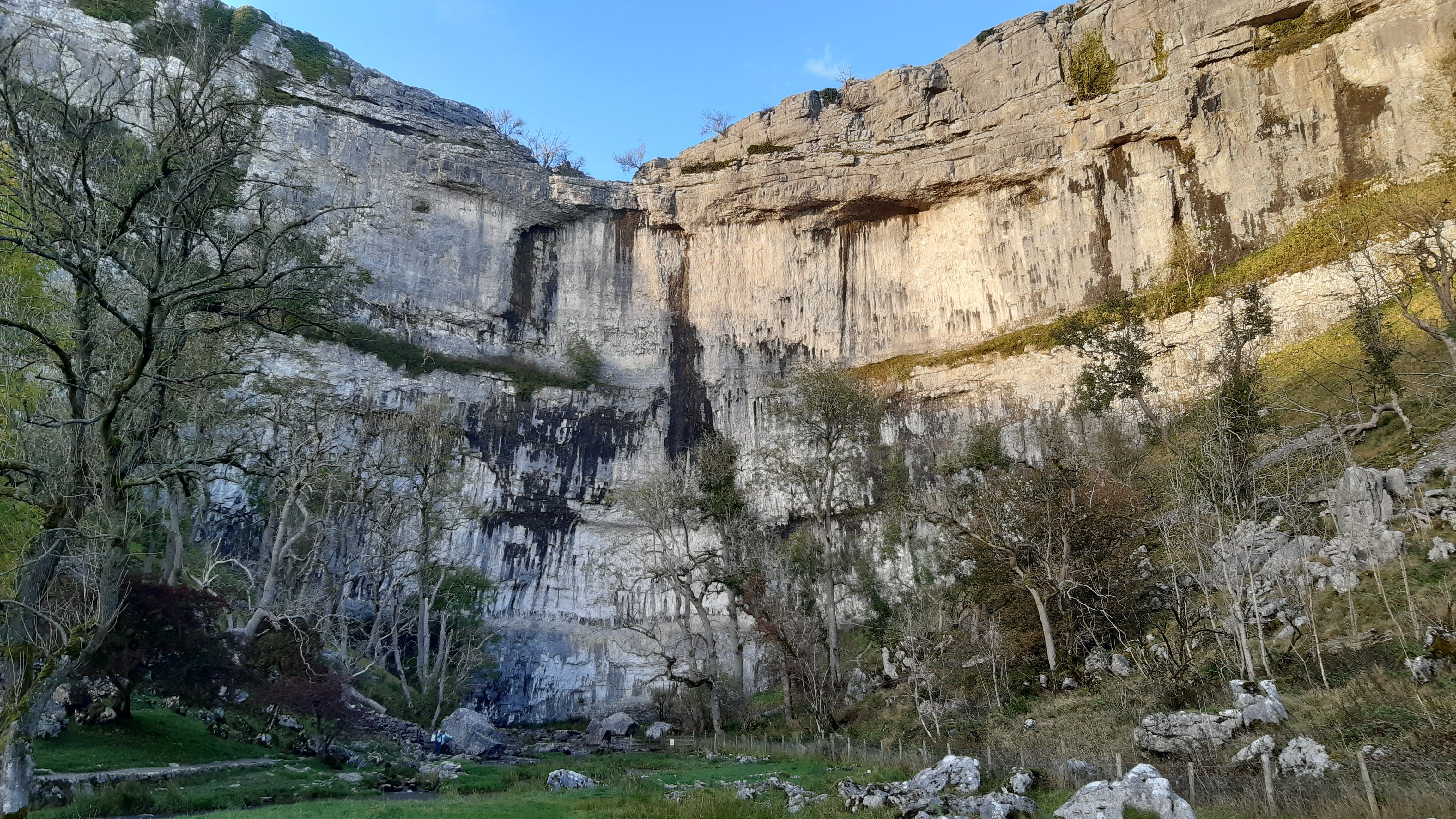
Instead of crimping limestone edges and grasping burly undercuts, Monday morning found me pulling up in a farmer’s field, ready to learn about trees. I’ll be totally honest, I didn’t know a huge amount about trees before I started this. I could identify a few, sure, and I know that being around a lot of them gives me a sense of peace and serenity that little else can beat. Turns out you do need to know a fair bit more about trees than “they make you feel good” though to climb them safely, and the first day was mostly theory and practicing knots. Knots, I can do. Sitting still and listening – much harder. Lucky for me the instructor was very engaging and clearly passionate about the subject, and I found myself soaking it all in easily.1 That evening, I couldn’t resist the lure of the limestone and walked up to the cove. As anticipated, the cove was breath-taking. Three tiers of white and grey limestone, an amphitheatre curving around the beck that burbled from directly beneath. But even from one day, all I could see were the dead and dying ash trees dotted across the fields.
The following day, and with an audience of endlessly curious cows, we started on the practical side. Tossing throwing lines up into branches, setting up anchors and working our way up the trunk and into the canopy. I fell in love with it immediately, though it was not without its frustrations. Throwing my ropes up to the next branch proved to be a real sticking point for the first day or so – my shoulders might be conditioned from rock, but my aim was absolute garbage until I found the knack of it. But the triumph of sticking the throw, the feeling of hauling straight up the ropes, walking up the trunk and tossing a leg up above my head to hook the next branch and slide onto it, each movement was a joy. The only time nerves hit were the first couple of branch walks I did – edging away from the security of the main trunk, not balancing on top of, but pressing out from, smaller and smaller limbs. Habit wanted me to balance on my toes, not press the middle of my stiff boots into the branch, which made for slow and cautious progress. By the second day though, even this felt comfortable. I wanted to get further and further out, lose myself in the thickening leaves, confident in the systems that held me.
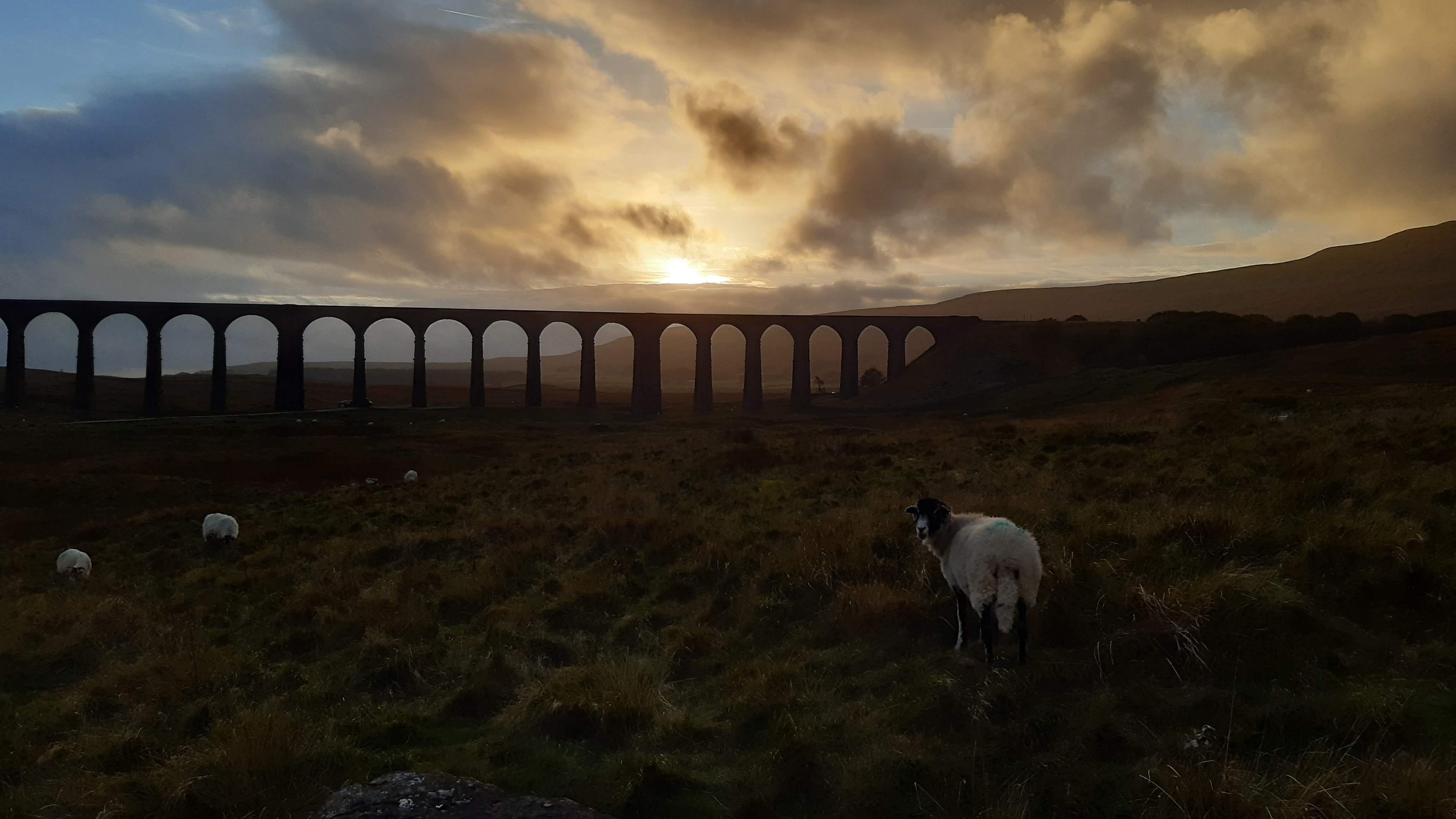
Keen not to spend every night sat on my own in the YHA, that Tuesday evening I headed up to Ribblehead viaduct. I arrived at the same time as golden hour, just as the sun sank toward the bank of clouds on the horizon, giving each one a luminous halo. I walked along the colossal arches of the viaduct and up the hill to the railway track, where I perched on a fence post, feeling as though I was in a place out of time. The moors rolled off into the distance like waves, an ocean of endless boggy grass and heather broken only by the occasional sheep – floating among the grass like shipwreck survivors. The landscape looked perfectly unchanged since the building of the viaduct – stone farmhouses still clustered in the distance, and though the evening Settle – Carlisle train was hurtling down the track, if I closed my eyes, it felt as though the centuries would just melt away. The chug of the diesel engine morphed easily into the whistle of steam, the crunch of a car on gravel off to my left somewhere became the clop of iron-shod hooves and the clatter of cart wheels. Eventually, my heights were sufficiently wuthered and I headed back to my car and the 21st century.2
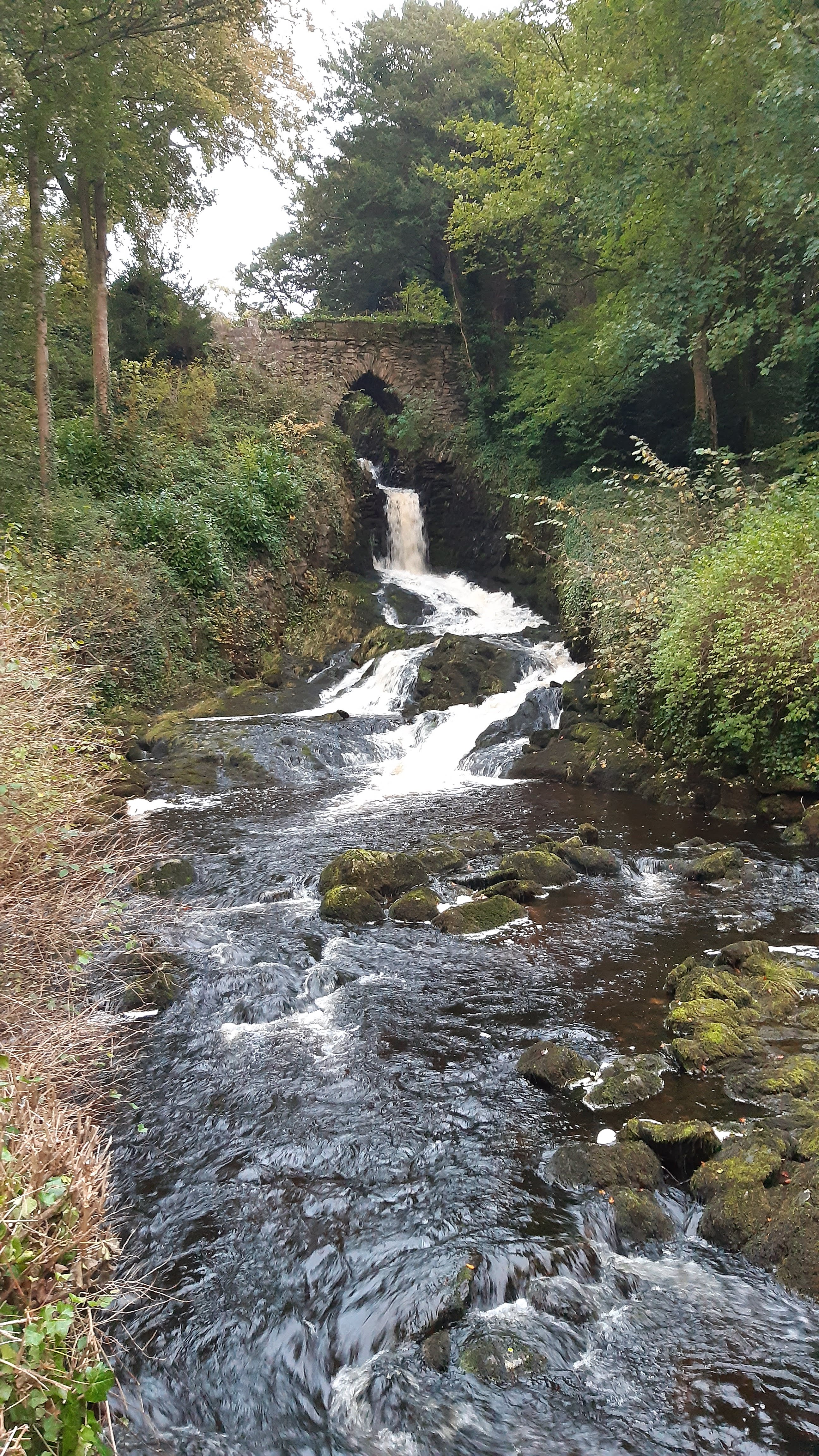
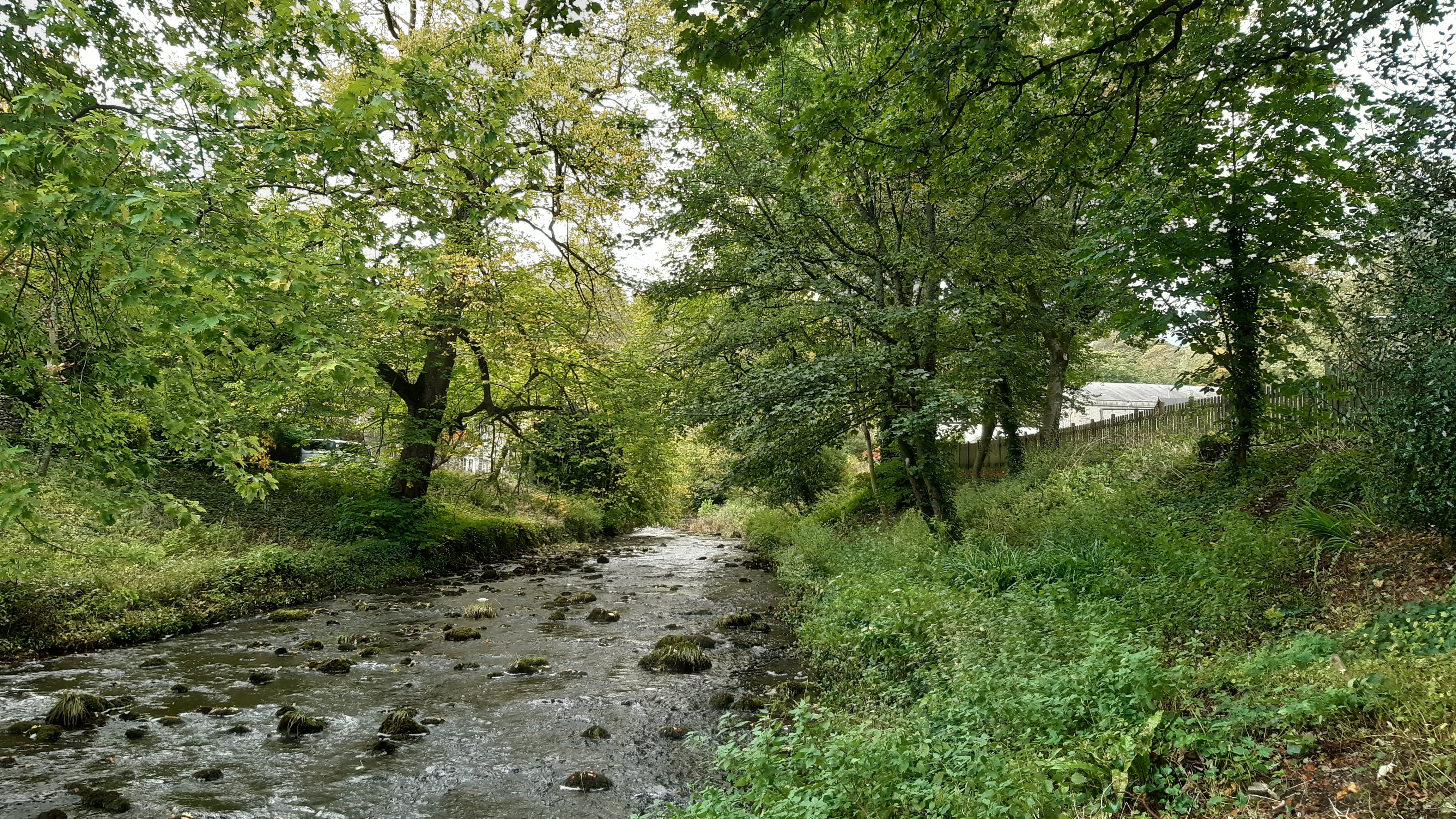
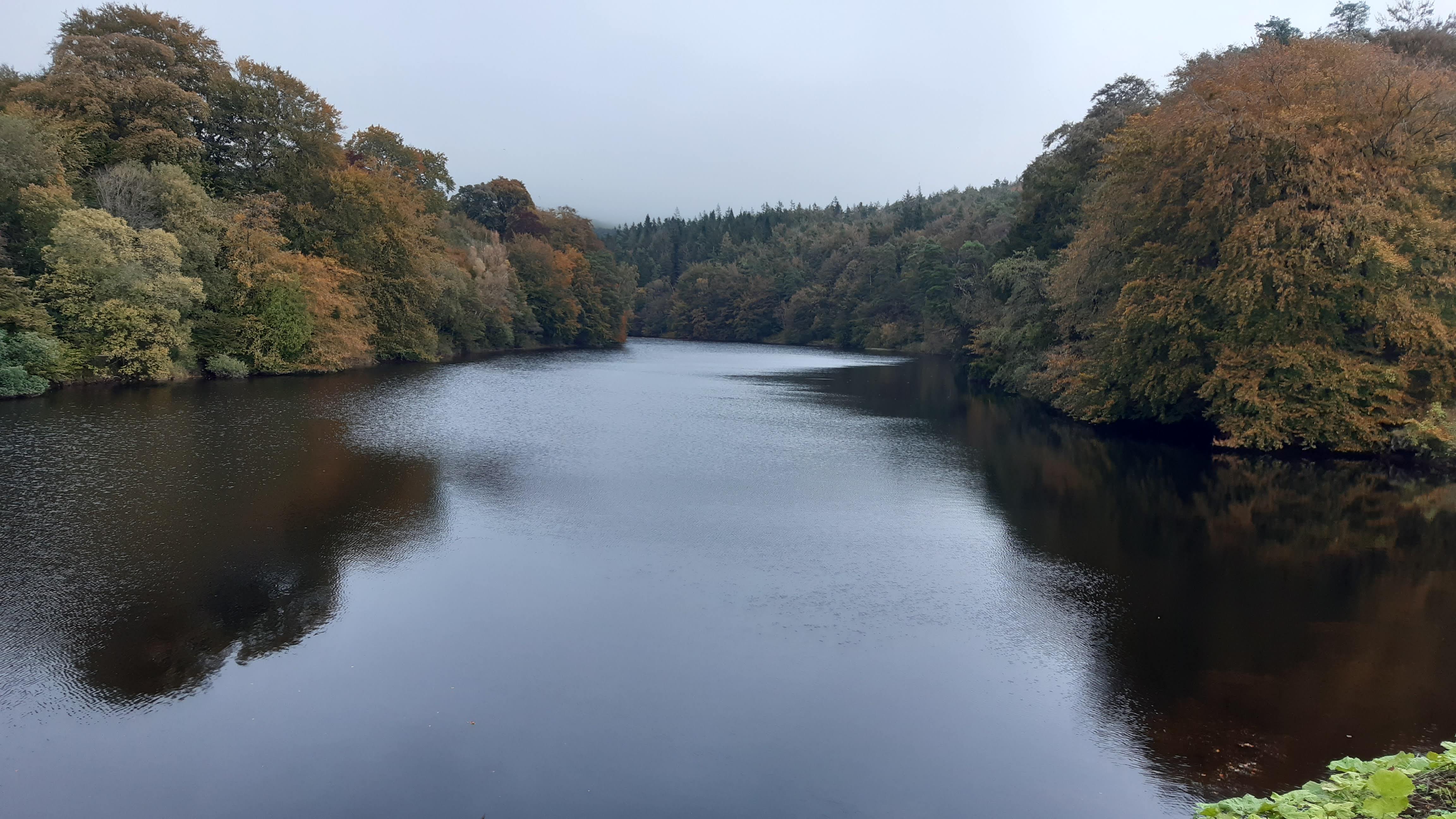
My next evening jaunt was to Clapham – not the district in London, the village in Yorkshire. A picturesque, shallow stream hustled between tree-lined banks and under an arched stone bridge. Following the water upstream I found a waterfall – lovely, if manmade, as part of the Ingleborough Estate. The Ingleborough nature trail wound further upstream from the falls and along the edge of a lake. At the tipping point of autumn, the woods hemming the lake were splotched with orange and yellow and an unreachable limestone crag peeked enticingly out between the leaves on the far side of the water. I wandered up through the The grounds of Ingleborough Hall were sculpted to the vision of Reginald Farrer, who, thanks to his botany fuelled travels was known, apparently, as the “Patron Saint of Alpine Gardening”. Given the havoc that rhododendron – one of his introductions to the estate – is wreaking on native plant life , I’m not sure I’d shout about that one, but sure.
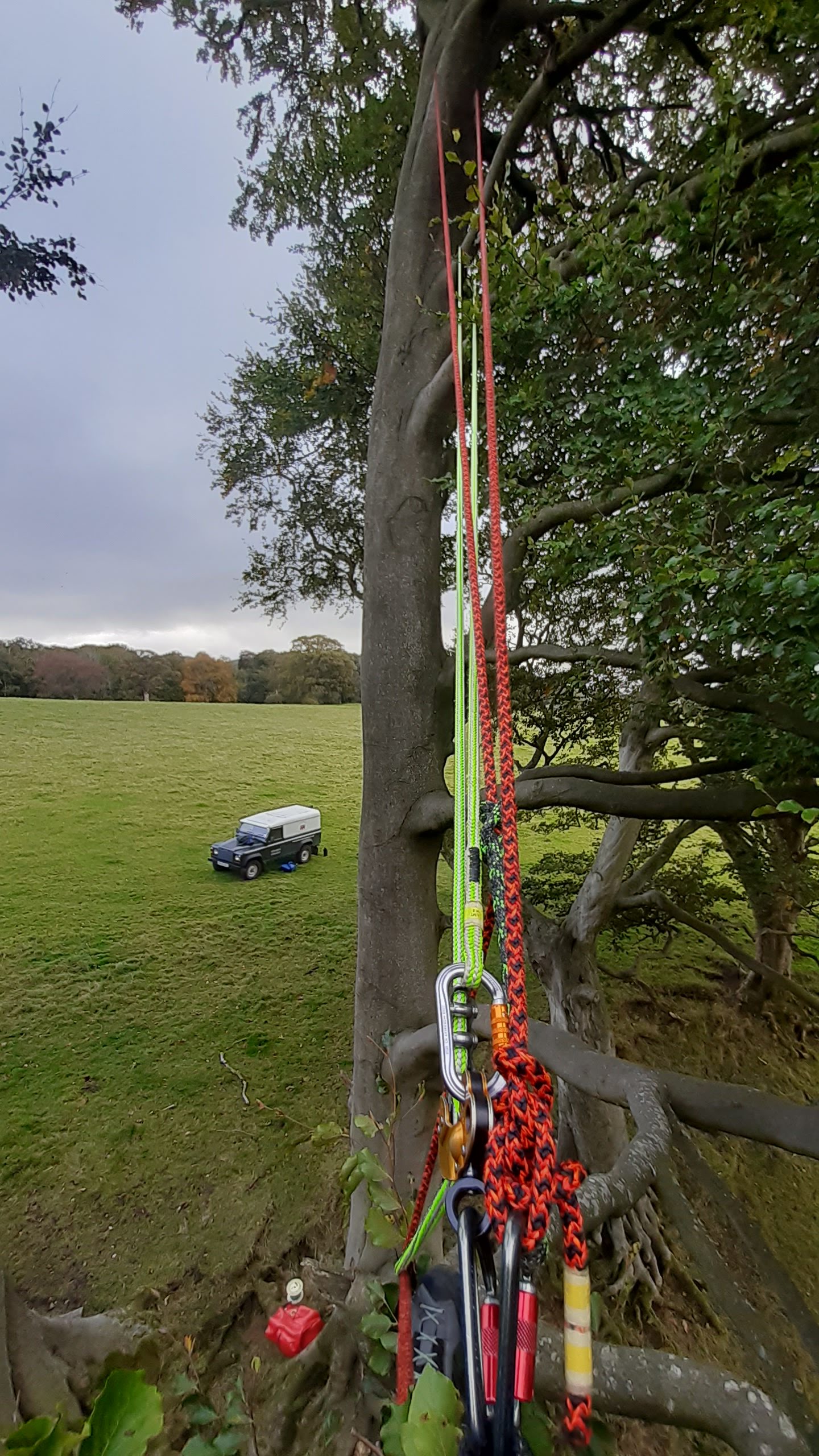
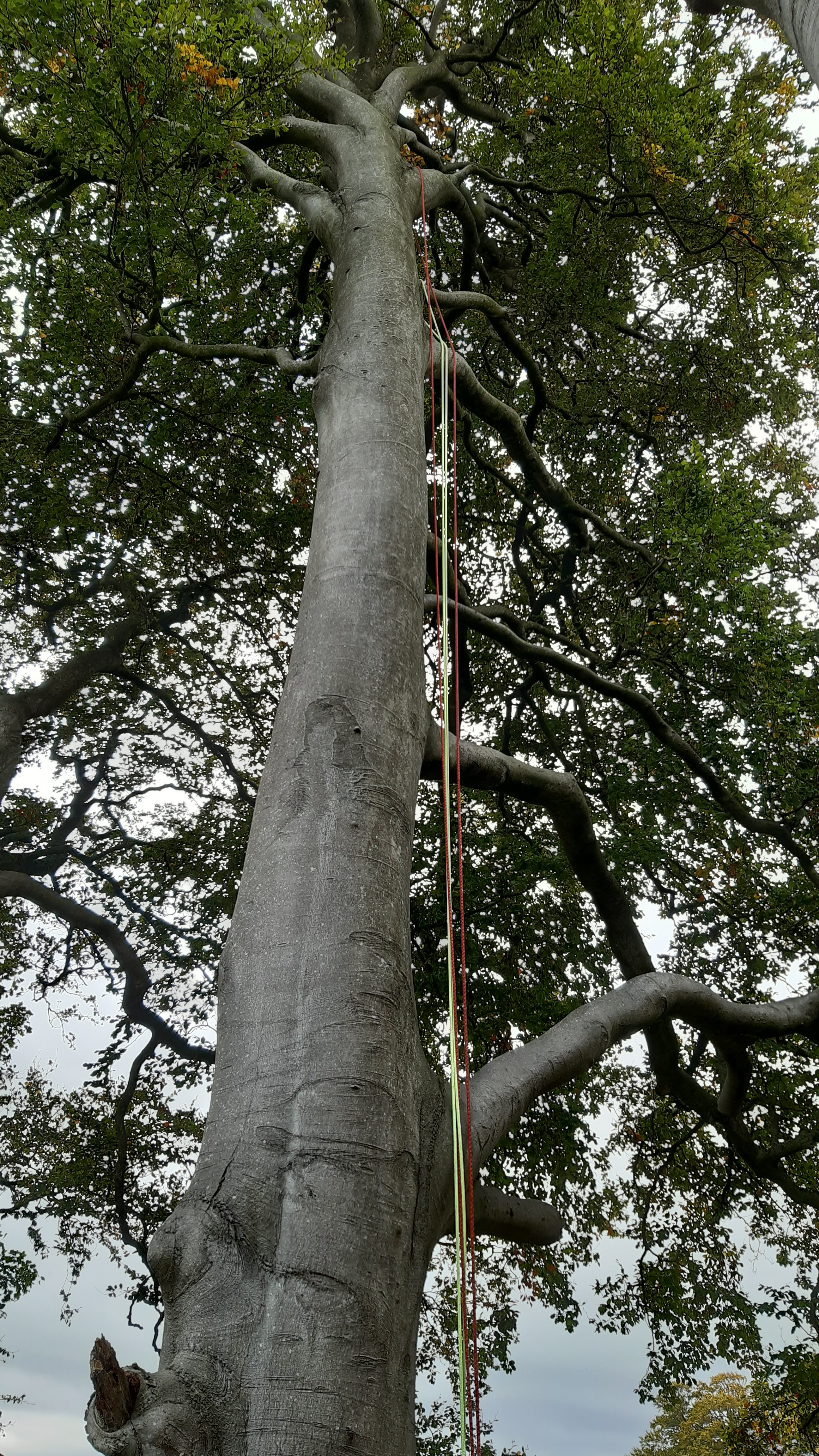
The rest of the week saw me spending as much time as possible in the trees. As one of the training days drew to a close, we were given the option of what we wanted to practise – where one of the other students on the course opted to get a head start on the rush hour traffic, and the other worked on throwing his lines over branches, I couldn’t get into a tree fast enough. I had not anticipated what an itch tree climbing would scratch for me. All the exposure of rock, the ability to look down and see nothing beneath my feet but air, but without the stress, the fear of being metres above a single sketchy cam while forearms drain of energy. Instead, two independent rope systems looped around two fat branches and no more than 50cm of slack, a cradle in comparison. Not to be blasé, I know full well that trees can be unpredictable, that there’s a myriad of things you need to look out for, and you’re supposed to use two separate ropes for good reason. But I have always found that the higher you get off the ground, the easier it is to breathe. To open yourself up to the world around you and take it in. The higher up you are, the smaller the petty stresses of life can seem.3 When I am up, my brain, usually running at 100 miles an hour, falls quiet. My world simultaneously narrows to a single point of focus – the climb – and opens up to the endless expanse of the sky, where nothing is really that important. One of the instructors said that the best feeling of all was making it all the way to the top of the canopy and poking your head out the top, seeing everything laid out around you, you above it all. I didn’t manage to get to that point in any of my trees, but I literally cannot stop thinking about that situation, cannot stop looking at the trees around me, wondering what it would be like to be perched up there. How close to absolute freedom it would feel, nothing between you and the birds but a pair of wings.
On the morning of my assessment I drove over the moors to that field outside of Settle, simultaneously nervous and exhilarated. Mid way down one of the narrow roads, an enormous hare bounded across in front of me, darting out from a dry stone wall and into a hedge on the other side. I chose to take it as a positive omen, a harbinger of good fortune, a passed assessment. It was right. I sailed through, even nailing the parts I had been most nervous about: the pole climb with spikes attached to my boots. I celebrated my pass the only way I know how – by going to check out the conditions at Malham cove again, in the hope of coaxing someone up from North Wales for a climb the following day. While up on the catwalk I started chatting to a couple of climbers, quizzing them about the seepage, their route recommendations. Just packing up, they invited me to go to the pub with them. This is one of my favourite parts of climbing; how friendships can be struck up so quickly, how community can be extended at the slightest provocation to include a stranger, based on just having climbed – or even wanting to climb – the same piece of rock. I left the pub that evening jazzed to have two new contacts in the local area, and able to use their confidence that the conditions would be good the next day to convince Chris and another friend to head up the following day. The weather came through for me, and despite a foggy morning we had a gorgeously warm day on the catwalk, an oasis of sun while the rest of the valley languished in mist.
Throughout my life, I have had several moments that have shaped the way I have seen the world and myself. The week I did a med school taster and realised I absolutely did not want to become a doctor. The first time I wrote something that people enjoyed reading. The first trad route I did where I argued for the lead, that I wasn’t just there as a passenger. This week, I think was one of those times. Thanks to COVID lockdowns and then a remote job, I have spent the last 5 years stuck in my back bedroom, isolated and indoors. That is not me. I am to be trapped behind a laptop, alone for hours on end. I am heights, I am adventure, I am new experiences and pushing my own limits, and this week was a perfect encapsulation of that. I still don’t really know what it is I want to do with my life, but maybe, just maybe, it’s in the trees.
No AI tools have ever or will ever be used to write or help write this blog.
Thanks for reading! If you enjoyed this, please consider supporting my work by subscribing:
Or supporting my climbing (trees or otherwise!) by contributing to my:
- Even the bit about risk assessments, everyone’s favourite. ↩︎
- This little trip has made me really want to reread Wuthering Heights, which says a lot about the effect the landscape had on me, considering how much I hated the book the first time around. Let me in at your window Heathcliffe. ↩︎
- Most of the time – with caveats ↩︎
 Kate Harrison Writes
Leave a comment