
In theory, we have been living in our van since October. In practice, other than a month in Chulilla, Spain, in November (which I still have yet to write about but FULLY INTEND TO), we have been bouncing between the van, our house and my parents’ house, all winter. Because, and I’m not sure if anyone has noticed this, winters in the UK suck. Living inside a big metal box loses its appeal drastically when it’s single figures outside, it hasn’t stopped raining since 2026 started, and nature has forgotten that colours other than grey exist. It’s okay though, we always anticipated this. We deliberately split this block of EU allowance between that month in Spain and spring, because let’s face it, December and January have the potential to be wet and miserable almost everywhere in Europe.
As a result, we’ve only just headed off in the van again. On the 23rd of February, we alighted the ferry in Dunkirk and began the long drive down in to Spain. Determined not to get stung by the sneaky French tolls (again!) we took our sweet time, stopping off in the Pyrenees for some stunning mountains and a quick hike before arriving at our first destination: Albarracín.

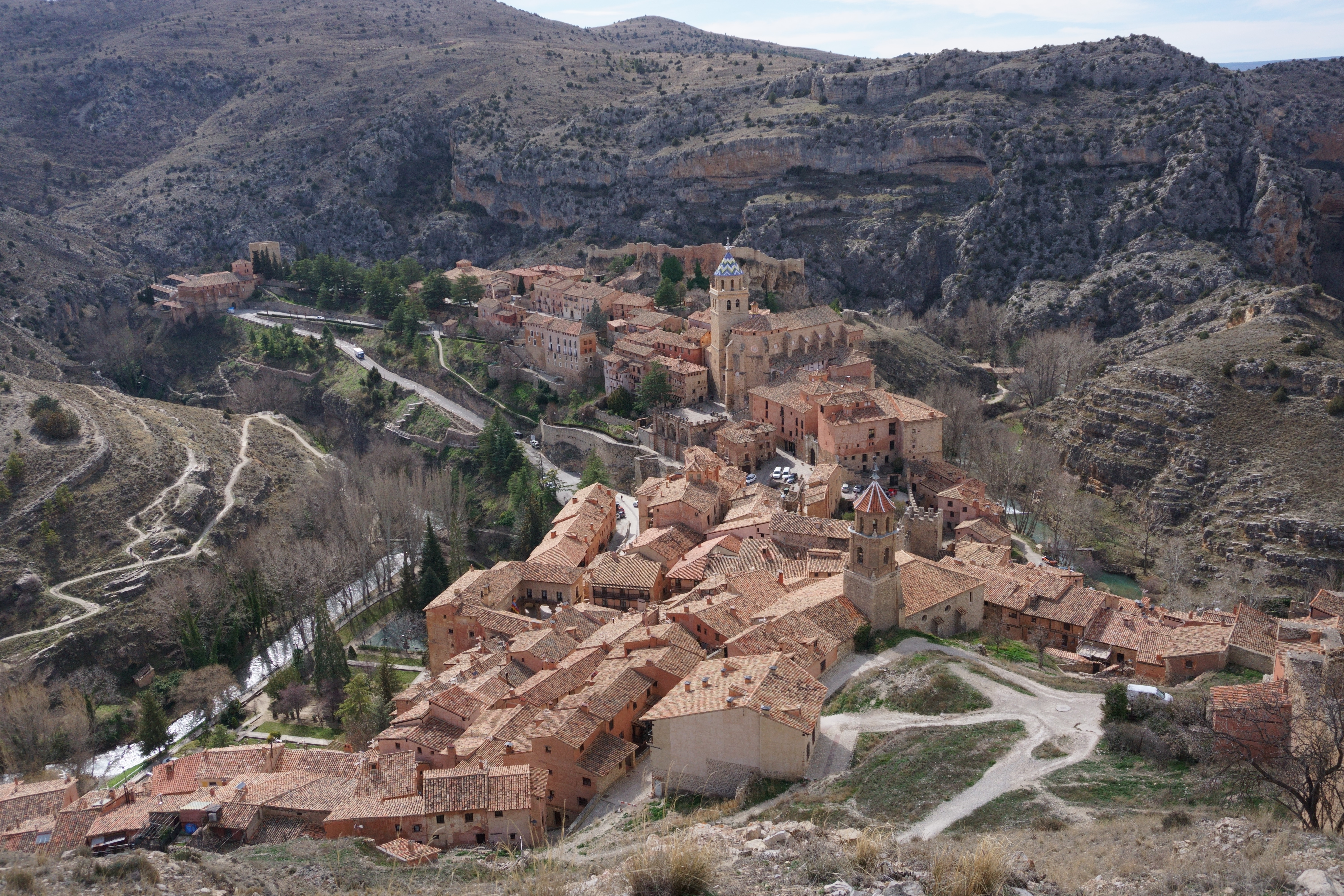
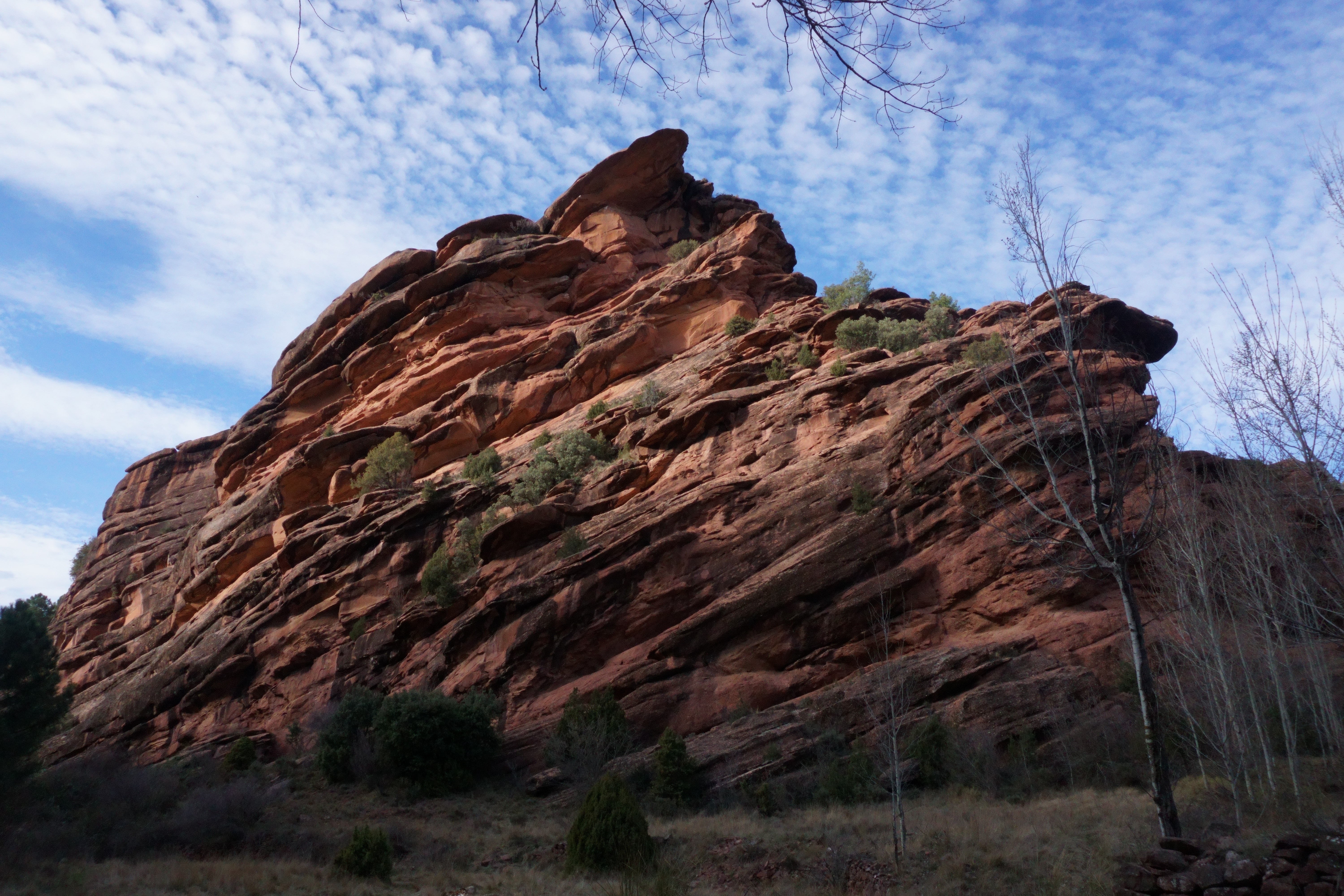
In the mountains of Aragon, the medieval town of Albarracín clings to the limestone hills above the Rió Guadalaviar. Already at a high enough altitude to put most UK mountains to shame, the cluster of terracotta roofs and tight, twisting alleyways lead you deeper into the past with every step. The town though, as beautiful as it is, wasn’t why we were here. A few minutes’ drive from the town the road leaves open farmland and enters the “Pinares del Rodeno”, a world of steep sided gorges and dark pine forests; where yellow limestone gives way to rich red sandstone and hundreds of rounded, roofed boulders – one of the best bouldering destinations in Europe, if not the world. The rock here forms in wonderous ways. On some blocks, roofs hover so far out from a foundation that they almost defy gravity. On others, clusters of pock marks form deep pockets with positive edges, while others still demand you cling to sharp crimps and balance your way up vertical faces. Almost all of them require a good old mantled top-out, with various degrees of dropability.
We arrived fairly late in the afternoon, and so picked the “Parking” sector as our first hit in order to cram a few problems in before dusk. True to its name, the first of the blocks were indeed in full sight of the car park, and I revelled in the short, flat walk-in. We didn’t try anything particularly hard that first afternoon, just got ourselves moving on some low-grade problems, romping up some 3s and a few low 6s, reawakening our muscles after several days of driving. Ever the scaredy-cat when it comes to top-outs, I had no qualms using a tree for a bit of extra leverage – it was touching the rock, therefore it was in. As night fell, we rolled a little way back down the hill to the van spot, just one more white panel van in amongst of sea of others – a good forecast had attracted a lot of other rock-botherers and we were all here to ruin our skin and try hard.
The next morning was a slow start. Bouldering tends to be an intense, short day, and so there was little sign of life around the van spot before 10am. Most trad climbers are already two pitches up by then. Alpine climbers have probably already summited. Fine by us, after so many days of moving it was nice to simply, sit still. The sky was a cloudless, vivid blue and I finally remembered what it felt like to not be cold. We headed over to the Cabrerizo sector, for a look at a classic f7A, Techo Don Pepo. Cabrerizo translates to “goatherd”, and it was clear where the name originated as we passed through an archway of enormous leaning boulders and on to a plateau of rock at the gorge edge. Drystone walls of livestock pens, remnants of shepherding from decades, even centuries past, were built up against the boulders, as if supporting old friends. I perched up on the top of the wall, watching as the group already there tried the problems.
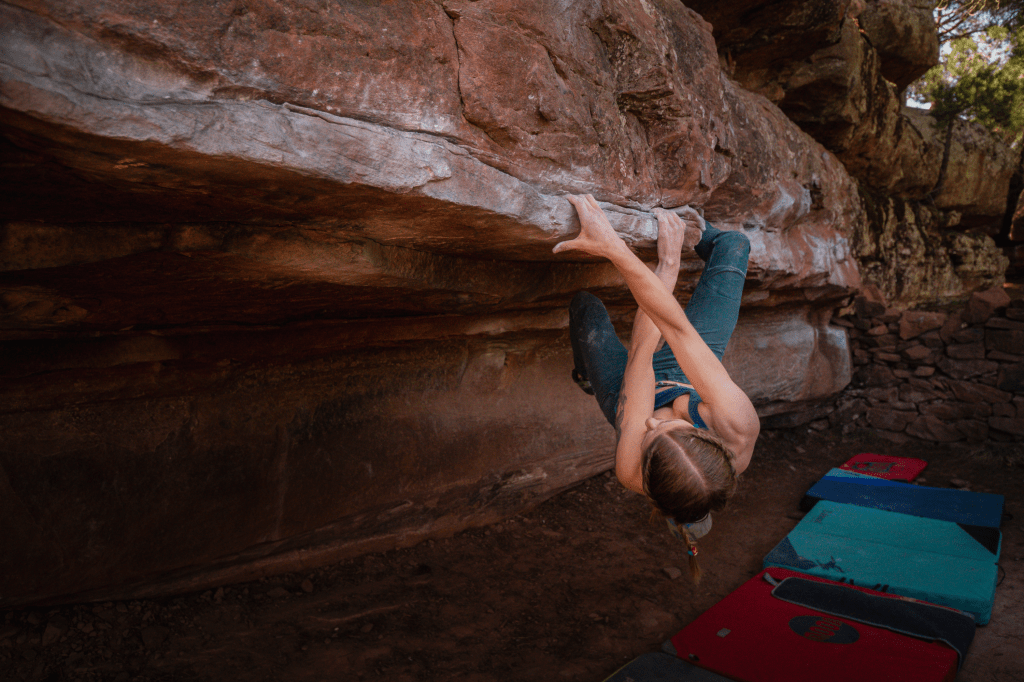
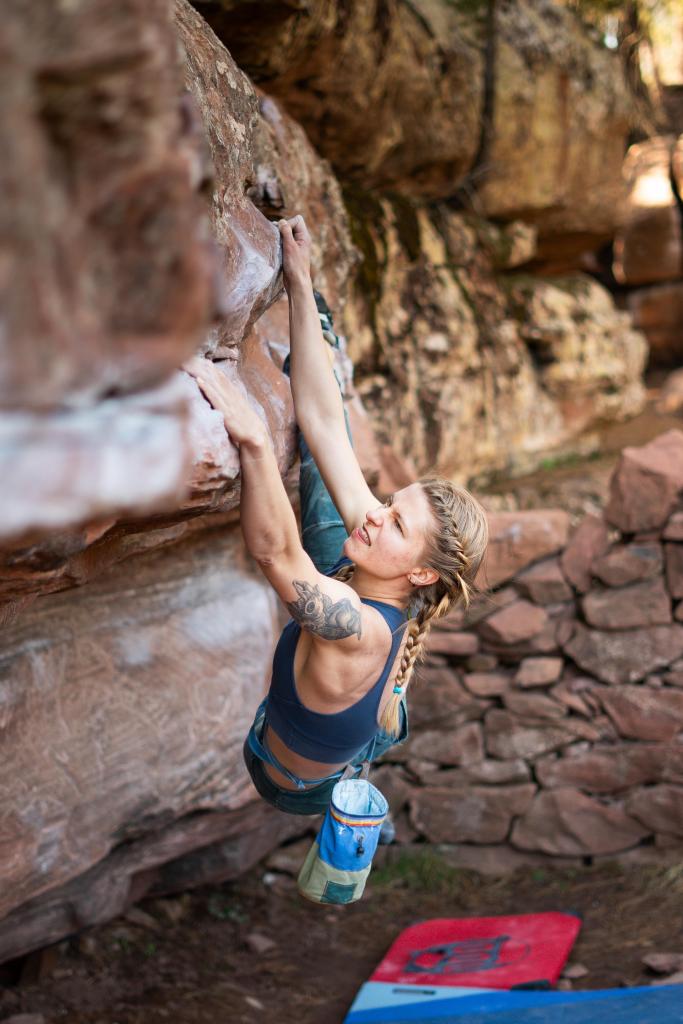
Trying really, really hard on Traversía Don Pepo. Photos: Chris Roberts (right), Juan David Cano (left)
The fully horizontal roof of Techo Don Pepo had Chris highly excited, but I was more enticed by the problem traversing the lip of the rood – Traversía Don Pepo – at the same grade. After the initial couple of moves, my feet could no longer reach the back wall, and I had to transition to heel and toe hooks. My body hung fully from the holds, feet level with my hands, back parallel to the floor below. I edged along, hooking my toes on my back foot to allow the leading heel to move forward. At one point, I had to swing one foot all the way around to the other side of my hands, hanging upside down like an acrobatic child off playground monkey bars. The traverse ended all too soon (though probably not soon enough for the endurance of most boulderers) in a tricky crux and a mantle that required swinging a toe up level with my hips to pistol squat off it while scrabbling desperately round for the all-important crimp to finish. I didn’t manage to link the traverse with the crux finish in the end. My power for bouldering has such a short expiration date you can find it in with the yellow stickers in the supermarket, but I was pleased with the progress, especially considering my general bouldering level (pretty poor), and the niggling injury in my left forearm.
Eventually the sun shifted behind the great boulder and I ran out of warm spots to bask in between attempts. While the direct sun was baking hot, it was still February above 1000m, and the shade was crisp and chilly. The following days alternated between trying very very hard and doing our best to do as little as possible.
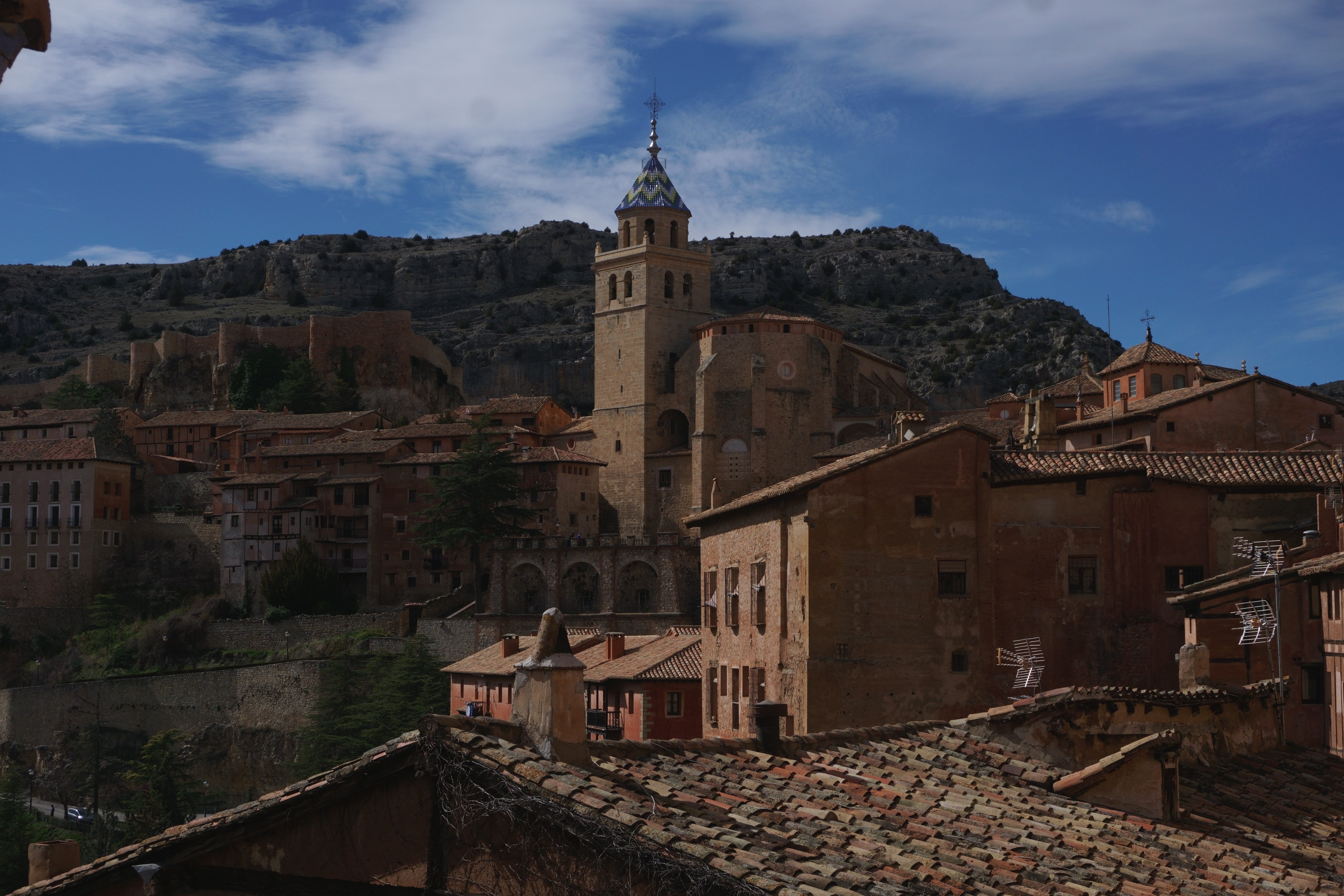
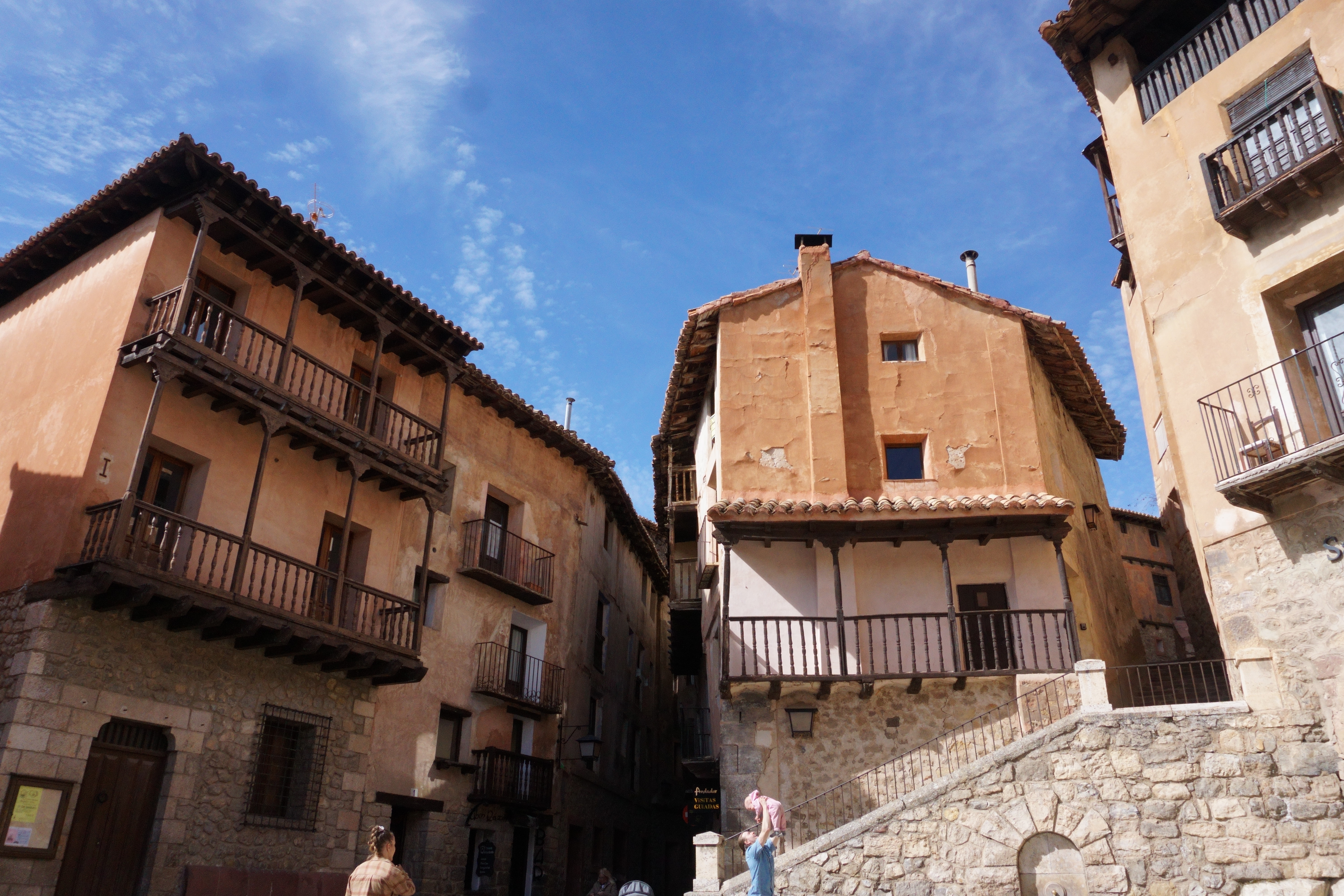
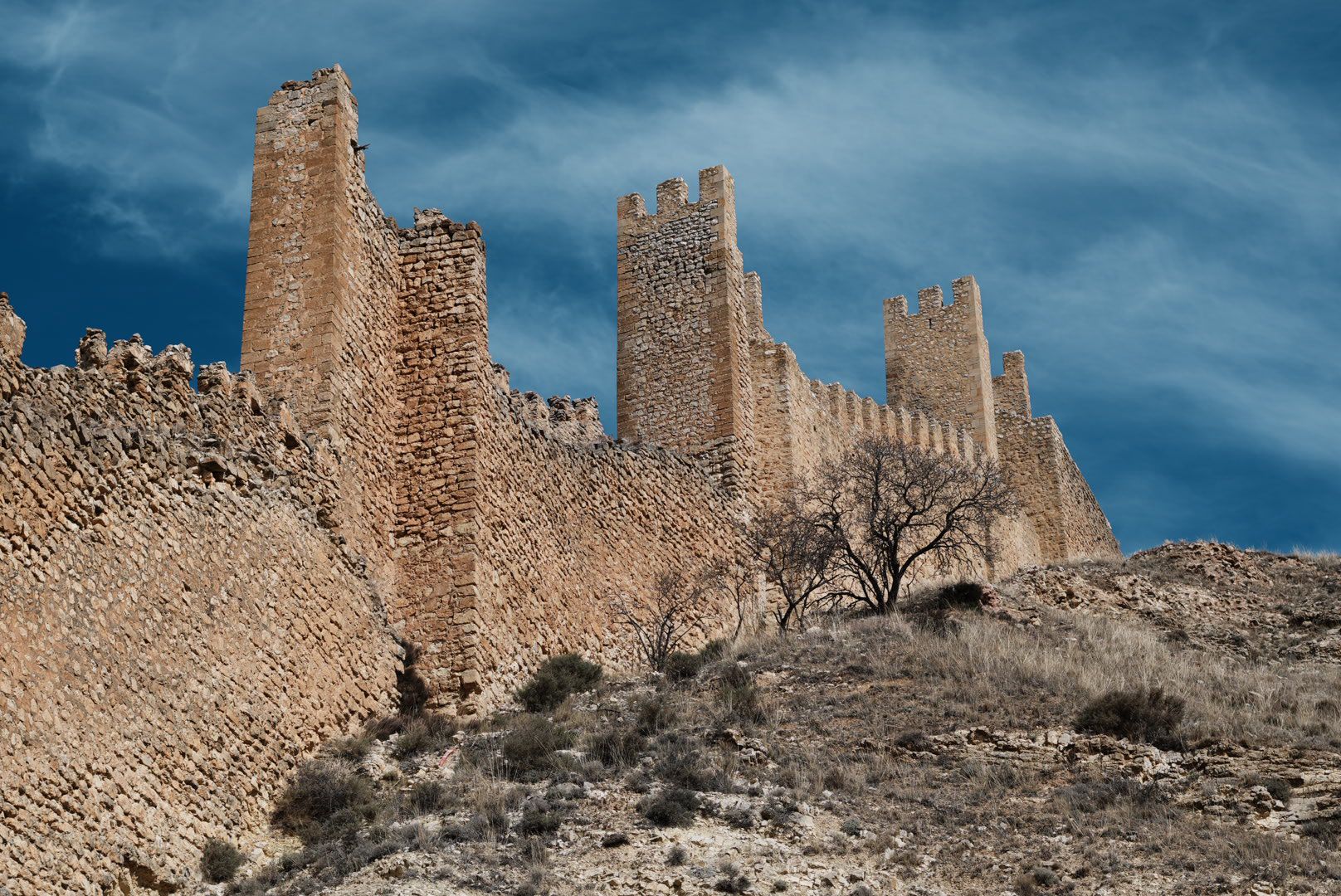
One rest day we spent wandering around the town of Albarracín itself. The oldest documented reference to Albarracín dates back to the 14th century, and it’s not difficult to believe that some of the original houses still remain. Down the narrow streets of the old town, the upper levels of the houses overhung so far that opposite neighbours might be able to reach out and shake hands. The red sandstone of the area was evident everywhere, in the rusty, coppery shades of the mortar and render. We lost ourselves in the dim, shaded alleyways until vague wanderings uphill popped us back out into the sunlight underneath the remains of the castle. The view from the ruined walls was beautiful – the blue and white zig-zags of the cathedral spire stood out amongst cascading terracotta roofs, both haphazard and completely cohesive. We had coffee in the tiny Cafetería Aben Razin on the Plaza Mayor, that all low ceilings, thick stone walls and dark wooden beams easily hundreds of years old, and lunch in Entre Tapas, with probably the best black pudding and pigs cheeks I’ve ever tasted.
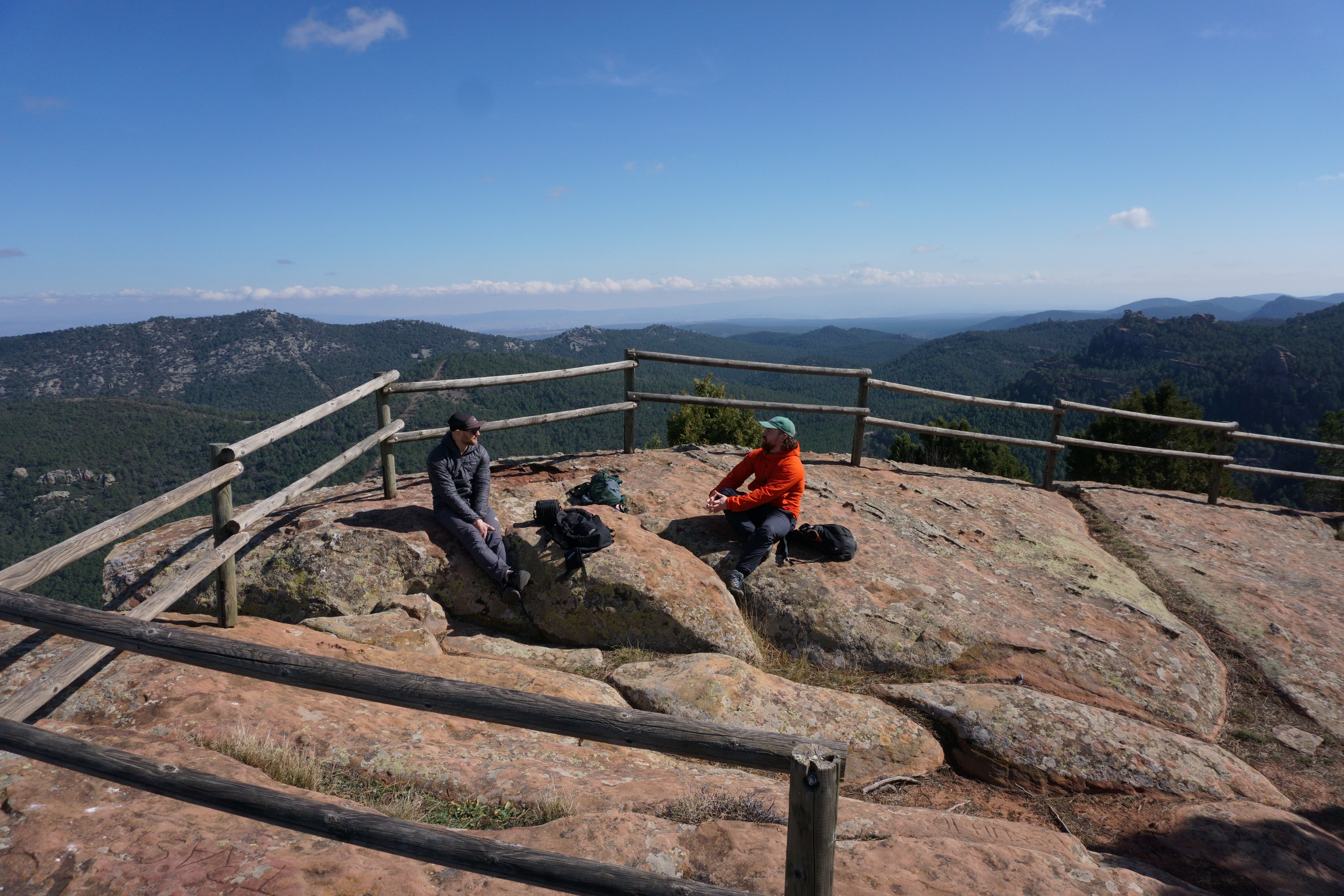
Another rest day we took a recommendation for the best view around and hiked up to Mirador del Puerto. We walked along gravel tracks that edged along sweeping, curiously shaped fields and through another boulder-strewn pine forest to emerge on a bluff overlooking rolling peaks that faded in to the distance in increasingly pale layers, and carefully balanced sandstone pillars erupting from dense woods.

Of the other bouldering areas, we spent a day in Arrastradero (which vaguely translates to “dragging place” – there are a lot of low roofs), where a short, wonderfully easy walk-in brought us to countless boulders scattered through the woods. While Chris threw himself at the very steep board-like Rammstein (f7B), I found thin a couple of thin, crimpy, vert problems that were far more my style and happily managed to send my first f7A+ boulder, La Güina – probably because it required a heinous sit start for flexible hips and pulling on extremely sharp razor crimps – my favourite. Two days were dedicated to the Techos (“Roofs”, aptly named”), sector for the classic A Ciegas (f7A+), a 50-degree overhang full of techy heel hooks and marginal crimps that defeated everyone, including Chris.

With the first full week of our trip drawing to a close, and the arrival of wet weather warnings for much of Eastern Spain we decided to move further south, and trade pads for ropes for now. Though I only managed to send one hard problem, and left several open accounts behind, I’m pleased with the progress I made – it’s not that long ago I wouldn’t even have been able to pull off the ground on a lot of the things I’ve tried this week. Power and strength don’t come naturally to me, but you don’t need endurance for many boulders unfortunately. Is this even the same person that boulders only under duress in the UK? Plus I know I have a whole other week of sandstone (not) sending ahead of me – we have a friend flying out to meet us in Albarracín later in the month, so we will definitely be back. After all, it’s a lot easier to wave goodbye to unfinished business when you know it’s only goodbye for now.
Visiting Albarracín
Albarracín is an absolute sandstone wonderland, and if you’re at all interested in bouldering (or even if you’re not – I would usually always pick ropes over boulders for a trip and I still loved it), I highly recommend it. If you are inspired and thinking about taking a trip, there’s a few very important rules that need to be abided by, if we’re all to continue enjoying the bouldering here.
- Be aware of where you can and cannot climb. The whole area is a protected space, and several seasonal bans have become permanent due to a small number of people not respecting them. The old guidebook contains some areas that are now permanently banned – for more information, check out the latest guidebook, available from the local climbing shop – Sofa Boulder – in town, or signs in the car parks. Climbing is also forbidden within 30m of the road or any of the ancient cave paintings.
- Absolutely do not climb on wet rock. Moisture makes this sandstone weak and brittle. Some classic problems have already been ruined by people breaking off holds by climbing when it’s wet.
- Night climbing/lamping/spotlight climbing is forbidden everywhere in Albarracín.
- For the love of God, poo responsibly. Why is it so difficult for people to dig a quick hole and/or bring a bag? One of the worst things to see when out climbing is toilet paper littered everywhere. Imagine the horror of jumping off the back of the boulder you’ve just topped out on, full of the joys of the send… only to land in a pile of loo roll and maybe worse. Vile.
It’s not all strict rules though. Here’s my advice for making the most out of your Albarracín trip.
- All the carparks around the Pinares del Rodeno and the town are pay and display, and they do check. But! You can get 1-day, 2-day or 7-day tickets for a reasonable price, and one ticket will cover you in all the car parks both in town and in the park.
- If you buy fuel at the Petrol Station and ask very nicely, they will let you fill up your water tank as well.
- The only carpark that allows overnight parking is Aparcamiento y Mirador. There’s usually a pretty good scene here, and good, walkable bouldering in the gorge below.
- One bit of rock looks a lot like another in the shade of the pines, the app 27crags is really useful for finding the exact boulder you’re after.
- If you’re flying in and don’t want the hassle of explaining to airport staff what a boulder mat is, you can hire pads at Sofa Boulder for as little as €8 per day.

No AI tools have ever or will ever be used to write or help write this blog.
Thanks for reading! If you enjoyed this, please consider supporting my work:
 Kate Harrison Writes
Leave a comment