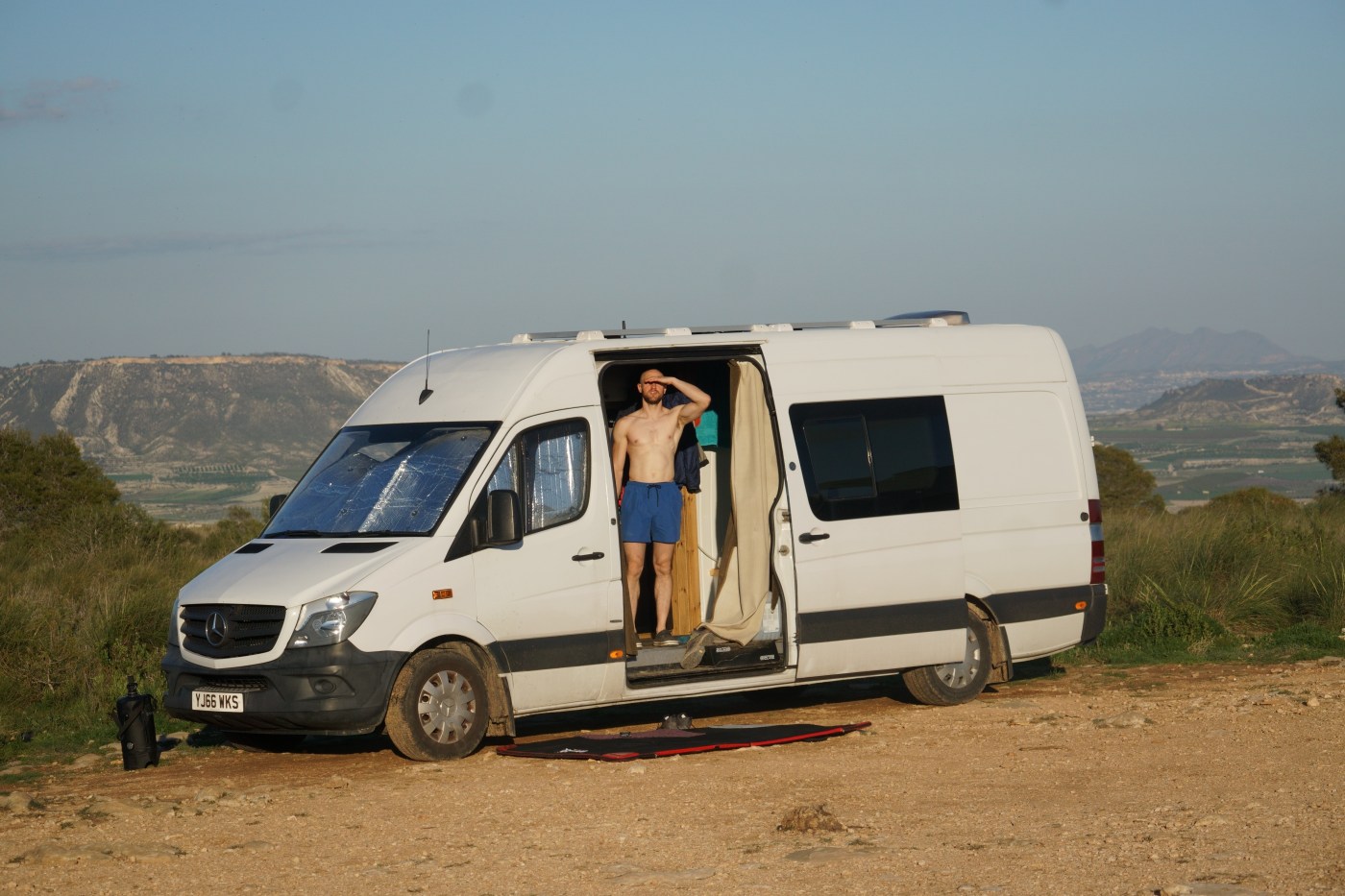
I have to be honest. The phrase “van lifer” makes me cringe a little bit. For me it conjures up images of influencers with perfectly tousled hair cradling cosy mugs on carefully mussed van beds, back doors open to beautiful views. Whenever I see the hashtag on social media I always feel like it’s selling a dream, a dream which can exist, but only amongst the other, more down-to-earth realities of living in a van, the realities that many people don’t realise they’re buying into. The previous owner of our van is a perfect example. We actually bought our van already converted, a lucky find while browsing shells for a self-conversion. The previous owner had put her whole life on the line for the van dream – putting her house on the market, moving herself and three dogs into it. Three weeks of torrential rain and some engine troubles later it was on Facebook marketplace for us to stumble on. When we turned on the little TV that had been installed (now long gone), her YouTube account was still logged in, the algorithm offering wall-to-wall van life influencers, selling the filtered dream. A dream that her reality had unfortunately not lived up to.
We’re no strangers to the van trips. We’ve had a van for several years now, and had done shorter trips – weekends, weeks and fortnights-long – before we committed to the big leagues. We knew both the harsh realities and the potential joys. Still, this last week or so in early March was our first time truly out in the wilds, fully off-grid, on our own, and, well, let’s talk about it.
We left Albarracín at the beginning of March, amid storm warnings and wet forecasts and fled all the way down to Mula, near the south-eastern city of Murcia. We’d had a recommendation for the crags by Mula, specifically one called Sector Ferrari as a south-facing, steep wall that took little drainage and minimal seepage – perfect for the questionable forecast of the next few days. I admit, I had my doubts as we turned off the main road – doubts that our big bus would make it up to the crag at all. Ferrari stands watch high up over the RM-15 motorway, facing out onto a landscape of orderly gridlines of orchards and farmland and wild, scrubby hills. In the distance, pale shadows of mountains loomed. The road up was rutted, rocky, scarcely worthy of the term and my heart was in my mouth as we crawled up the track, worried the whole van might shake itself to pieces – or at the very least the intermittent slow coolant leak we’d been dealing with might shake itself into a very constant outpouring.1
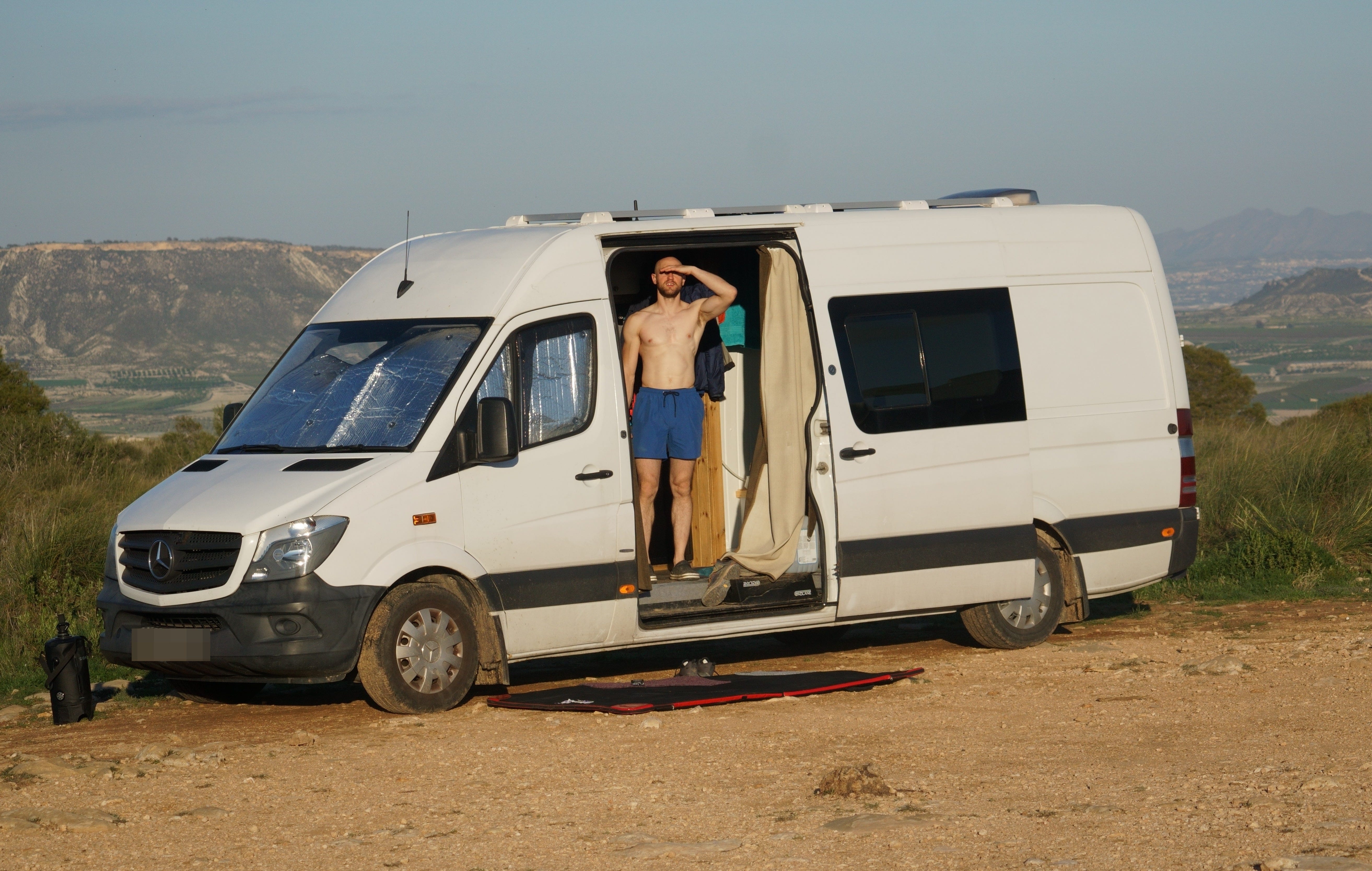
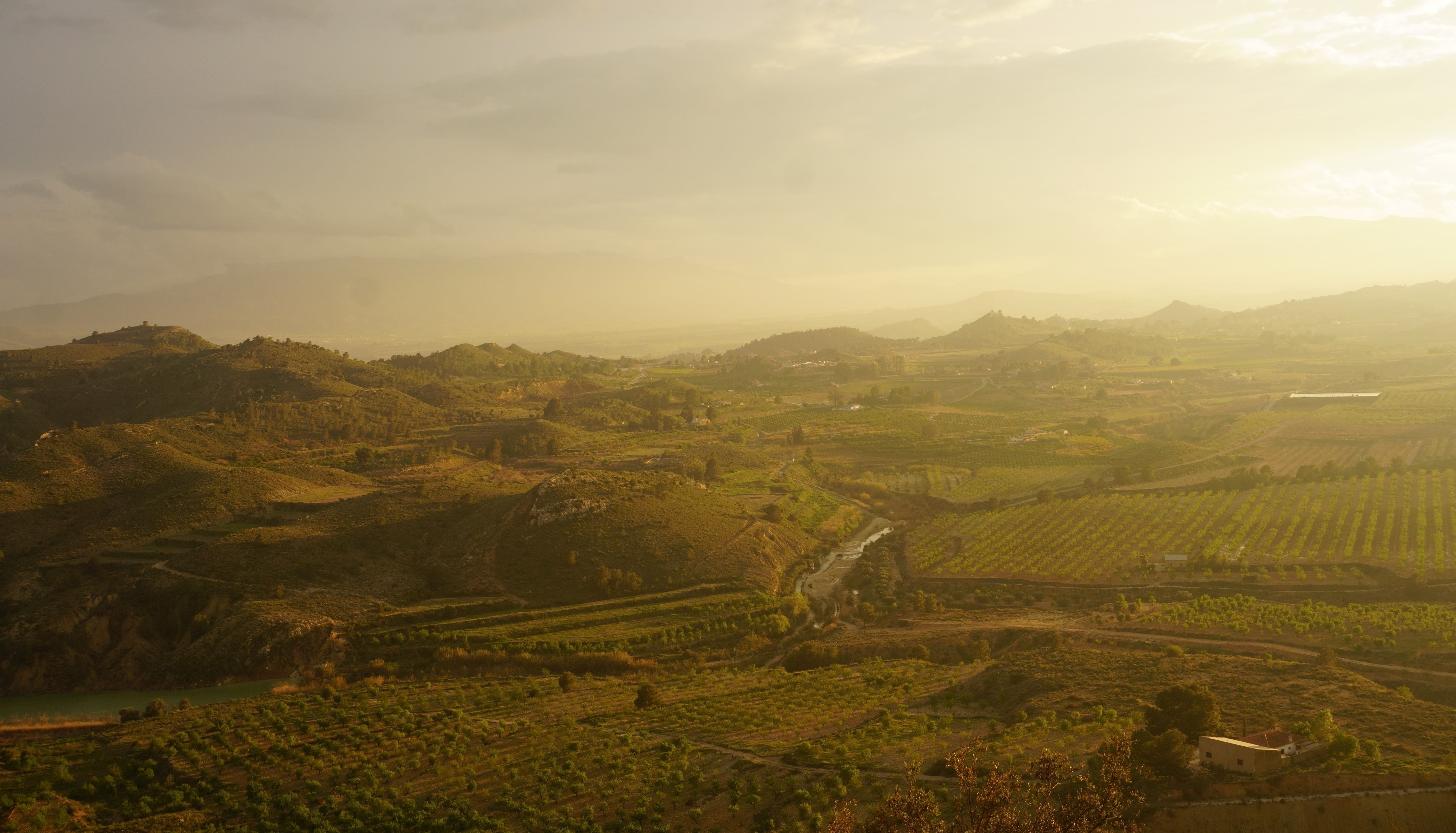
Eventually we made it onto the plateau above the crag, and the patch of cleared dirt by the road that was to be our home for the next week. It was, thankfully, entirely worth it. From the van we had stunning views across scrubland and to mountains that erupted in individual peaks from flat land, all the way to Murcia. And the crag itself has secured its place in my heart as one of my all-time favourites. Just a couple of minutes from the road the path curved off over the edge of the cliff and down through rocky gateposts to the main cave of Ferrari.
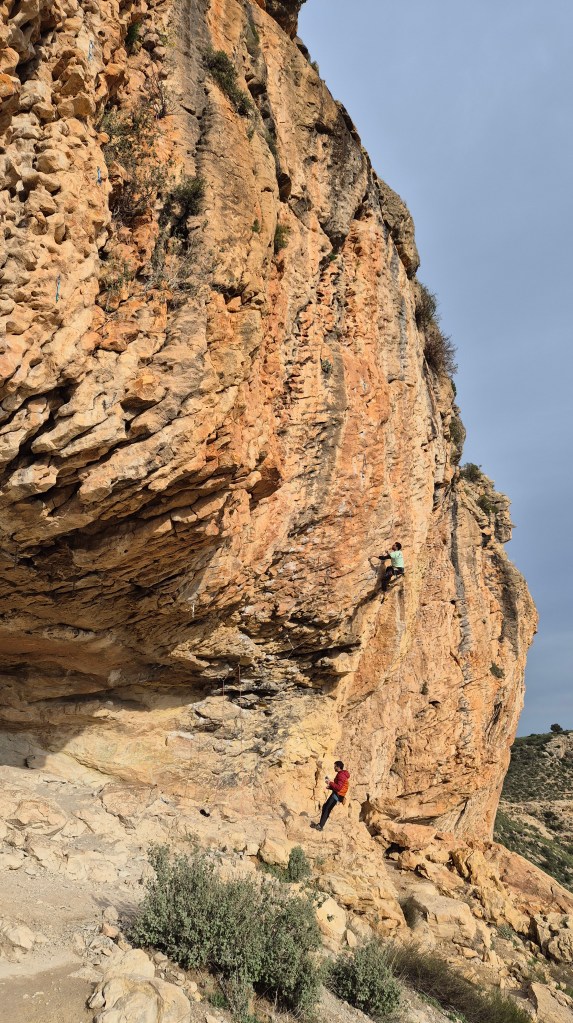
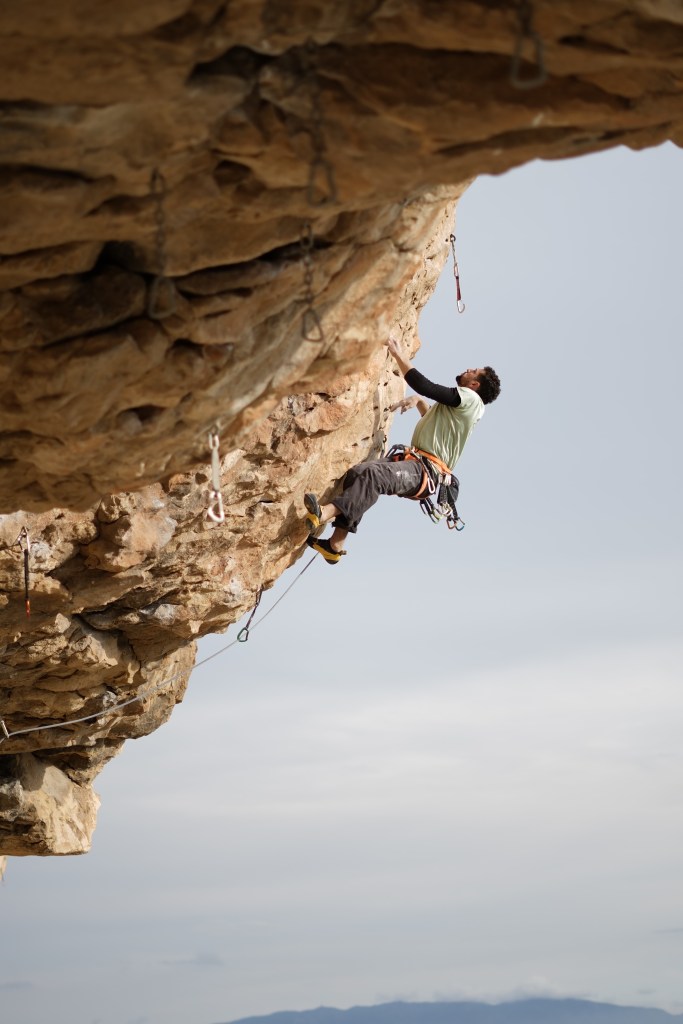
Visiting Mallorcan climber on Libertad
To call it steep would be an understatement – imagine instead a 40-50 degree training board of your choice, but just riddled with jugs. The limestone here is folded and wrinkled like the skin of a giant shar-pei, which has given rise to an abundance of jugs. Buckets. Handles. Sinkers. Whatever you want to call them, they’re everywhere and they’re absolutely fantastic. In the main cave, each of the routes start almost horizontal before curving round cruxy boulder sections and up onto the headwall. The most accessible in this section is the lovely jug fest Hermanas (7b), but the much harder Libertad (7b+) next door is a satisfying fight through kneebars and pockets up on to a technical face climb. There’s even a 7c that traverses all the way across the roof of the cave, an exploration of the fully horizontal. My favourite though, had to be Ramera (7b+) 25 metres of 40o overhang, a pure battle of will and endurance with more buckets than a garden centre.2 If I could point to any climb and say “this has been specifically designed for me”, it would be this one. Climbing it in the full sun I was in my element. And while Chris sweated on the belay, I felt solar-powered as I rode the rising wave of pump all the way up to the final wide, very droppable move, and the chains.
After the chilly, forested shade of Albarracín, the sunny days at Ferrari were a dream. Each evening as the sun began to sink off to the west, the golden hour illumination turned the view of the orchards and hills below us into a painting, a landscape of dreamy pastels and diffuse light like a vision rendered in oils. The vibe of the crag only added to its charms – one or two weekdays we had it to ourselves, but the weekend days were busy (but not rammed) with friendly local climbers happy to share their beautiful rock.
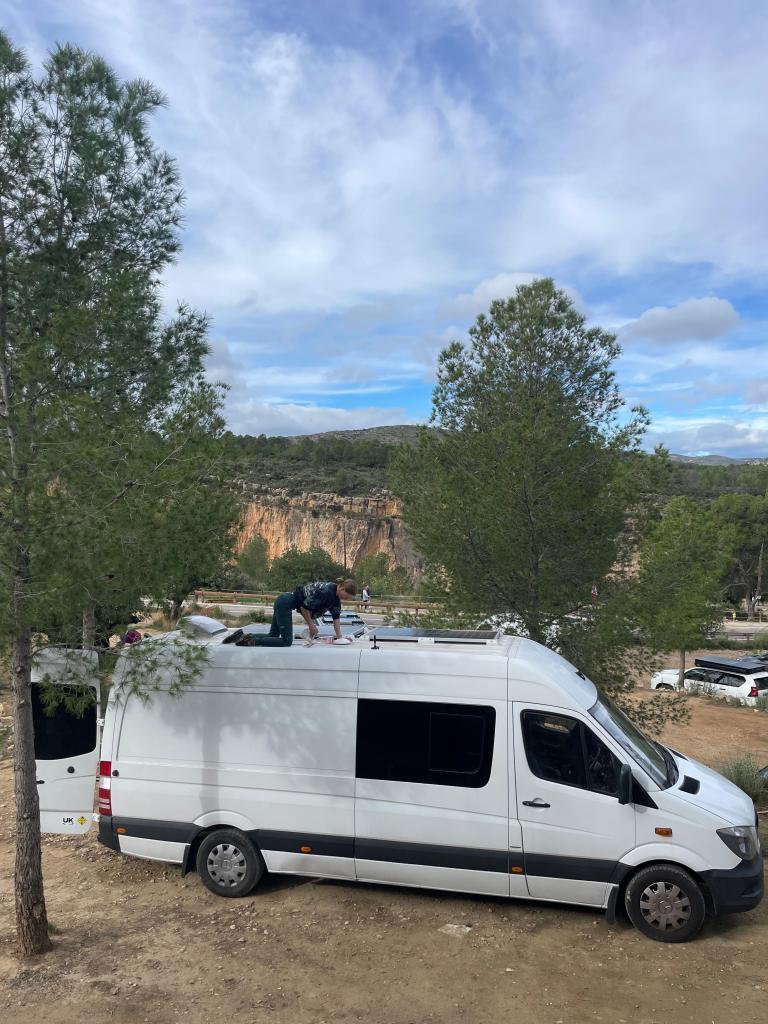
But what of the van? That’s what I lured you into this piece with, after all. We only intended to stay a couple of days at Ferrari, until the weather straightened out, but between the climbs and the vibe we fell in love with Mula and stayed just over a week. In that week, we ventured down the rutted road into the town for supplies just once, spending the rest of the time on the plateau. On the weekend nights bookending our stay we had the company of a couple of other vans, but during the week we had it entirely to ourselves. We hadn’t really experienced this level of isolation before, almost everywhere we’ve visited before now has had lively van scenes, and this really gave me the opportunity to reflect on life in a van.
It’s funny, when you think about it. Our modern, western lives are a riot of complexity, notifications, scheduling, work, stress – lives that ultimately we aren’t designed for. On that plateau, with minimal phone and internet signal, in a van where everything takes longer than it does in a house, my life shrank down to the very basics – sleep, sustenance, waste management and exercise. The focus becomes simply existing. In my house in the UK I effectively had unlimited water. I could turn on a tap full bore, and not have to worry about where it was coming from or how much I was using. I could have hot showers whenever I wanted. I could flush the toilet and my waste would disappear as if it never existed. If I ran out of anything I could pop to the Co-op 30 seconds down the road and replenish as needed. Basic existence is a footnote in a busy life. In a van, you become intimately aware of what you’re using, and exactly how much of it. Uncomfortably aware of your environmental impact. The average person in the UK uses 142 litres of water per day, which is actually quite shocking. In the van, about 80 litres lasts two people about 5 days, so about 8 litres of water per person per day (including drinking water). Washing up dishes is done in less than an inch of water boiled in the kettle, sporadic showers are done with sun-warmed(ish) water in a 10L bag shared between both of us. (Hands are still washed thoroughly, my germaphobia allows nothing less). Our electricity comes from solar panels and moving the van – we have no mains hook-up. We have to be aware of how much electricity we’re using, dependent on how much solar power we’ve reaped that day. On particularly dreary winter days, it’s not unheard of to go to bed early and read by a single light, so that there’s enough left in the leisure battery to guarantee the fridge will run all night.
And then there’s the waste. Living in a van is probably second only to having a baby or being a carer when it comes to things that make you intimately acquainted with faeces. We have a Trobolo composting toilet in the little bathroom cubicle of the van, which is just a gentrified way of saying “pooing in a bucket”. It’s good for last resorts, and if it can be emptied regularly, but for a week on an isolated plateau it was far nicer for everyone involved to wander out into the scrub, dig a hole behind a tree and pack the paper back out to the Trobolo.3 People can talk all they want about “getting back to nature” but ultimately I think the best way to achieve a true reconnection with nature is (responsibly) popping a squat with a beautiful view, the way our ancestors did.
What I’m trying to say is that basic tasks take longer, and are more awkward than in a house. Life is pared back and basic existence becomes front and centre, takes up most of your time. But this isn’t necessarily a bad thing. Life is slower, simpler. When the basic chores are done there is nothing demanding your time other than simply being. In my house I constantly had a to-do list hanging over my head – tasks to do, errands to run, a schedule to keep. On my rest days up on the plateau, my most difficult choice was whether I was going to spend my afternoon reading on the boulder pad in the sun or stretching. Or even, just lying on the boulder pad doing nothing in the sun. When was the last time I was afforded the chance to just… do nothing?
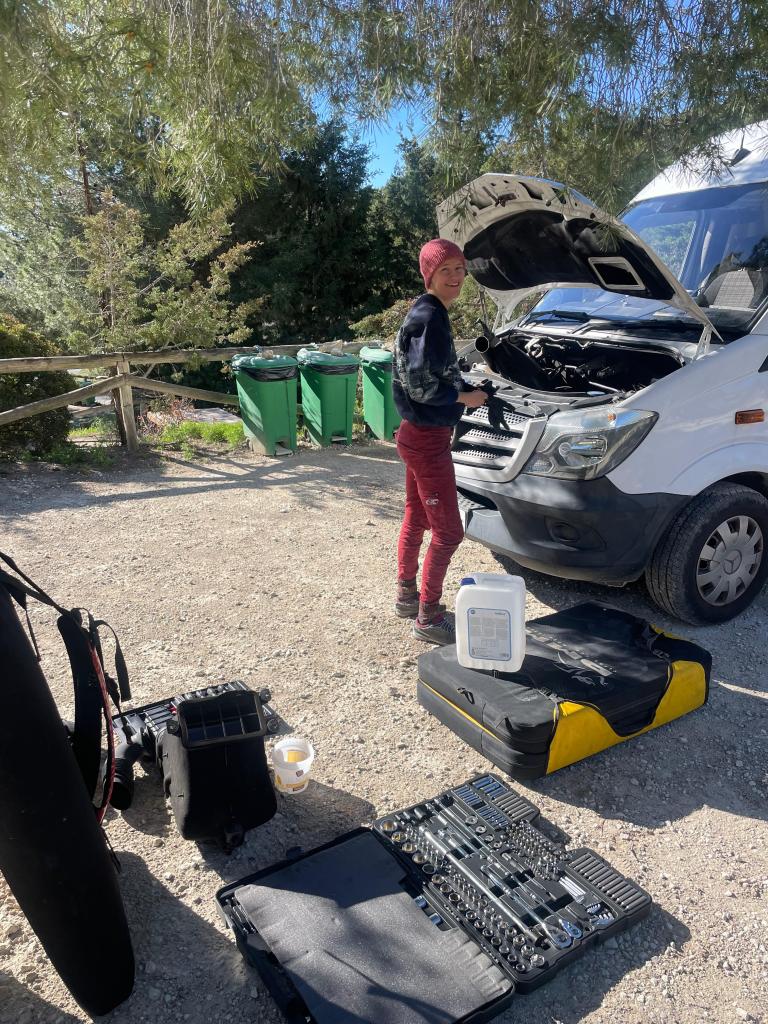
Don’t get me wrong, there is definitely a van to-do list on the whiteboard – vans like ours are constantly trying to fall apart on you, and, like nervous horses, often have to be gently coaxed into functioning properly. But as long as nothing is actively making concerning noises (and daily puddlewatch reports no coolant puddles), then what else is there to do but nothing? The reality of day-to-day van life can be dirty, shitty, awkward and stressful (puddle dependent), and my hair is certainly never perfectly tousled, but the rewards are joyous in their simplicity. The wide open, empty space to just be.
Visiting Mula
- · Sector Ferrari is a perfect winter/early spring crag – any later in the year and even I would have been scorched off. It catches sun all day and dries quickly after rain – though some routes do take a bit of seepage, the wet sections are usually easy to manage.The complete (and far more accurate than Rockfax) topo can be found on gonzaloclimb.com. The definitive guide for all the crags round Murcia can be purchased from the same site as a PDF for €9.99 – which is well worth it and goes back into the local climbing community and crag maintenance.
- It’s not all 7b and up, there are some really delightful and wild 6s (even the 6as are steep jugfests!), and enough to keep almost all abilities occupied for a week or so. There are also other sectors, with wider grade ranges and different aspects, well worth checking out.
- Mula is not exactly an extremely popular tourist destination in its own right but still has plenty of things to see and do during rest days – it’s known for its art museums, has lots of excellent bakeries and I’ve been told that the Saturday market is great for fresh fruit and veg. One satellite town – Bañosde Mula has hot springs you can go bathe in to wash away all that climbing fatigue.
- If you’re in a van, the local swimming pool will let you have a shower for €2 (best to go before 12pm when it’s quieter). In the swimming pool car park, under the manhole cover by the fountain, there’s a tap for fresh water.
No AI tools have ever or will ever be used to write or help write this blog.
Thanks for reading! This publication is entirely unsupported, so if you enjoyed it, please consider supporting/donating:
- Turns out the locals go the other way, which appears to be a private road but is well used by everyone else. ↩︎
- I wish I could tell you this is an original phrase but I first saw it in the description of Zeppelin in Pembroke and it’s lived in my head ever since. ↩︎
- I will write a full piece at some point about how to wild poo conscientiously and ethically, it’s something I feel very strongly about and something an upsetting amount of people seem to struggle with. ↩︎
 Kate Harrison Writes
Leave a comment