Like many subcultures, climbing has its own language. A rich dictionary of terms and lingo that can seem a little nonsensical to those outside it. As much of my life and social community centres around this world, I am fluent in its language and my posts are often full of absolute jargon, used without thinking. Recognising that there are quite a few people who read my posts but aren’t as immersed in climbing as I am, I thought I would create a handy glossary of climbing terms.
Lets start with some of the main types of climbing:
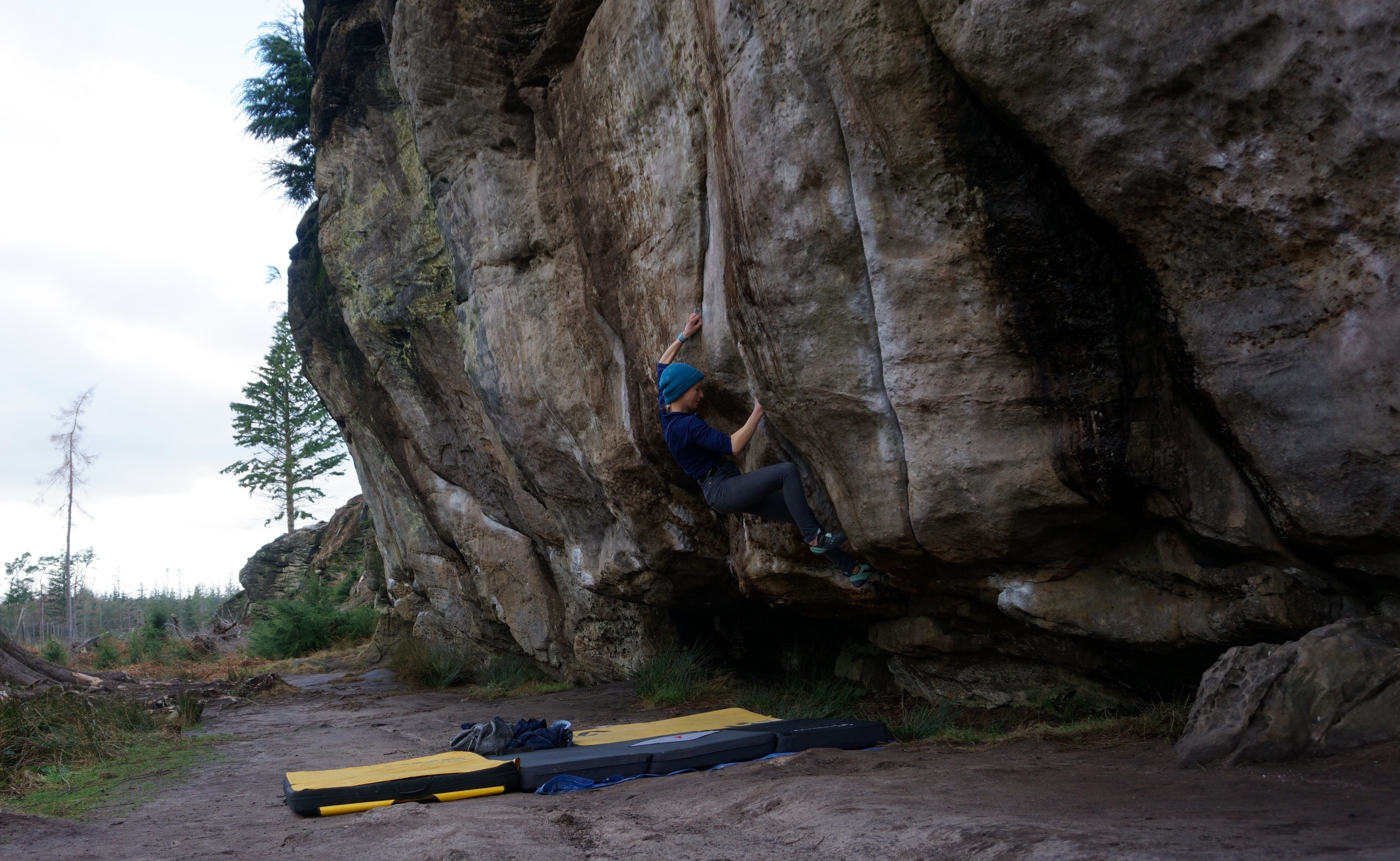
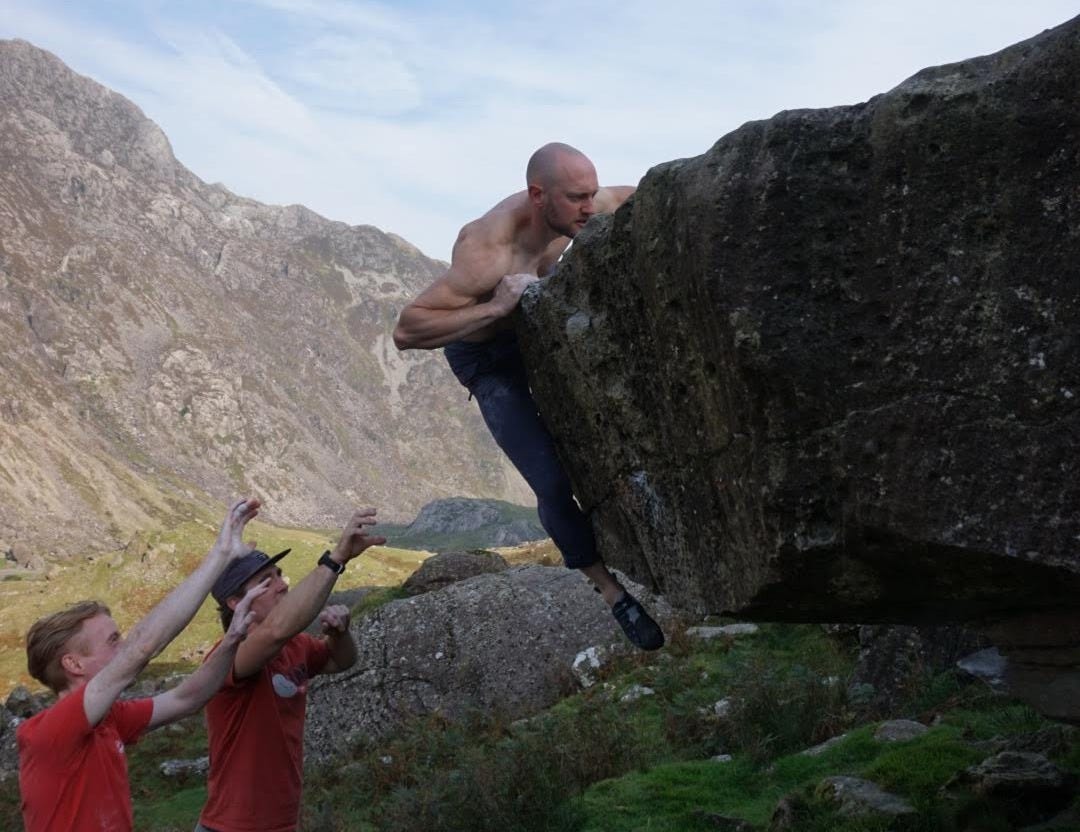
Bouldering. Climbing low rocks or free-standing boulders (hence the name). Usually only a few metres off the ground, bouldering is done without ropes. Instead, crashpads (boulderpads/boulder mats) are laid out below the boulder for climbers to land on.
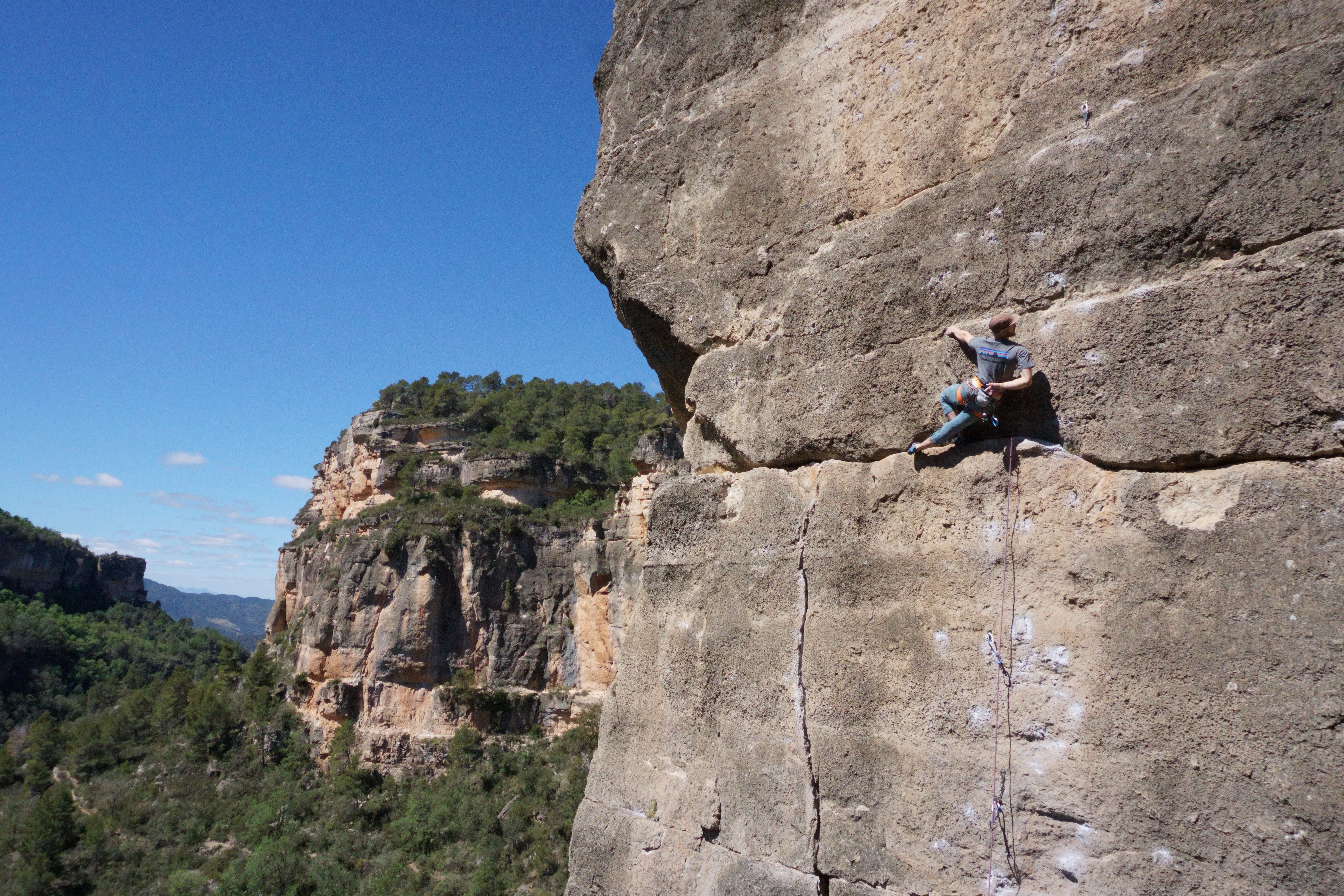
Sport Climbing. Climbing longer routes with a rope and harness, in which you clip the rope into permanent, pre-placed bolts and anchors in the rock for safety. These bolts are usually stainless steal and either glued or cemented into the rock by the person who developed the crag. Sport climbing is relatively safe, and is a good place to push your physical climbing ability – falls are a given and part of the process.
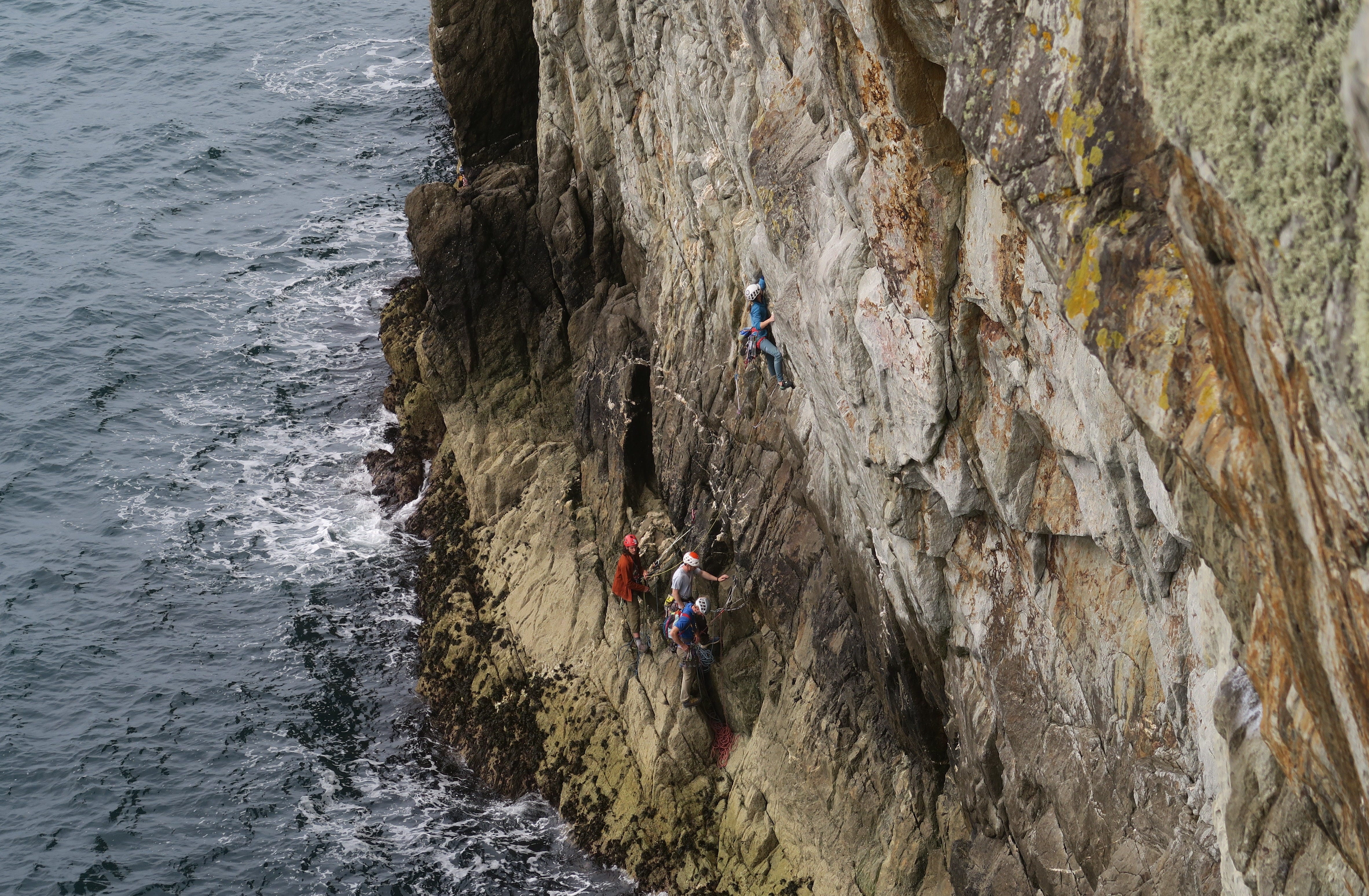
Trad (Traditional) Climbing. Climbing longer routes, in which the leader clips the rope into temporary protection that they have placed themselves. Requires a much larger mental aspect than sport climbing, as well as the ability to make anchors and actually find the route – without a handy line of bolts to guide you. The consequences of a fall on temporary gear can be far more serious than on a cemented bolt, but the increased fear is balanced by the increased freedom as the locations can be incredibly wild.
And now for the jargon.
Aid. To pull on gear in order to make upward progress. Can be done deliberately, as in aid climbing, or in the heat of the moment in a panic/as a wee cheat to avoid falling off.
Back and footing. How you climb a chimney of rock. Back on one wall, feet pushing against the other and then just sort of… shuffle upwards.
Barn door. swinging out away from the rock like an open door. Usually happens when all your feet and handholds are all in a vertical line.
Belay/Belaying/Belayer: your belayer is the person holding the other end of your rope. Ideally, they should stop the rope from slipping through the belay device if you fall, therefore arresting your descent.
Belay device (including ATCs, and grigris). A piece of equipment used to control the rope while belaying, which provides friction to help the belayer stop the rope if the climber falls.
Beta: the trick to doing the route, or knowing how to do the moves on a route. e.g., “Do you want the beta for that route?” Having the beta for a route means you should know what to expect, and theoretically makes the route easier. However, it does mean that you can’t have the true on-sight, which is argued by some people to be more important.
Bolt: A thick metal loop or expansion bolt permanently set into the rock to protect a climb. Mostly used in sport climbing, they make a route safer, as they are (when maintained) highly, highly unlikely to come out if fallen on. Putting a bolt on a trad climb is a cardinal sin (at least in the UK), unless it’s slate.
Bomber: Really good gear that isn’t going anywhere. “I placed a bomber piece in that crack, 10/10 would whip on it.”
Break. A horizontal crack.
Bridge. Climbing by having each foot/hand on opposing faces of rock, i.e., bridging the gap.
Cam. A spring-loaded camming device used as protection in trad climbing. The trigger is pulled back, narrowing the head and the cam is placed into a parallel crack. When released, the head widens, camming in place.
Campusing. Climbing only using hands, as if on monkey bars. Rarely necessary, often used for showing off.
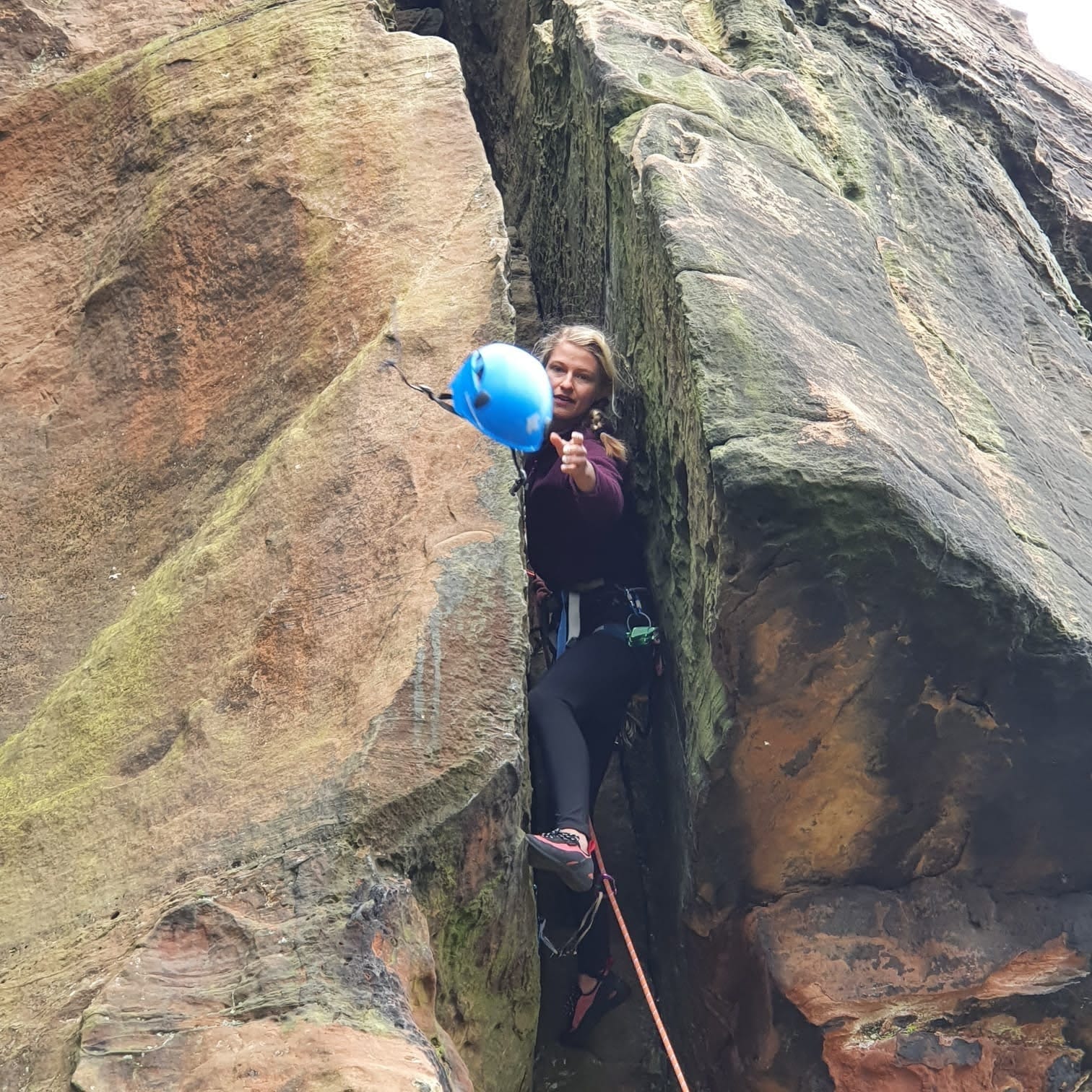
Chimney. A crack wide enough to stuff your entire body into, and then regret all your life choices.
Choss/chossy. Poor quality, unstable rock that is likely to fall apart while you climb it. Most of the rock in the UK, depending on who you ask.
Clean ascent. If you climb a route “clean”, you have done it from bottom to top without resting on the rope, falling or pulling on gear.
Crimp. A very small hold that will only take the tips of your fingers. Holding a crimp is known as crimping.
Crux. The hardest move or sequence of moves on a climb.
Decking. Falling so far you hit the ground, usually from having no protection or your protection has blown out. Do not recommend.
Dogging. No, not that. Trying and failing to climb a route clean. You have either fallen, rested on the rope or pulled on gear. Falling or resting multiple times leads to increased dogging and increased despondency.
Dyno. Reaching the next hold by jumping dynamically for it.
Ethics. Deserves its own post really. The complex set of rules and honour code that climbers abide by. Covers everything from behaviour at crags (e.g., not climbing during bird bans), to the method in which the route is climbed – and the subsequent way the climber claims they climbed it.
Epic. When a nice day out begins to get a lot more serious/dangerous/involved/desperate than you anticipated. Hopefully ends in nothing more dramatic than a good story to tell, but may not always.
Exposed. Very far from the ground, in a very exciting position, i.e., absolutely terrifying.
Figure eight. The most common knot used by climbers to tie the end of the rope to their harness.
Flag/flagging. Sticking a foot out sideways (often behind your other leg) to maintain balance.
Flash. Climbing a route or problem clean on the first attempt, but when the beta is already known. Everyone has their own opinion on how much beta is needed to take a send from an onsight to a flash.
Gaston. Holding the edges of a crack in such a way that it looks as though you’re trying to pry a lift door open.
Gear: A general word for the protection used on trad routes (i.e., cams, nuts, hexes, slings etc.)
Grade: The difficulty of a climbing route. Grades are simultaneously incredibly important and completely meaningless. Most grading systems follow a straight forward numerical scale, except for British trad grading, which is both a confusing mess, and also the best grading system in the world.
Gripped. Utterly terrified, absolutely frozen, gripping the rock as if it’s the only thing standing between you and certain death.
Headpointing. Leading a trad route after practicing it first on a top rope.
Hex. Hexagonal-shaped metal protection that works well in cracks. Also known as gumby bells as they are most popular among beginner climbers and don’t half make a racket when they clang together.
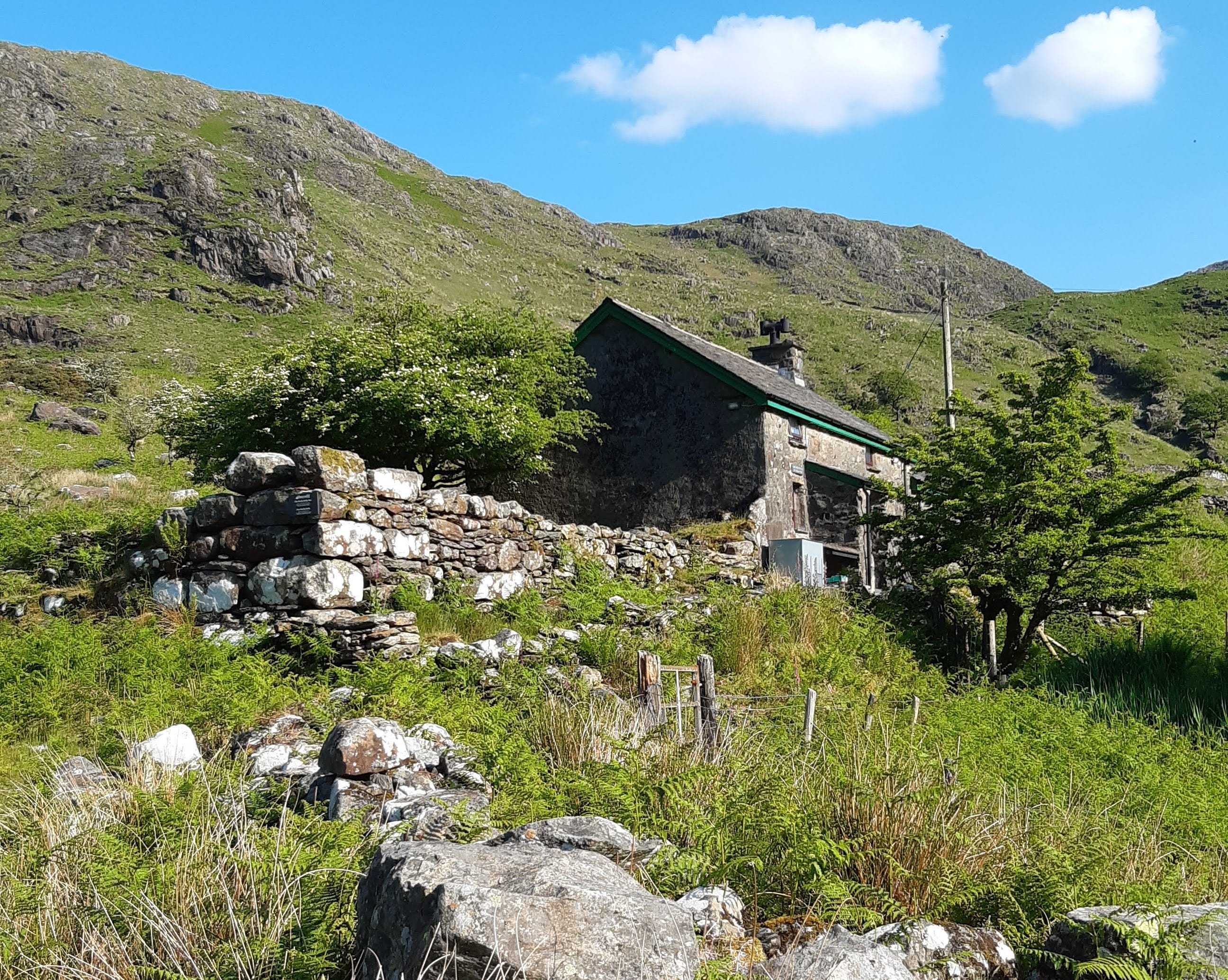
Hut. A private bunkhouse-style building owned by a climbing club. Offers cheap accommodation and basic but often cosy facilities in prime climbing locations, often with long histories.
Jug. A very, very good, easy to hold handhold. The dream handhold. The kind you fantasize about when you’re several metres above your last piece of gear on ratty little crimps and you can feel the pump rising in your forearms.
Jamming. The method of stuffing body parts into cracks to climb. Depending on the width of the crack, you can jam your fingers, hands, fists, feet, or even, in an offwidth crack, a whole arm or leg.
Kneebar. Jamming your lower leg between two bits of rock – knee on one side, foot on the other.
Layback. Climbing up holds that all point the same direction (sideways). Often found on one side of an arete or crack.
Leading/lead climbing. Climbing a route with the rope trailing behind you as you go. As you climb upwards, you clip the rope into protection (bolts or trad gear). If you fall, you should only fall the distance to the last piece of protection, then that distance again – e.g. if you climb 2 metres above the last piece of protection and then take a fall, you will fall about 4 metres, plus rope stretch.
Mantling. Getting up onto a ledge with very few holds below. Imagine getting out of a pool. Ideally this is done by putting a foot at the same level as your hands and then standing up, but if the situation is dire, it may involve a bellyflop.
Mono/monopocket. A hole in the rock that only fits one of your fingers in.
Nut. A piece of protection for trad climbing. Very simple, basically a wedge of metal on a stiff steel wire that sits into cracks. Vary in size from comfortingly large to upsettingly tiny. So named because the old school climbers of the 50s and 60s originally used machine nuts.
Nut tool. A hooked tool used by a second to remove gear from cracks.
Offwidth. A style of climbing favoured by masochists. Used in cracks that are too wide for fists but too narrow to back-and-foot in. Requires techniques like chicken-wings (bent arms), stacked hands, and kneebars, and also a lot of struggling.
Onsight. The “purest” and most coveted way to ascend a route. Climbing a route first time, without beta, falling or resting on the rope.
Peg/piton. A piece of metal protection that can be hammered into a thin crack. Mostly used in winter climbing these days, but old, rusty, questionable pitons can often be found on trad routes, relics from days when there were less gear options. Whether or not you trust these corroded horrorshows is entirely up to you.
Piece. A piece of protection.
Pitch. A section of a climb, with a belay taken at each end. Routes can be single-pitch, or multi-pitch.
Pinch. A hold that you pinch – obviously.
Placement. A place in the rock where a piece of gear will fit.
Pocket. A hole in the rock that can be used as a hold.
Prusik. A short length of cord that is wrapped around the rope when abseiling or ascending to act as a brake.
Pump. The build-up of lactic acid in the forearms that causes intense, extreme fatigue and eventual falling off. Usually means you need to train more endurance, sorry. Forearms turn rock solid, and fingers will simply uncurl of their own accord.
Quickdraw. Two opposing carabiners on either end of a short sling. One end is clipped into the protection (trad or bolt), and the other end is clipped onto the rope, attaching the climber to the wall.
Rack. The collective name for all your gear.
Redpoint. The process of working/climbing after practice a route that is too hard for you to flash or on-sight.
Ripped. Gear being pulled violently out of the wall as a result of a leader falling. This might be due to poorly placed gear, rubbish placements, or simply the velocity/angle of the fall.
Rockover. A specific climbing move, whereby a foot is placed on a high hold, then the bodyweight is rocked over that foot and the leg straightened to push you up the wall. Basically a pistol squat on the wall.
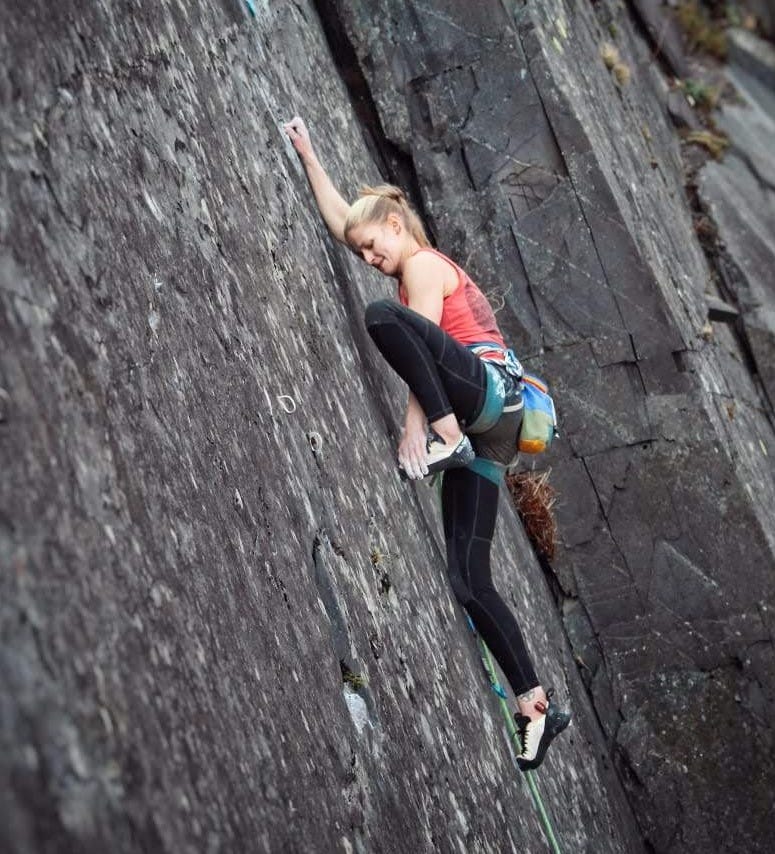
Run out. The distance between gear placements or bolts on a route. The longer the run out, the spicier the route.
Sandbag. A route that is harder than the grade would suggest. Sometimes this happens because it’s been graded wrong, sometimes because it’s really knacky. Sandbag can also be used as a verb, if you’re deliberately implying that a route is easier than it really is.
Second. The person who stays at the bottom, belaying, while the leader climbs. The second will then climb the route afterwards to remove all of the gear that was placed on the lead. Less scary than leading because the rope is always above you and you can’t really fall far.
Send. To send a route is to climb it clean, bottom to top without falls or weighting the rope.
Sidepull. A vertical hold that you pull on sideways in order to climb.
Sinker. A sinker piece of gear is the best gear you’ve ever placed, isn’t going anywhere, 10/10 would whip on.
Slab. A face of rock that slopes backwards away from you. In some ways it’s easier to climb because you don’t have to pull with your arms as much. On the flip side, the holds are usually far smaller than they need to be.
Sling. A long loop of dyneema cord, comes in different sizes, and can be used in anchors or looped over spikes as protection or belays.
Sloper. A sloping hold with no discernible edges. Dreadful.
Smearing. Pressing the flat of your feet against the rock and hoping friction alone keeps them on when there are no edges to stand on. Can range from pretty reliable (on gritstone) to nothing but a hope and a dream (on slate).
Solo. Climbing alone without ropes or a partner. Absolutely don’t fuck this up – the consequences are potentially enormous.
Tat. Old slings, cord and bits of rope left behind on routes – often at belays or abseils points by past climbers. UV light damages and degrades ropes etc, so these should be approached with caution and assessed carefully before use.
Thread. Threading a sling through a hole in the rock or around a chokestone to use as protection.
Thrutch. A climbing “technique” used in chimneys and offwidths that mostly consists of attempting to swim, squirm or wriggle your way upwards.
Top-out/topping-out. Making the final moves of a route or a boulder to finish on top of the crag.
Toprope. When you climb a route with the rope above you rather than below you. This may be because you’re seconding a route and your belayer is above you, or because you’ve set up the rope to go up from the belayer to the top of the climb and back down to you. Less scary than leading becuase you don’t really go anywhere if you fall.
Undercut/undercling. A hold that faces downwards and needs to be held underneath to be useful.
Whip/whipper. A large fall.
If there’s anything you’ve seen in my posts that is still baffling and isn’t mentioned here, let me know and I’ll add it!
 Kate Harrison Writes