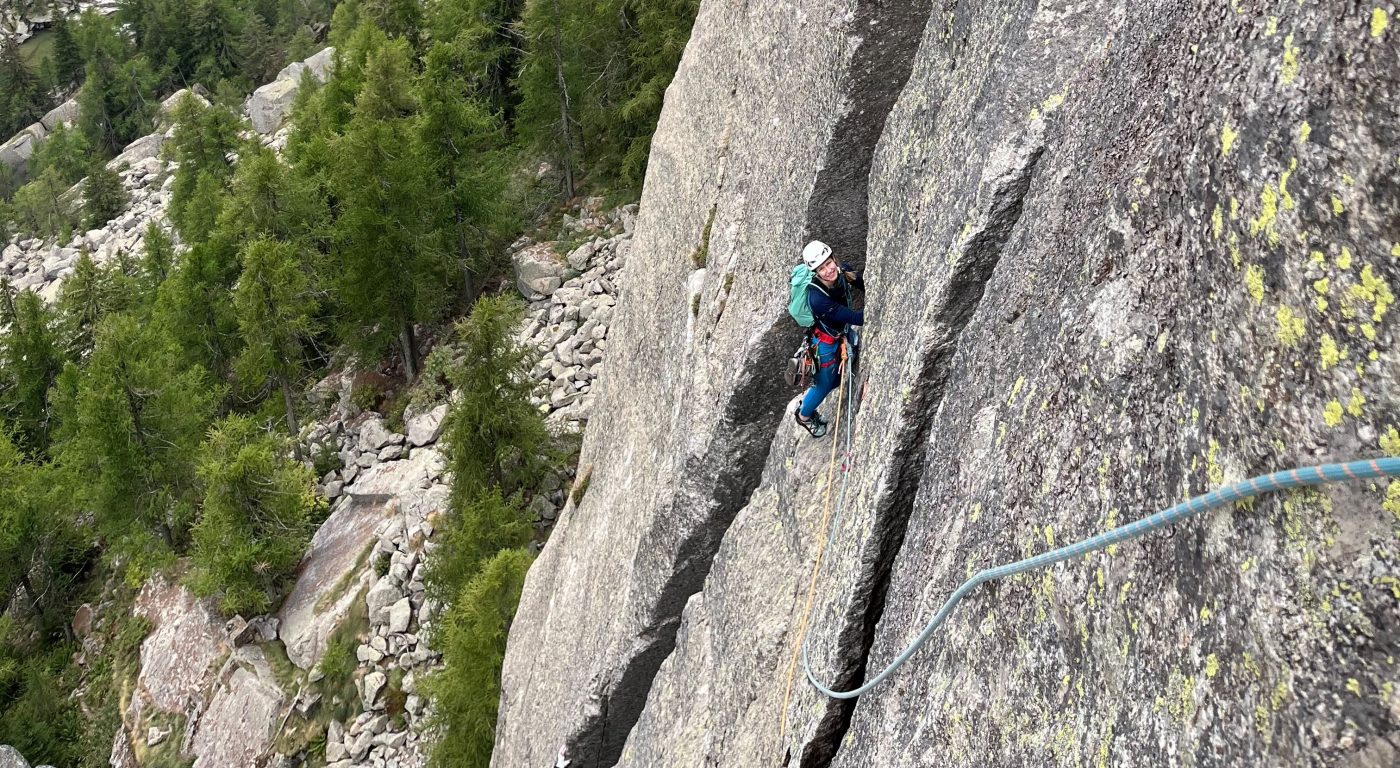
It’s well established knowledge that too much of a good thing is bad for you. Therefore, it stands to reason that too much of a bad thing is also pretty terrible for you. Either way, after two weeks of very difficult walks in Ailefroide, my bad foot and I were fed up of slabs. It was time to batter my ego on another form of climbing I suck at: cracks.
Yosemite is a mecca for climbing. It’s known for its featureless granite faces, its splitter cracks, and it’s rich climbing history. For those of us out there for whom Yosemite is a pipe dream – whether the cost is prohibitive, the current US administration is off-putting, or you simply don’t fancy living in a 1m x 2m floating tent and pooing in a tube for a week, you’ll be glad to discover that there is a European alternative. Known as the Yosemite of Europe, the Valle dell Orco sits on the quiet side of the Gran Paradiso National Park, in the north western corner of Italy. Initially developed in the 1970s, Orco remains a bastion of trad climbing in an increasingly pegged and bolted world.
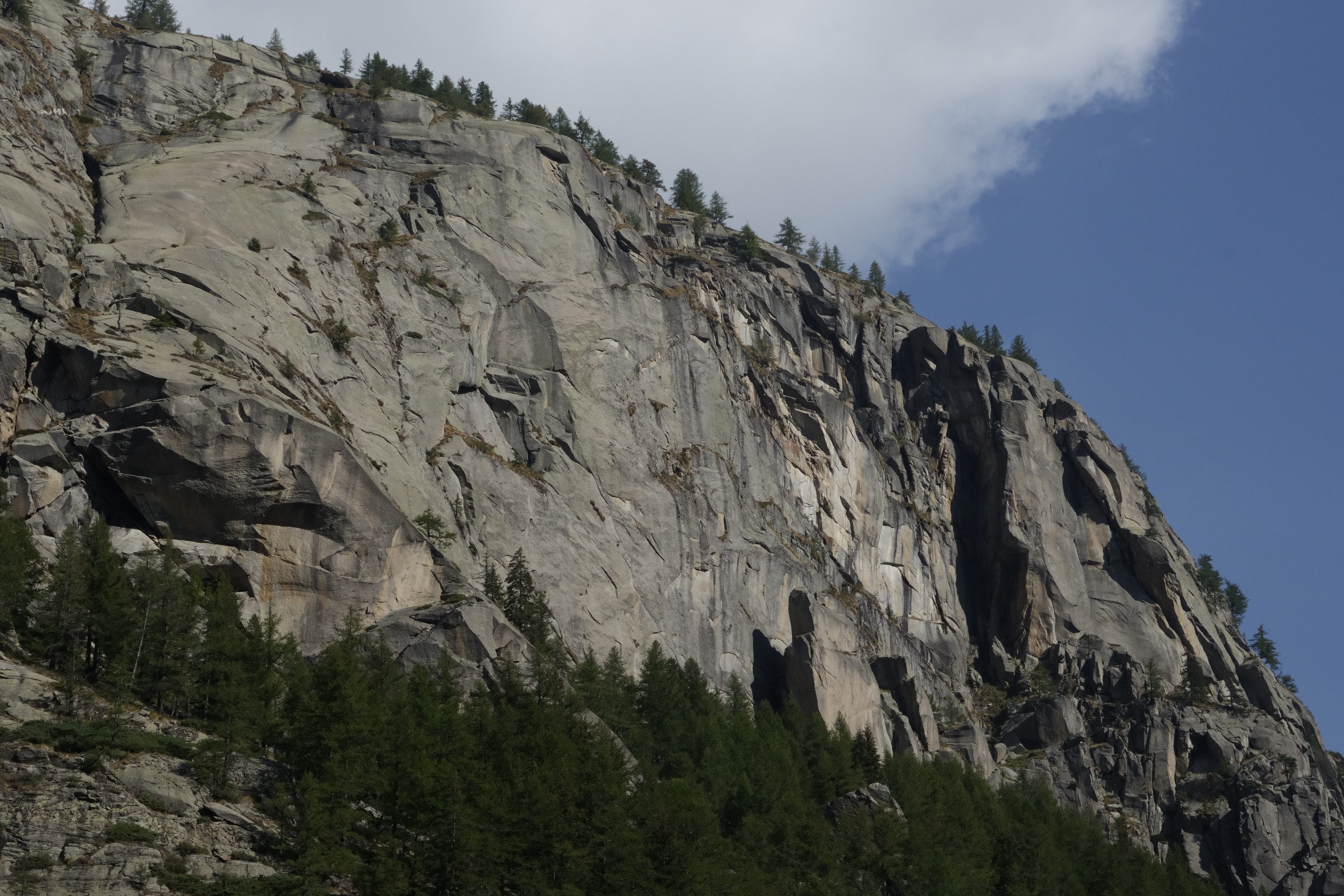
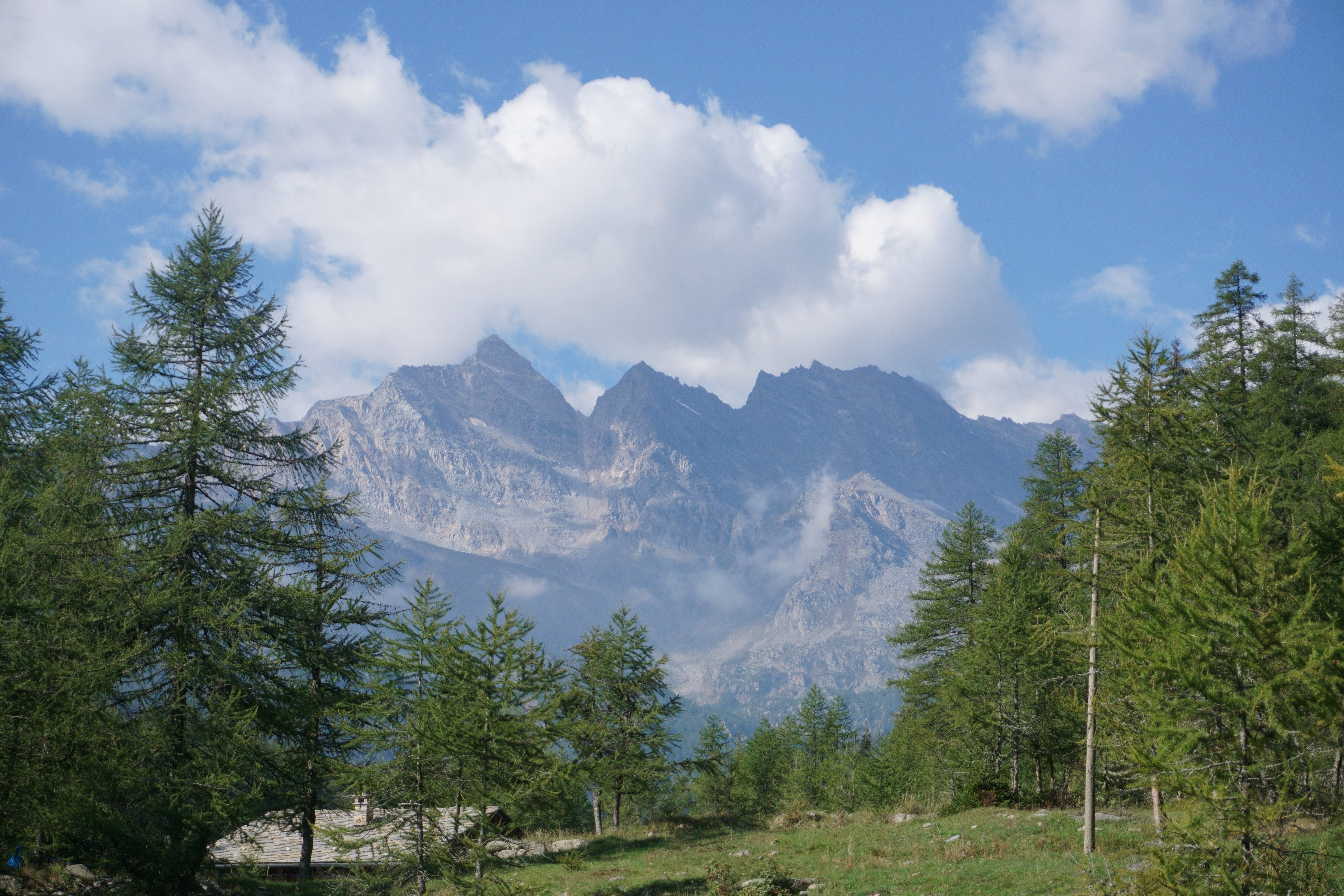
From the French alps, we weaved through mountain passes and down onto the plains around Turin, before the altimeter steadily began to climb again, a mirror to the rising peaks around us. The road shrank as it dipped and curved around tiny mountain villages, the stone houses and wooden balconies cousins to the ones in France, but with a distinctly Italian, terracotta aura to them. Tight, steep, hairpin bends led up to a final, seemingly endless tunnel that eventually popped us out right underneath the massive bulk of Sergent one of the main multipitch crags in the area. It was beneath this behemoth that we’d be spending the next few days – the campsite of ai Laghetti lay in its shadow, bordered by huge, still snowy mountains in the distance and the river Orco at our back.
We arrived in the afternoon, with just enough time to cram a couple of single pitch routes in before dark. The trad routes have French sport grades here, which played havoc with both my ego and my 2026 average sport grade – being basically allergic to the UK gritstone I am not a crack aficionado and I was quite happy to sit around the low six mark. We started on Incastromania (6a), a classic and supposedly a good introduction to the area’s style. For the non-climbers amongst my scant readers, I should probably explain what crack climbing entails: jamming. When I say jamming, I mean what I say on the tin: literally jamming whatever body part fits into the crack and letting friction, body tension, and a whole lotta hope do the work. Narrow cracks might take fingers, wider ones will take hands or fistjams, along with feet. Wider than that and you’re looking at stuffing a whole arm in – a chicken wing -, a leg or even, my genuine favourite, your entire self.
Alas, the problem with crack climbing is that if your hands don’t fit, they just don’t fit, and it makes everything a lot more difficult. Chris found Incastromania too thin for his meaty paws and laced the 25m split with almost every cam he had – two full sets – arriving at the chains pumped to hell. My scrawny mitts had better luck and I didn’t find it too bad, though the tables would turn on me later in the week. The feet, much like Ailefroide, were still non-existant, barely there ridges and crystals in the granite, but with both hands wedged into the crack, I felt far better about my prospects using them.
The following day dawned misty and overcast, the huge distant mountains peaking out ominously from behind banks of cloud. Sergent loomed above the campsite in the mist, large and foreboding, daring us to tackle it. Our objective for the day was a multipitch – Chris was keen for a 6c, having learned nothing from our lessons about multipitches on unfamiliar styles in Ailefroide, but I argued him down to a friendly 6a – another classic of the area, Nautilus. The first two pitches were delightful crack and corner systems, beautiful flowing movement without being too demanding on either body or mind. The third and fourth pitches showed where the inspiration for the routes name came from. We shimmied all the way inside a cleft in the rockface, what what felt like 20,000 leagues under the surface. The climb became a walk as we stepped inside the mountain, a flat platform stretching back into the bowels of the rock. A road to nowhere, it felt like entering into the lair of some beast, or a secret passage in an Indiana Jones adventure, ready for boobytraps to strike. Getting in was the easy part – getting out much tougher. Back pressed against one wall, feet pressed against the other we had to shuffle upwards towards the bright daylight. Pressing hands against the rock behind me, I pushed through my legs, as if trying to squat the whole mountain, allowing my back to drag upwards. Then, one foot at a time, scuffed up a couple of centimetres, never losing the tension, the backpack dangling between my legs out of the way. Inch by slow inch I dragged myself up towards the flake that promised exit. Always a lover of a full body tussle, this was my favourite pitch. Chris, I imagine would have very different things to say about it, especially when he discovered only afterwards that there was an escape route – a step outwards off a chockstone that skipped the chimney almost entirely.
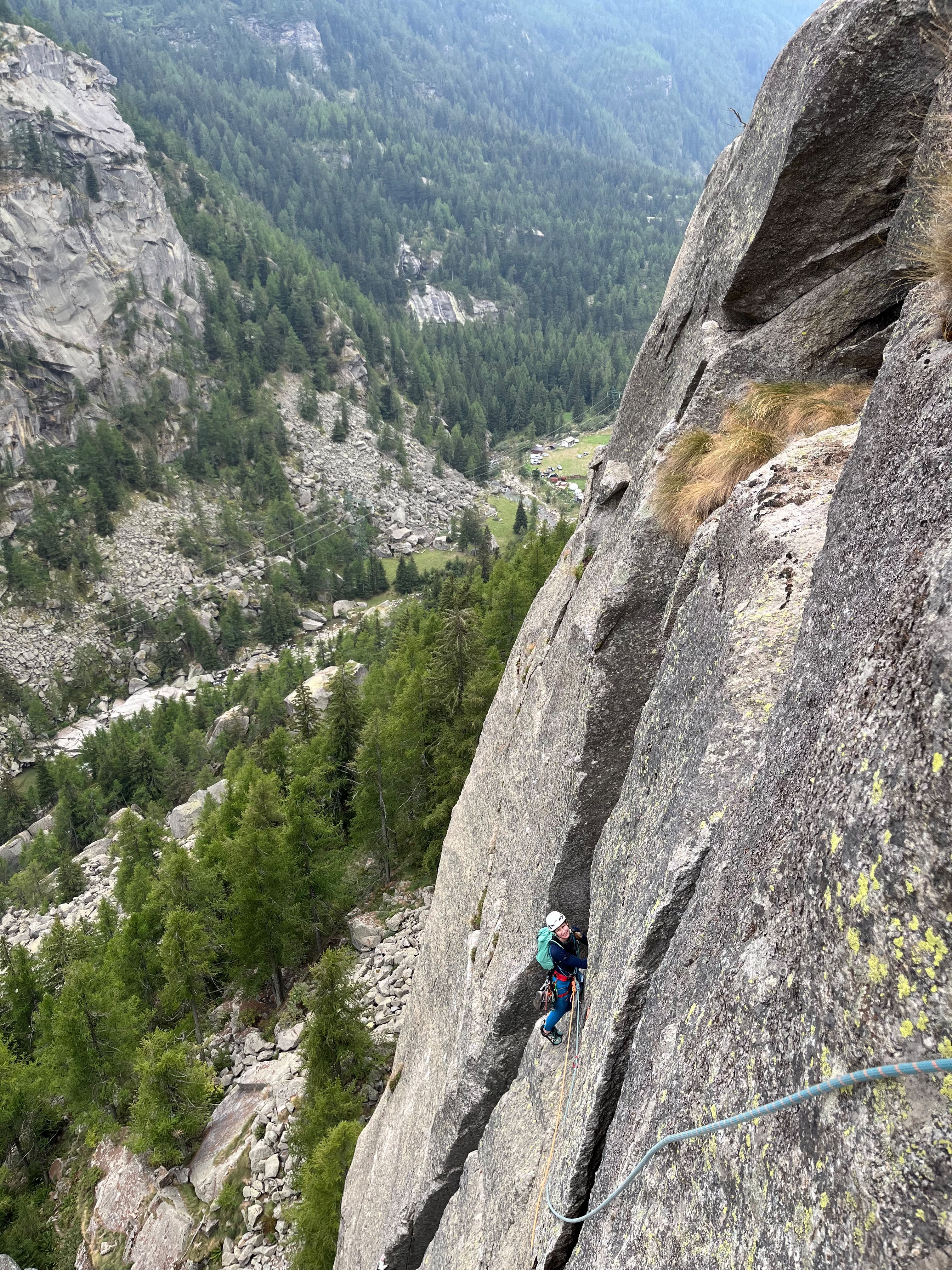
The final two pitches were more standard cracks, with the 6th being the standout – a fingercrack and corner with tricky bridging into a careful traverse. It culminated in a hand crack so perfectly parallel that it also doubled as a cam graveyard – I counted no less than four cams lost to the depths of the crack, well beyond the reach of grasping fingers. A clear lesson in the importance of extending your cam placements. As always, I had a little moment of wonder at how high we had climbed. Tiny people moved around the campsite like ants down on the valley floor, and yellow-beaked choughs squawked and cawed, wheeling below us.
We had one more climbing day in Orco, at the single pitch crag Dado, where we knocked down a bunch of trad crack routes of varying sizes. From tight hands to half-body offwidths, the highlight was Bianca Parete (6b+), a wide, curving crack that arced into an undercut traverse and a final, vertical split. This one suited Chris far better than me- the crack was a solid fist jam for him, but for me? There is very little worse in crack climbing than sticking your hand inside a cleft and feeling air on either side. My fists rattled inside the rock, threatening to slide out at any moment and I found myself having to cram my arm in up to the shoulder, hand pressing on one side, tricep on the other, the rough granite grating my skin like sandpaper. “It’s all over once you hit the undercling!” Chris shouted. Still half a metre or so below said undercling, standing on the last visible feet I was honestly stumped as to how I was supposed to hit anything. I battled on through to the upper crack, using crimps on the face that Chris hadn’t even thought to look for. I was quite happy to be on the second for that one – I know my place when it comes to cracks, thank you very much!
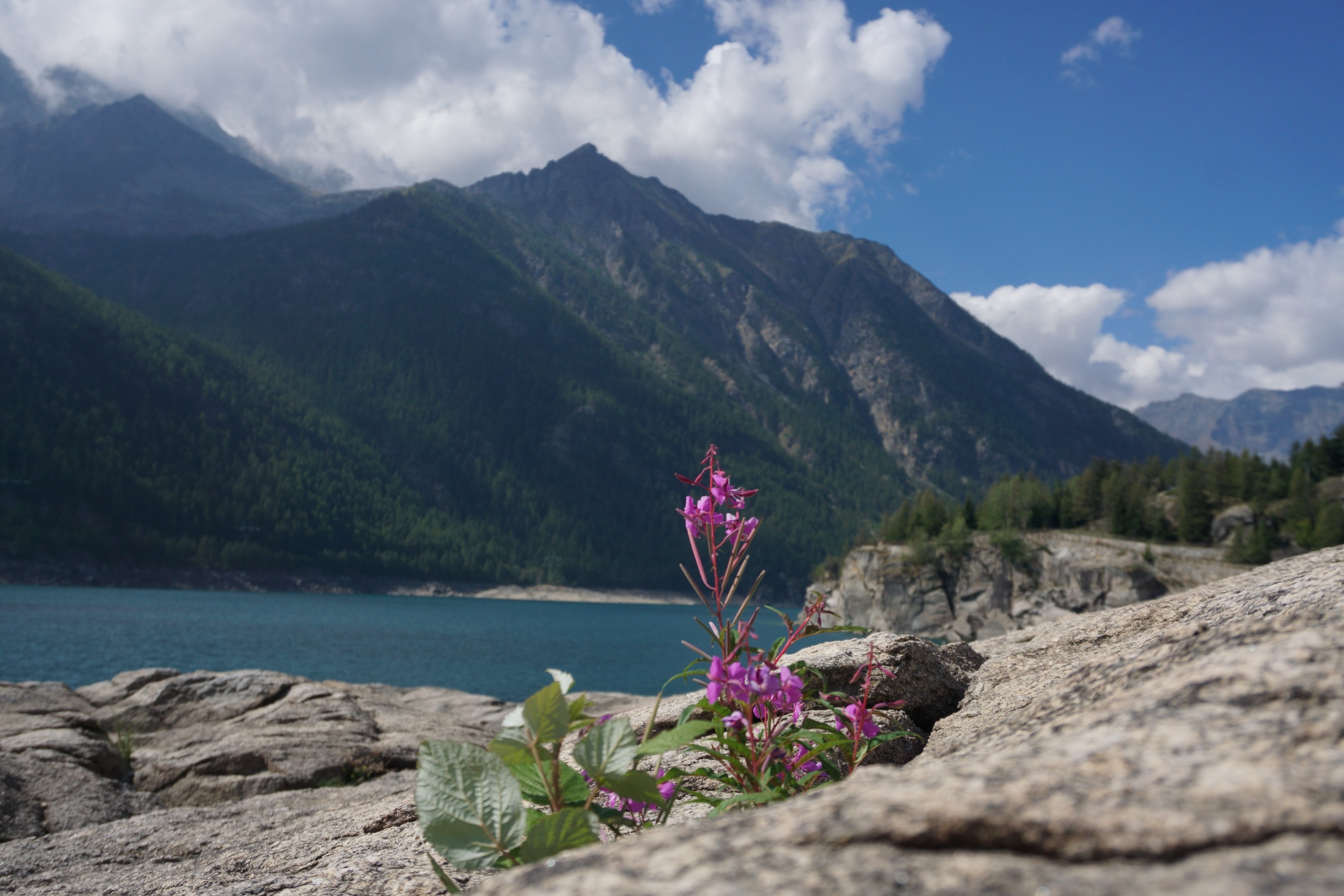
Orco was a delight, and I do love being able to roll out of the van and straight to the bottom of the crag with no driving involved, but after a few days, the peaks beyond Sergent sent out a siren call that was impossible to ignore. The logo of the Gran Paradiso national park is an ibex, and I was keener to see some of the local wildlife than I was to insert myself into any more cracks. Don’t get me wrong, Orco is a great venue, and I highly recommend it, especially if you worship at the altar of “God’s Own” rock – Peak Grit. Unfortunately we’re both limestone heathens and getting the most out of this venue was something we could both admit we didn’t have the patience, or equipment for – it was time to move on.
Visiting Orco
- Gear: For the Orco cracks, big cams are essential. We only had one size 5 DMM dragon between us – Chris having sent his back to DMM for new wires before we left the UK – and we felt the loss. Luckily were able to borrow where we needed from other climbers, but 2x 5s, a 6 and even a 7 and an 8 would definitely have been useful.
- Guides: The definitive guidebook is a must – it covers all the trad and sport climbing in the valley, and some of the boulders. It has both photo and drawn topos which are really useful, and it’s clearly had a lot of love poured into it, though some of the translations to English are a little confusing.
- Stay: Van camping is tough in Orco, there’s rangers about, though it is possible. I’d recommend the campsite for this one though. There is another campsite further into the valley, but ai Laghetti allows for the best walkability. No need to book, you can just rock up, though it may be worth calling ahead in busier seasons to check availability. It was about €26 per night for both of us and a big van.
- Supplies: Stock up on supplies and gear before you head into the valley – there are no large shops and only a couple of minimarts about.
- When to visit: just like Ailefroide, I reckon this is a shoulder season venue – Sergent is south facing and gets sun all day, and it was pretty toasty – that high altitude sun really gets you. In late September there is a climbing festival in the valley, which would definitely be cool to attend.
No AI tools have ever or will ever be used to write or help write this blog.
Thanks for reading! I really appreciate every interaction. If you enjoyed this, please consider supporting my work:


Leave a comment