Summer can be a real bitch. You have all these plans and expectations for the good weather and then you get bitten by a horrible little nightmare of a tick and end up with suspected Lyme disease and a massive course of grim antibiotics and then your foot gets sick of being crammed into too-small rock boots and sets itself on fire with multiple tendonopathies till you can barely walk without pain and then you somersault over a chair (don’t ask) and sprain your finger so badly it turns black for a week and you end up hardly touching rock for half the summer anyway. And this is, of course, all the more infuriating when the weather is dry and hot and those high-mountain, usually-wet crags are just crying out (without tears, they’re that dry) for you to come climb them.
In the end I gave up and decided to focus on salvaging myself for our Big Autumn Trip instead, and spent weeks training, doing physio, and fingerboarding, none of which lend themselves to particularly interesting blog posts.1 And finally, finally, finally, August ended, and with another three glorious months of Schengen allowance ahead of us we packed up the van and rolled it back onto a Dover ferry on one side of the channel, and then off the other side onto the good old French toll roads.
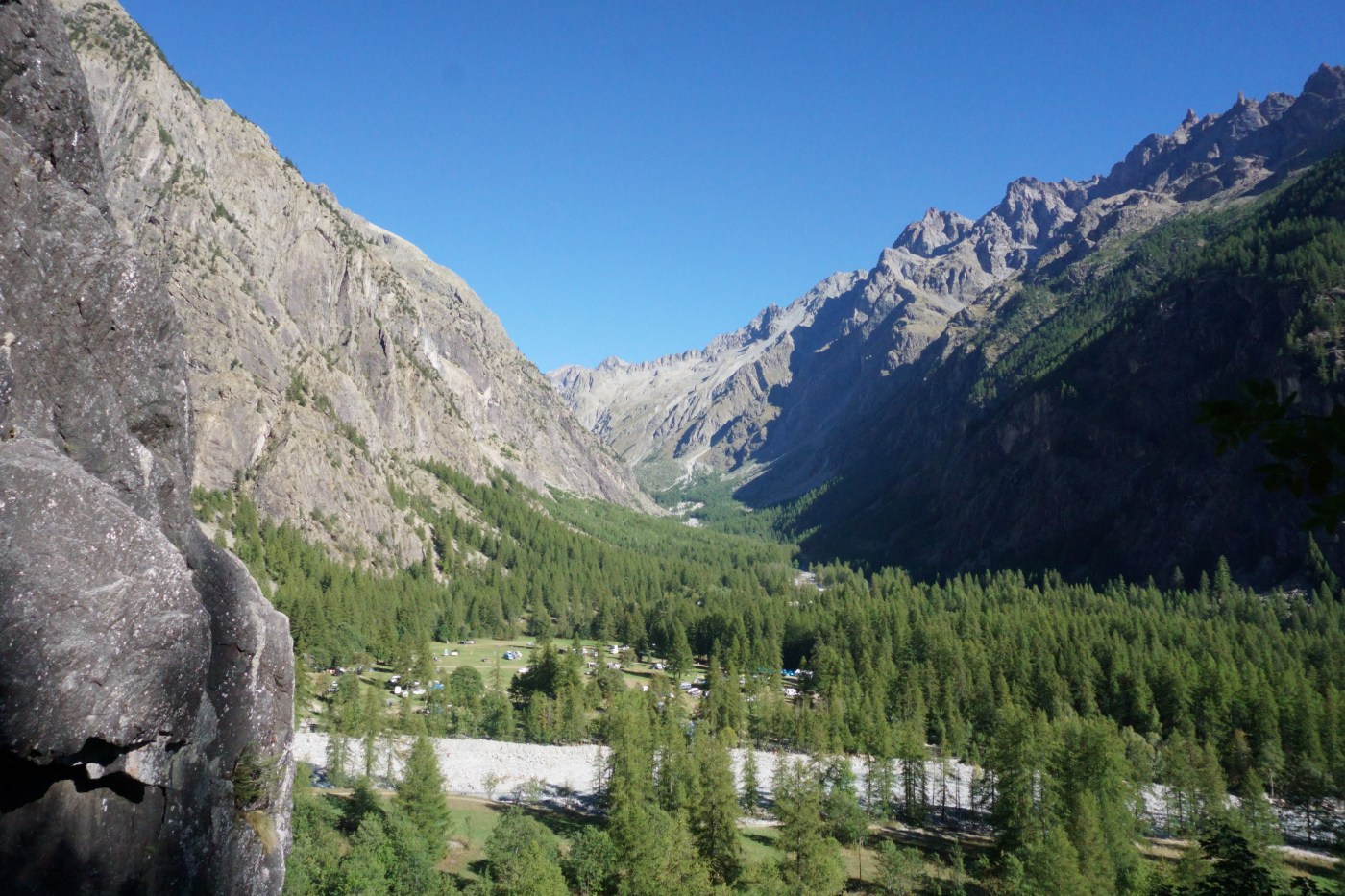
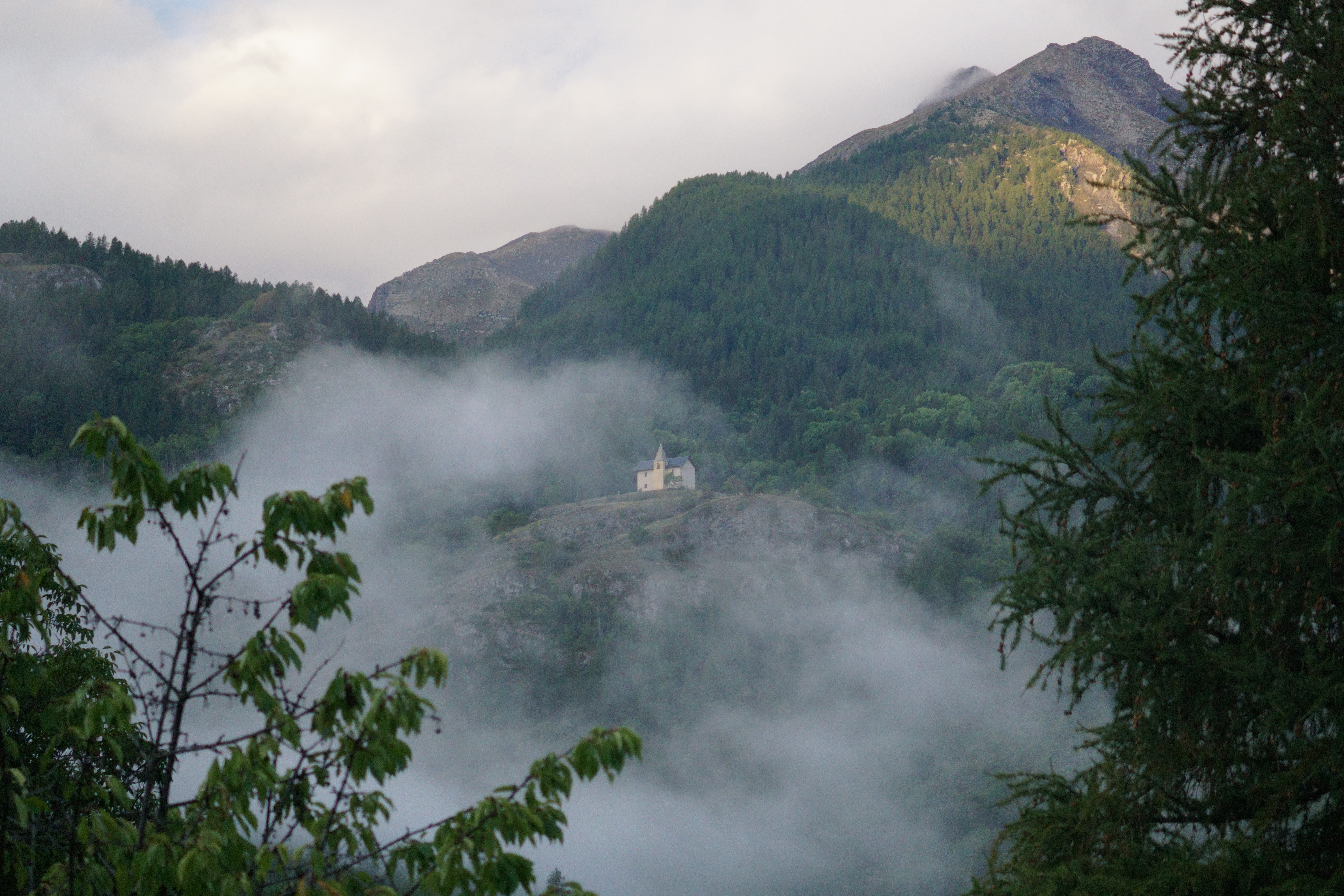
Nine hours and more euros in toll fees than I care to think about, and the terrain began to shift. Rolling hills became steeper and sharper and lush greens gave way to angular browns and greys. I don’t think there will ever be a time when I do not have to do a double take at those first glimpses of mountains. No matter how many times it happens, that first moment I have to twist my head against the van window to look straight up, the first moment I realise the van is sinking into a gully between monoliths, I will always feel that thrill. This time, the peaks were the Dauphiné Alps in south eastern France, the goal the hamlet of Ailefroide. Or, more specifically, the village of Vallouise just before Ailefroide, where a friend of Chris’ has a chalet and was kindly allowing us to stay.
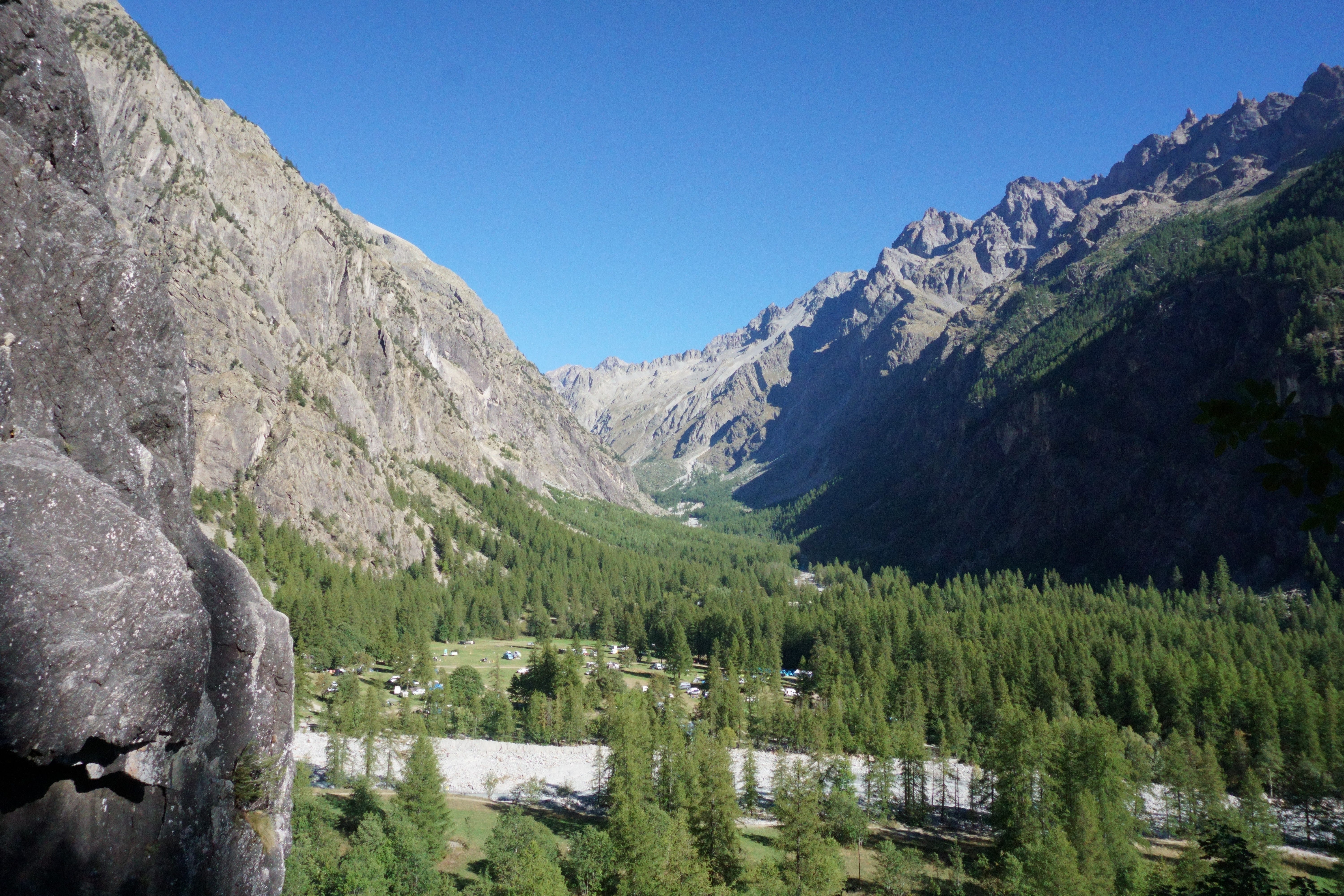
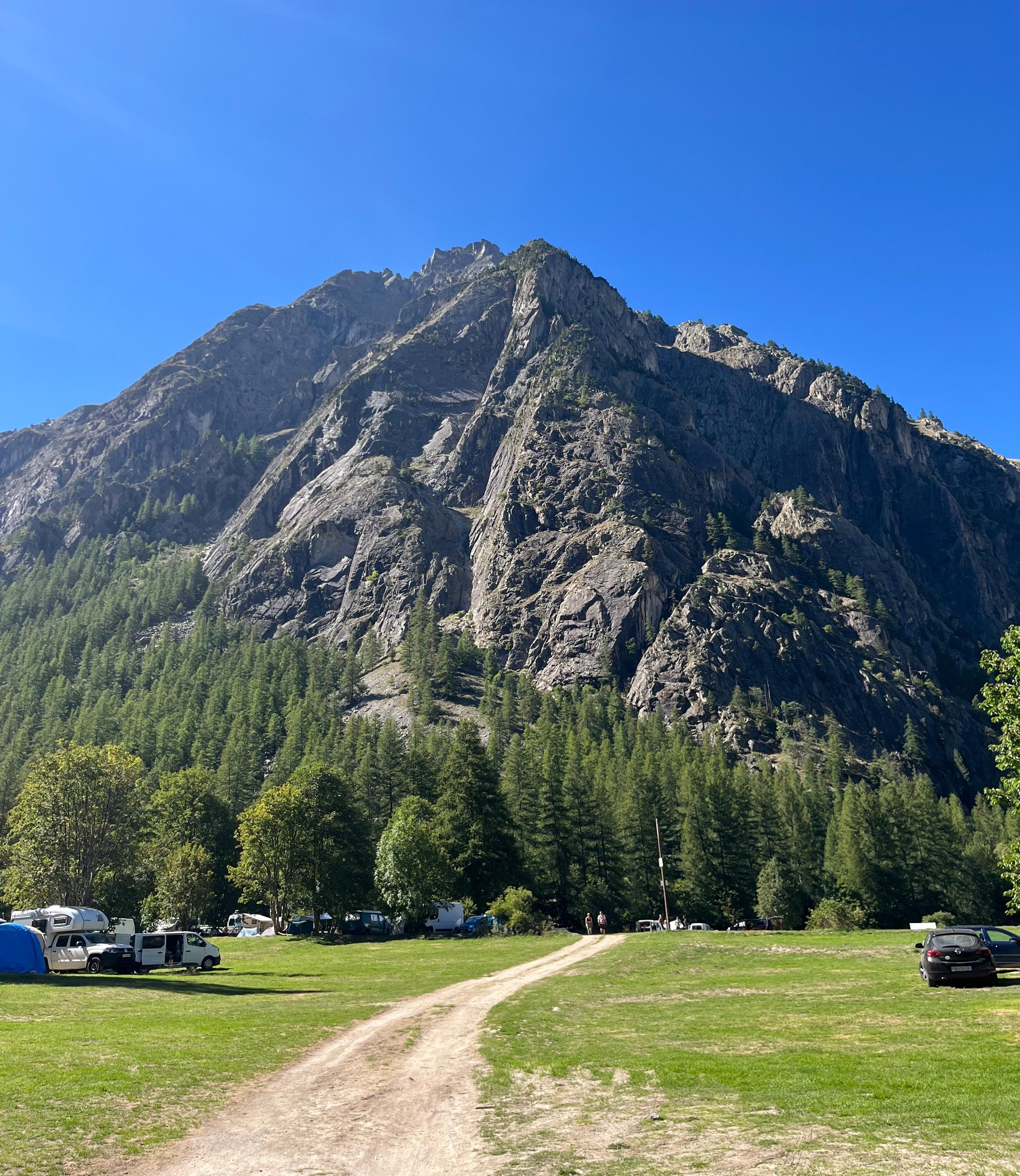
We arrived early in the morning, just as the rest of the chalet was about to head out for some climbing, so we of course jumped in. If driving through the wider Dauphiné Alps had been stunning, Ailefroide was another level entirely. Arriving in the car park at the end of the road was like being in the bottom of a steep-sided basin – no matter what direction I turned, there was a mountain, huge slabs of rock rising in hundreds of metres of continuous cliff, culminating in precarious towers, like stacked baby blocks, almost too thin to be real. Even down in the valley we were already higher than any point in the UK, which is always wild to think about.
The hamlet felt busy, a little crowded, and with good reason: where usually visitors would be split between parking areas on either side of the Torrent de Saint Pierre – the bridge and the far side of the river were closed off, space now only for the diggers clearing debris. Just a few days earlier, huge storms had battered the region, and the river had flooded, badly, leaving extensive damage in its wake. We saw snatches of destruction where the path up to le Poire d’Ailefroide – one of the crags on the west side of the valley – had, in places, been lost to the high water. From my eventual vantage point high up on le Poire the damage became more evident. Whole stretches of the road on the other side of the river were simply gone. Each hairpin bend closest to the road just, sheared off flat. It was difficult to comprehend the sheer force and volume of water that it would have taken, even harder to see that rage in the narrow stream of the Saint Pierre returned to normal, late summer levels.
That first route gave us a taste of the Ailefroide granite – maybe a little too much. We headed to le Poire simply because the rest of the group were and we hadn’t had time to pick something for ourselves. Once there we chose a 6c+ multipitch out of the guidebook without really thinking about it. I haven’t climbed on granite since a damp trip to Cornwall in 2023 and barely in France since 2020, so it didn’t really occur to me that French grading (stiff a the best of times), combined with granite (a rock type I don’t really get on with anyway), would result in a route that felt far harder than the guidebook given grade. The first, easier pitch already packed a bit of a punch at 6a, and so when we got to the crux pitch, we were met with an unpleasant surprise…
There is a style of climbing called the “French Free” ascent. This is used for routes that you totally, definitely, absolutely intended to climb free (i.e. clean), but ended up having to pull on gear here and there to get through the hard parts. It’s usually used in a bit of a derogatory or insulting manner but ultimately who really cares how you climb anything. Well, faced with that 6c+ pitch – a sudden, featureless, steep wall without a hand- or foothold to speak of, and five pitches still to go, it was very much a case of when in Rome France, and both Chris and I shamelessly grabbed every draw and every bit of lifeless, core-shot tat available to us and hauled our way through to victory (a pastry from the patisserie on the way home). We were at least, able to massage our egos later on that evening – despite a 6c+ grade in one guidebook, the route was given 7a+ in another, and on UKC the voting gave it 7b – a whole three grades harder than expected.
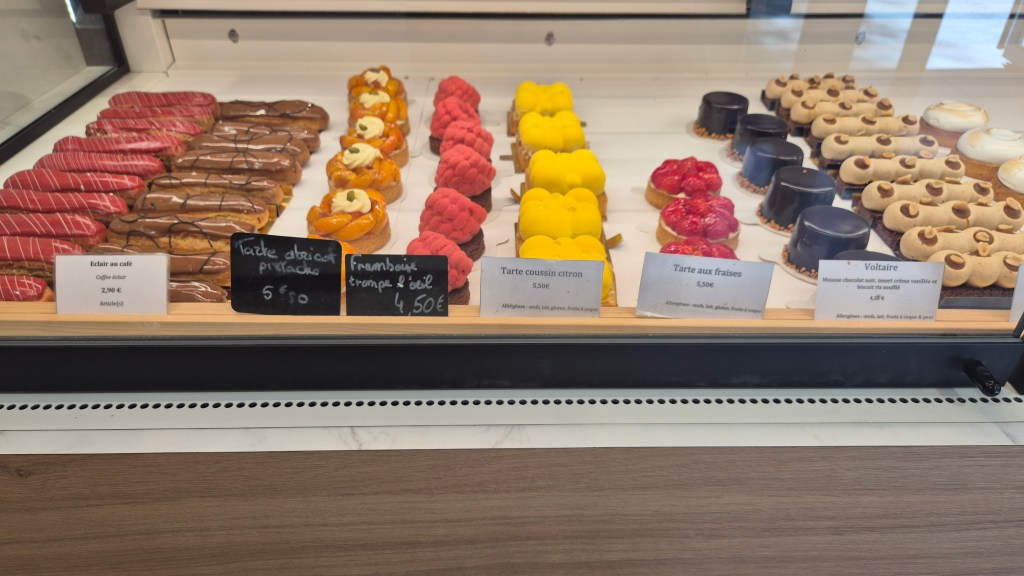
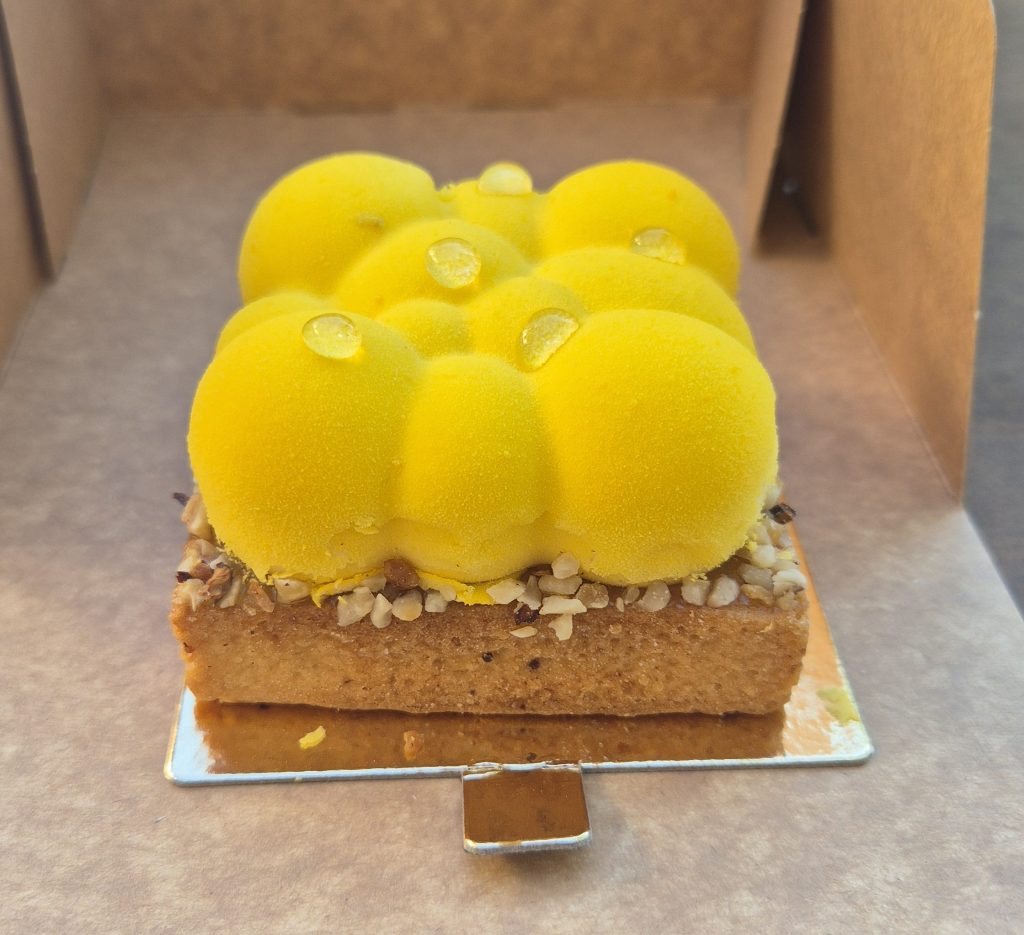
The days settled into something of a routine. Fresh bread and pastries from the nearby bakery each morning, then off into the Ailefroide valley to climb. The literal translation of Ailefroide is “cold wings”, but that couldn’t have been further from the truth – the sun was intensely hot most days and we sought shade where we could. Much of the climbing in the valley is multipitch slab – for the non-climbers, slabs are crags that slope away from you. This might imply that slabs are easier because you can use your legs more and your arms less – like walking up a very steep slope. In reality, this actually just means that the holds are more imaginary than actual and you find yourself smearing your feet on hopes and dreams and pulling on crystals that are smaller than the diamond in a miser’s engagement ring.
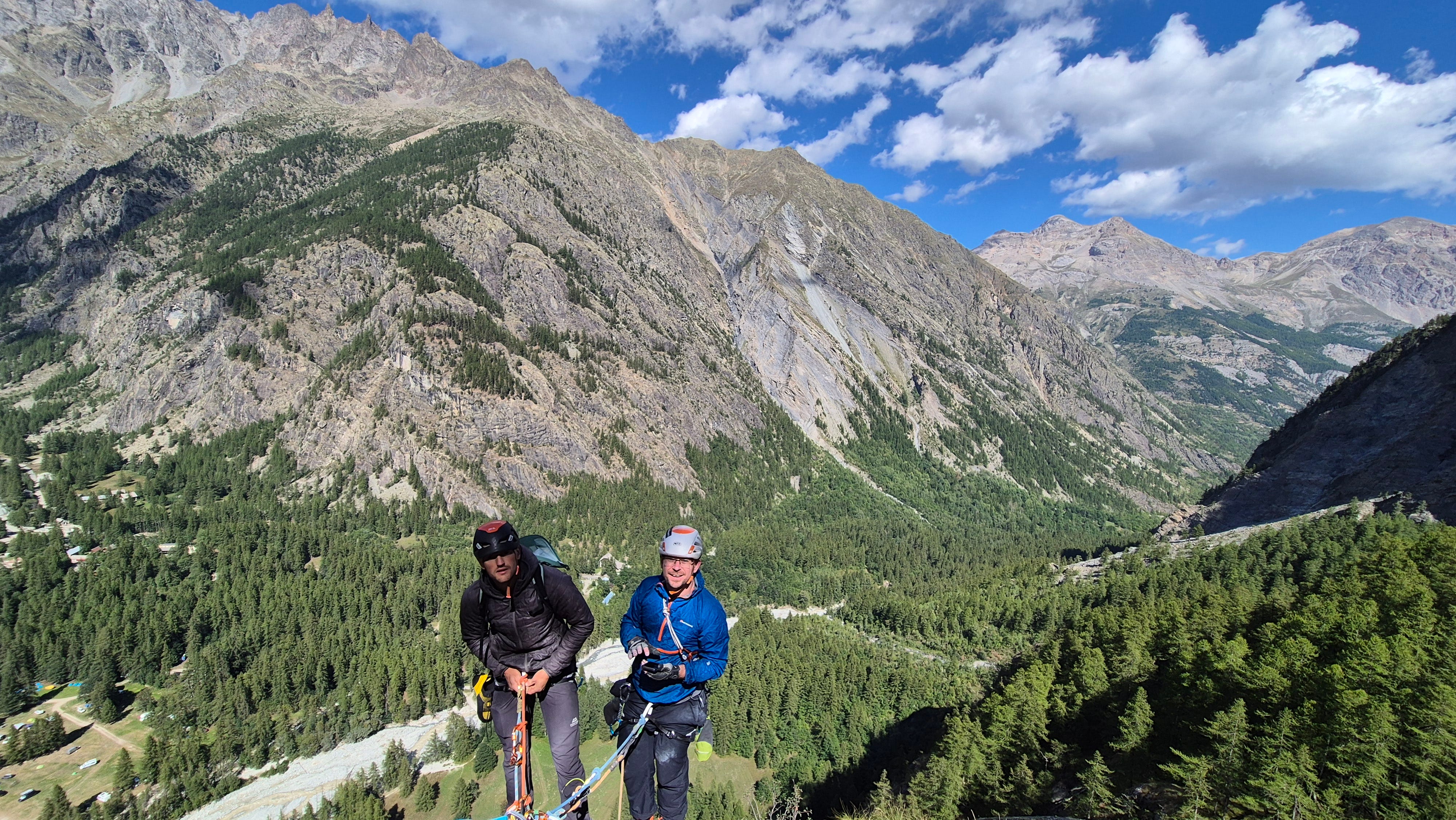
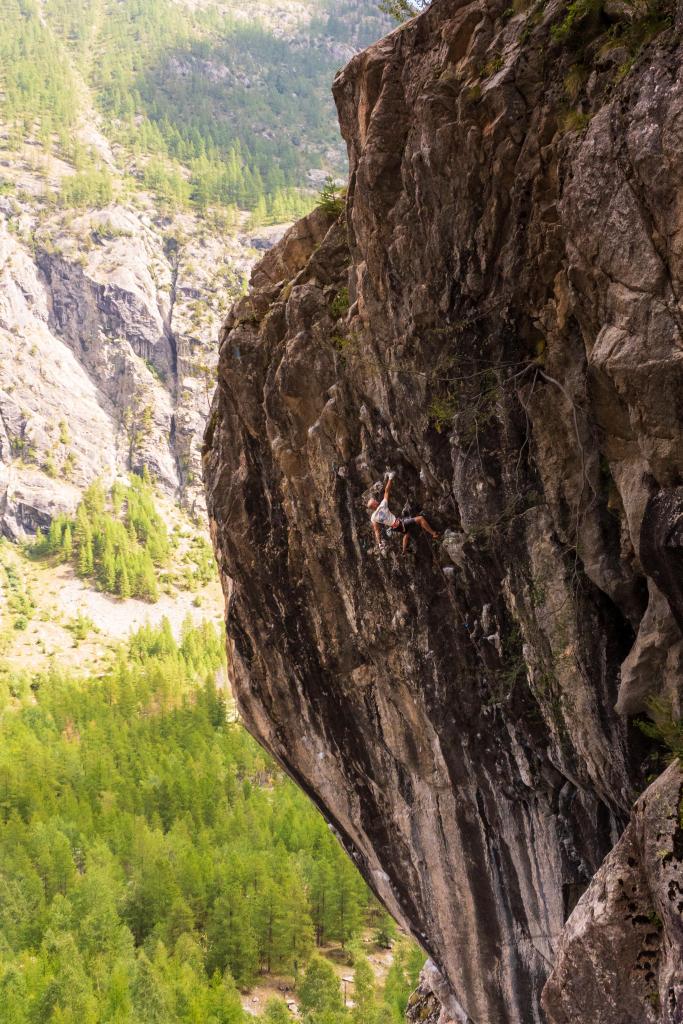
Slab is not usually my thing, but again, when in Rome… we did a fantastic 9-pitch route called Snoopy Directe (6b) which could have actually converted me to slab – the harder pitches had decent, if thin, crimps and the easier pitches could be scampered up on all fours quite nicely without even needing to looks for holds. Eventually though we had to take respite from both the sun and the slab and took refuge in shady, overhanging sport crags. I’ve never climbed sport routes on granite before, and it was a real treat – from La Gorge in the West side of the valley with it’s delightful range of 6s and low 7s, to the absolutely stunning Face Bouc, maybe the most picturesque crag I’ve ever climbed on. There we redpointed the phenomenal Punishment Park (7c) – a route with the steepness of an 8b, but the holds of a 6a. A route with so many jugs and hand-sized cracks that it must have used up the entire Ailefroide budget for holds, leaving everything else with three smears and a crystal. We both jammed the hell out of it.
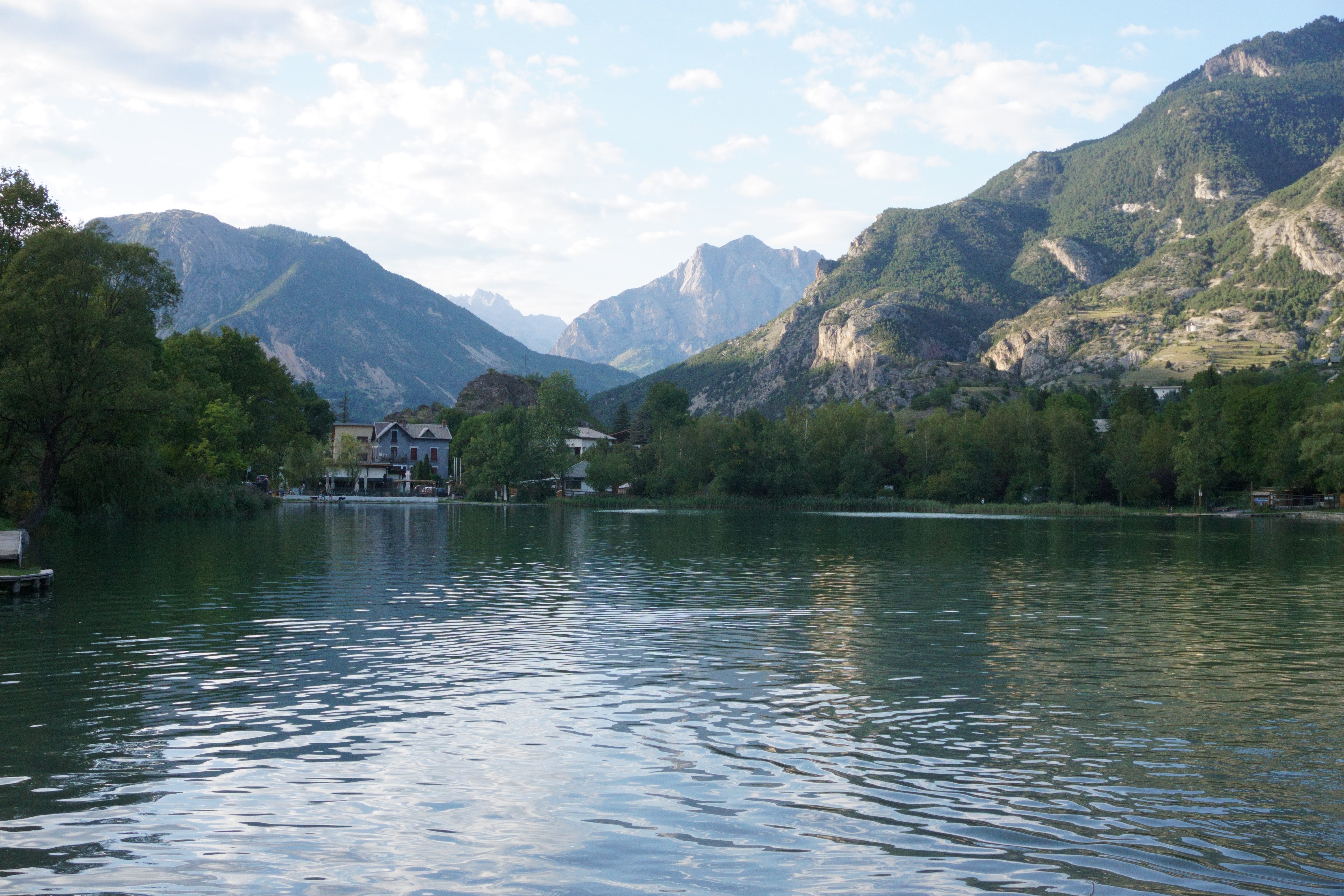
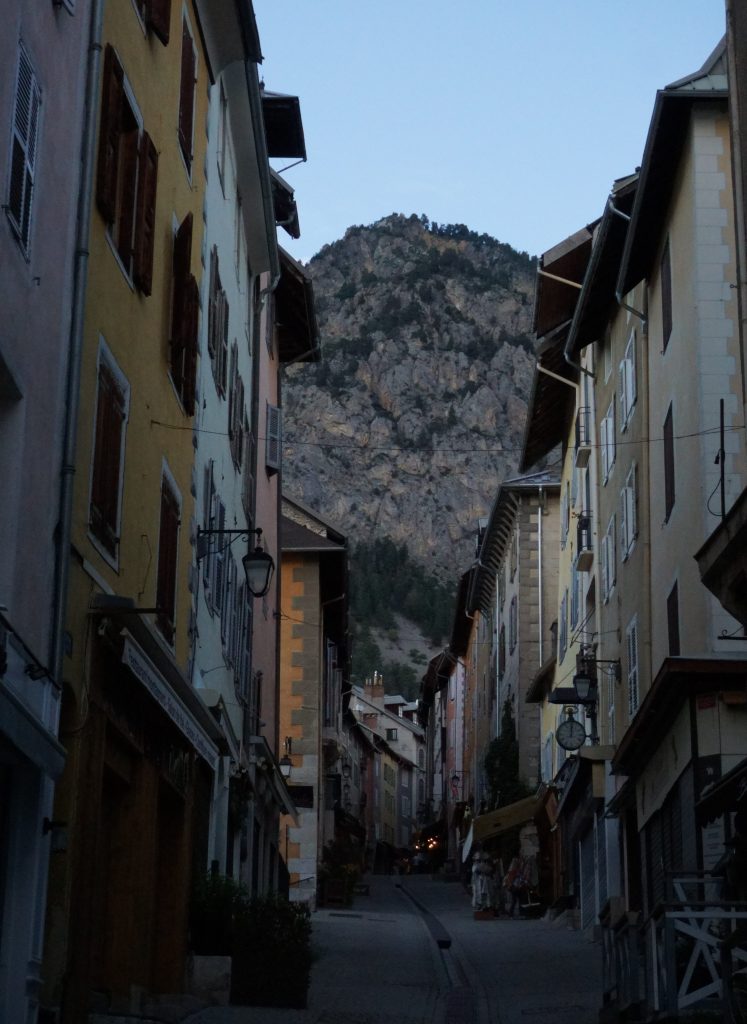
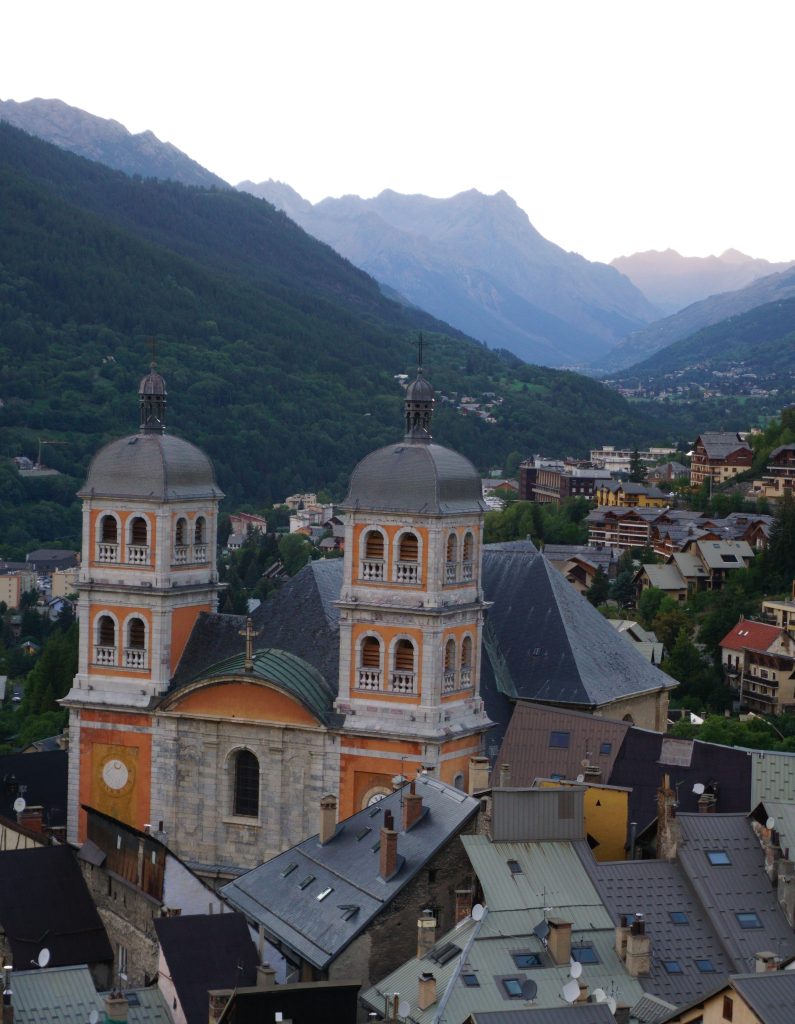
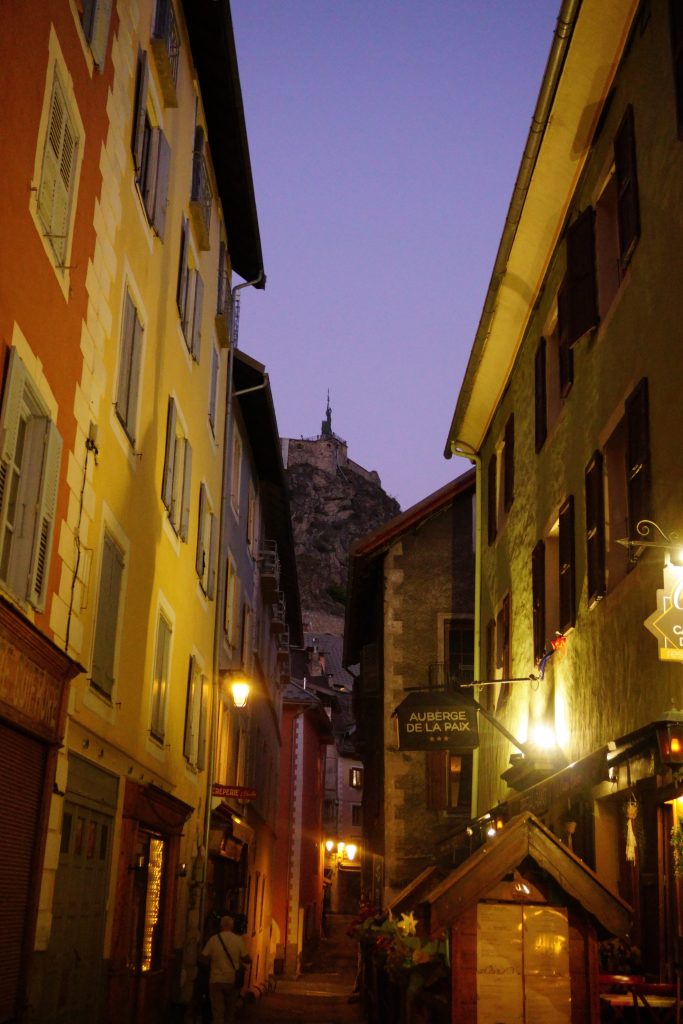
There were, of course, other things to do outside of the climbing. Rest days were spent at Roche de Rame, a gorgeous alpine lake with clean water and a boardwalk perfect for jumping off.2 One evening I headed into nearby Briançon, armed with my camera and ready to take advantage of golden hour on the mountain views. The historical old town clings to steep streets, bisected by a channel of running water (no doubt once the destination of the contents of countless chamber pots) and I headed up these to the capping fort to seek out that light I was after. I was richly rewarded in every direction and eventually wandered back down through the narrow alleys. At dusk, Briançon’s old town is a strangely intimate place. As I weaved through layers of tall, skinny buildings, I saw couples sitting down to dinner in yellow-lit flats, heard snatches of conversation through open windows and even the splash of someone turning the shower on.
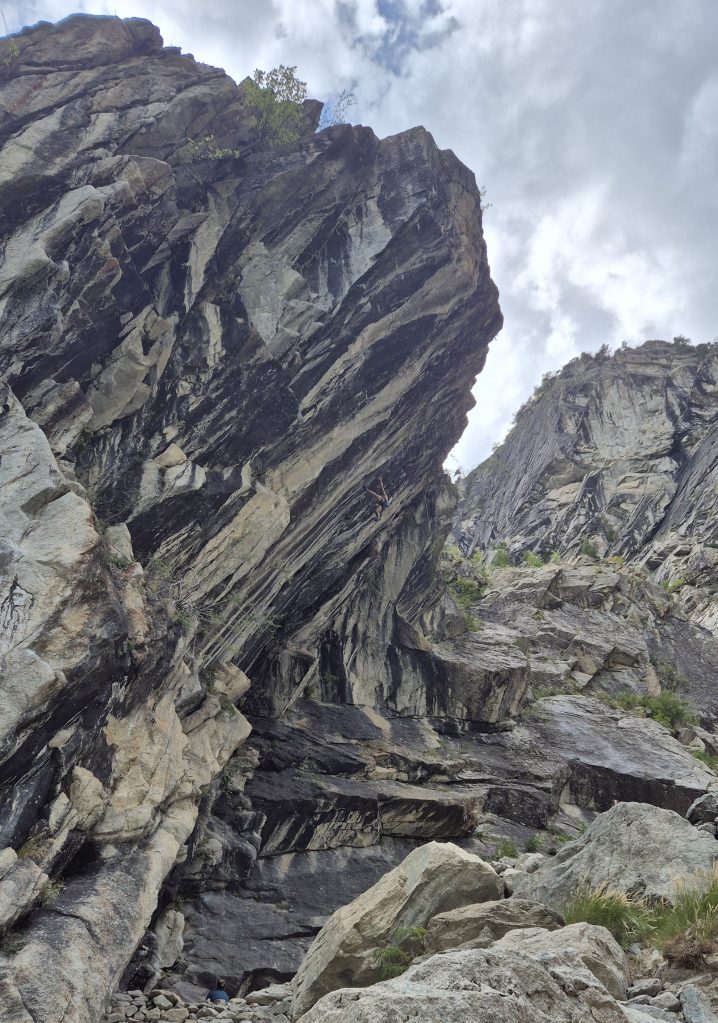
After about a week and a half we were ready to start moving on, but there was one last challenge we had set ourselves. On one of the crags on the west side of the valley was a14-pitch classic 6c+ called La Voie des Maitres on the Palavar, an enormous hunk of granite slab that made the previous crags we’d been on look like toys in comparison. Chris was close to logging his 1000th route and got it in his head that this – Way of the Masters – would be the perfect one. Due to weather and rest days his thousandth route ended up being Punishment Park, but this was still a route we both wanted to try out.
God, what a mistake. I don’t know why I thought 14 pitches of continuous hard slab padding with a messed up foot would be a good idea, but I have never felt like less of a master of anything in my life. Things started off pretty well – the walk-in was steep but relatively short and the woods teemed with life – long tailed-tits chirped in the larches and grasshoppers buzzed from every direction. In most of the sun patches lizards lounged, scuttling into hiding as we passed. We ditched packs at the bottom of the crag and scrambled the first, easy pitch, roping up for the second pitch – the first of the 6cs. That’s when things stopped being quite so sunshine and rainbows.
The benefit of the “French free” ethic, and the general ethic of large alpine routes (getting up it and off it before dark and a cold, miserable night in a bivvy is more important than doing it perfectly3) is that most of the time, when the climbing gets hard, the bolts get close together and you can just yard your way from bolt to bolt, barely touching the rock at all. Not so for the Masters on this Way! Oh ho no! The bolts on my lead would have been upsettingly far apart in any situation but on this lichenous, crumbly slab that was somehow also overhanging, I was given no choice but to balance my way up, the last bolt a distant memory, laybacking through a tenuous roof on non-existent feet before it truly slabbed out and I slithered up the next 20m, doing pistol squat after pistol squat, my body as close to the rock as possible, my clothes paying the price of all that friction.
The next couple of pitches were 6as and lulled us into a bit of a false sense of security. When the next hard pitch arrived – Chris’-, my foot was already starting to sing in protest. Chris quickly declared the route a “no moan zone” and determined that we were going to have a good time, whether we liked it or not. He set off, and equally quickly slipped off. He asked to be lowered back to the belay, determined to at least get the pitch clean in one go. Sure, I said, but you only get one do-over. We can’t be redpointing up this whole route, it’ll take forever. Then he reached the actual hard part of the pitch and had to resort to yarding on the bolts anyway – this 6c was harder than any of the moves on the 7c we’d done earlier in the week. Slab climbing puts a huge amount of pressure on your feet, and by the time he reached the top of the pitch the no moan zone had been abandoned entirely. I didn’t do too badly on the second (a top rope does wonders to your ability to do anything), and thought I actually might make the whole pitch without pulling on gear. But by about 3/4 of the way through I was sick to death of trying very hard on impossibly small feet and hands and just wanted the damn thing to be over. Yet another “oh for god’s sake!” as I pistol squatted up yet again to find not a whisper of a nice crimp, became “oh sod it” and the temptation of grabbing a the fat dogbone of a quickdraw became too much.
Consistently teasing us, the next couple of pitches eased back down to low 6s again, but even these were intense. I am never not terrified on slab – I find it hard to trust my feet at the best of times, and so having to do so on pure smears, with one foot not operating at full potential and in very ratty old comfy shoes as a result… by the end of the 9th pitch I had basically been consistently shitting myself for about 5 hours. At a relatively comfortable belay at the end of pitch 9 we were faced with the two crux pitches. We thought hard about how they would be as hard, if not harder than what we had already done. About how much time it was likely to take and how it was already mid-afternoon now. About how my foot would be cashing the cheques tomorrow that I was writing today. About how the team ahead of us had been stuck on the 6c+ crux pitch for a good long time now… and decided we were quite happy not being masters. We could see the van down in the campsite, hot wheels-sized from this height, and it was calling to us. We bailed out into a train of abseils and were back at the bags within an hour or so.
I’m a big believer in the adage that it’s never the wrong choice to bail on a route, and every bail offers a lesson to be learned. Here, we had bitten off more than we could chew – despite being part of the same grading system, grades on multi-and single pitch routes are not always comparable – nevermind on different crags, even different crags in the same area. We should have tested the water on the Palavar with an easier route to get a feel for it, rather than jumping in (very sore) feet first. Still, it was an experience I wouldn’t have passed up on, and the struggle made the fresh nectarines back at the van taste all the sweeter. It’s also an excuse to come back to Ailefroide for round 2 – though I don’t think I will need all that much of an excuse. My time in the valley was so magical I would actually subject myself (a steep jug obsessive) to more hard horrible slabs just to come here again, and if that doesn’t tell you how beautiful this place is, then I don’t know what will.
Visiting Ailefroide
- We stayed most of the time in the neighbouring village of Vallouise where there are hotels, gites, and the dreamy Boulangerie Mounie, but the best place to stay for climbing is the Ailefroide Campsite – in the quieter months you don’t need to book – just show up, the showers are hot and the rates are very reasonable.
- The hamlet of Ailefroide has a bunch of bars and cafes and a decent little shop to stock up in, so you can go your whole trip without leaving the valley if you want. For bigger shops, Briançon is only about half an hour away. In addition, Vallouise has a Thursday morning market, full of fantastic fresh local produce.
- We were there in early September, and I think this is definitely the best time to go – any earlier in the summer and it would be too hot I’m sure. Any later and the shady crags would be too cold – you are about 1500m up after all.
- If you’re short on chalk or forgot your guidebook, there are two climbing shops in Ailefroide and another two in Vallouise. In Briançon we found the well stocked and reasonably priced Chullanka, where it was very tempting to stock up on climbing shoes without the UK import costs…
- There’s loads of other things to do in the area if you fancy – the tourism office in Vallousie has a huge range of info, and a free, up-to-date guide to the area’s via ferratas.
No AI tools have ever or will ever be used to write or help write this blog.
Thanks for reading! If you enjoyed this, please consider supporting my work:
- Unless you’re desperate to know the strength difference between my half crimp and my three-finger drag max hangs in which case drop me a DM you filthy little hangboard perv and I’ll tell you all about it. ↩︎
- Such a treat to be able to swim in a body of water and know it’s not full of sewage?? ↩︎
- Compared to the British ethic of “if you can’t climb it free and ideally on-sight why are you even touching rocks you filthy casual” ↩︎

